You are sitting on the couch, your cat has climbed into your lap, and everything feels perfectly calm — until it isn't. Mid-stroke, without what seems like any warning, your cat whips around and sinks its teeth into your hand. You pull back, confused and maybe a little offended. This is called overstimulation aggression, and it is far more common than most cat owners realize. The good news is that your cat is not being random or malicious. It is communicating, just in a language most people have not learned to read yet.

Why It Happens: The Science Behind the Bite
Cats are not domesticated in quite the same way dogs are. Thousands of years of selective breeding have made dogs genuinely crave prolonged physical contact with humans, but cats arrived at domestication on their own terms — and their nervous systems reflect that. Petting triggers a complex mix of pleasure and sensory input, and for many cats, that input has a hard ceiling.
Repeated stroking over the same area stimulates the same nerve endings over and over. Researchers believe this repetitive stimulation can shift from pleasant to irritating surprisingly fast, in a process sometimes compared to how a light touch on human skin can become unbearable if it goes on long enough. The cat's brain essentially flips a switch.
There is also a social dimension. In feline body language, prolonged physical contact is not always a sign of trust — it can feel like an imposition. Some cats tolerate petting because they enjoy the warmth and proximity, not the touching itself. When the touching exceeds what they signed up for, the bite is their clearest available exit strategy.
Breed, early socialization, and individual personality all play a role in how quickly a cat reaches that threshold, which is why two cats in the same household can respond so differently to the same kind of handling.
Step-by-Step: Reading the Warning Signals
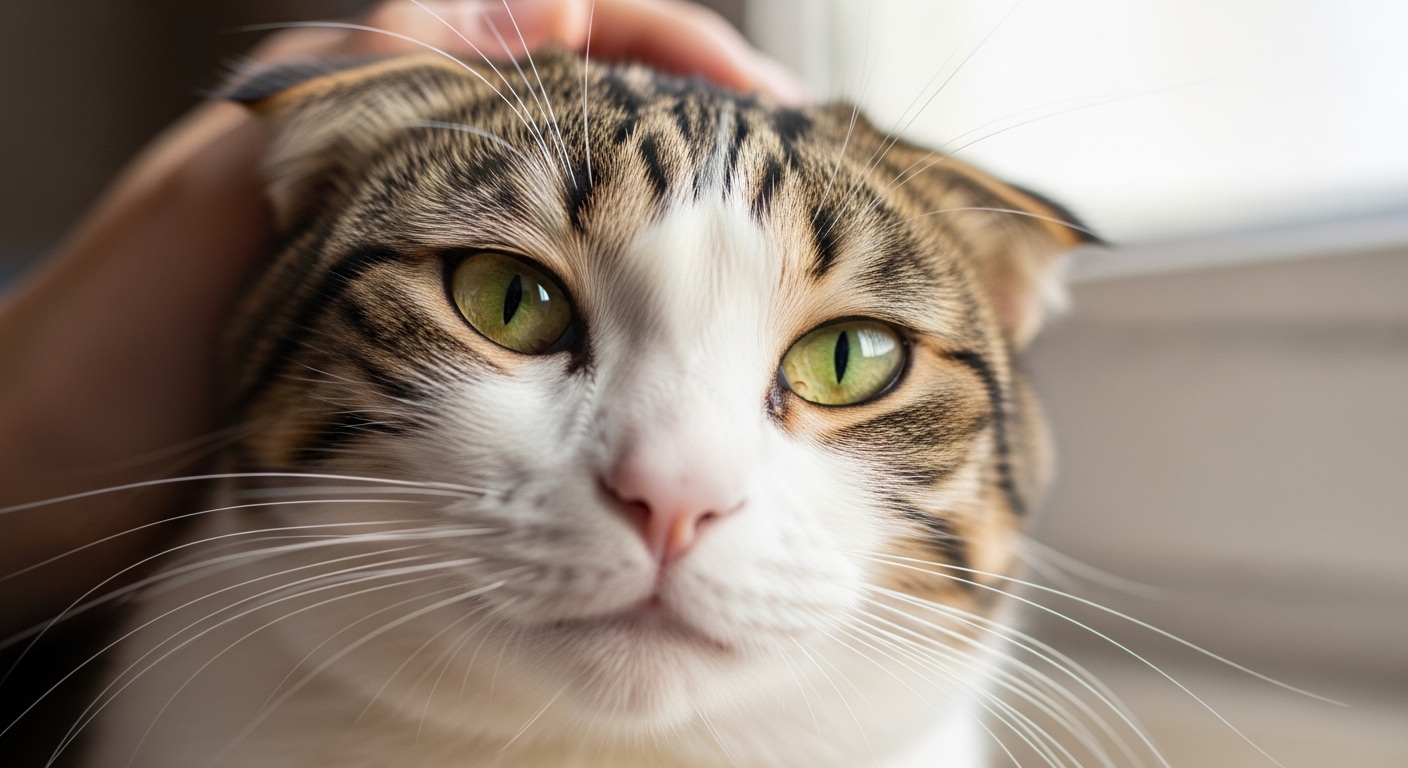
The bite almost never comes without warning. The problem is that the signals are subtle and easy to miss, especially when you are relaxed and not paying close attention. Learning to spot them is genuinely the most useful skill you can develop as a cat owner.
Watch for these signals in order — they tend to escalate:
- Skin rippling or twitching: The skin along your cat's back may visibly twitch or roll, even if the rest of the body looks still. This is often the earliest sign.
- Tail movement: A slow, low tail swish is not the same as a happy wag. When the tail starts flicking with increasing speed or force, the clock is ticking.
- Ear rotation: Ears that swivel backward or flatten slightly are signaling discomfort, not curiosity.
- Dilated pupils: Eyes that suddenly widen mid-petting session suggest the nervous system is shifting into a more alert, reactive state.
- Head turning: If your cat turns to look at your hand while you pet it, that is often a direct precursor to a bite.
- Muscle tension: A body that was relaxed and heavy in your lap may become subtly rigid. You can feel this before you can see it.
The moment you notice any two of these together, stop petting. Do not pull away sharply — just let your hand rest still, then withdraw it calmly. Many cats will immediately relax again once the stimulation stops.
The goal is not to pet your cat less. It is to pet your cat better — stopping before the threshold, not after it.
Common Mistakes That Make It Worse
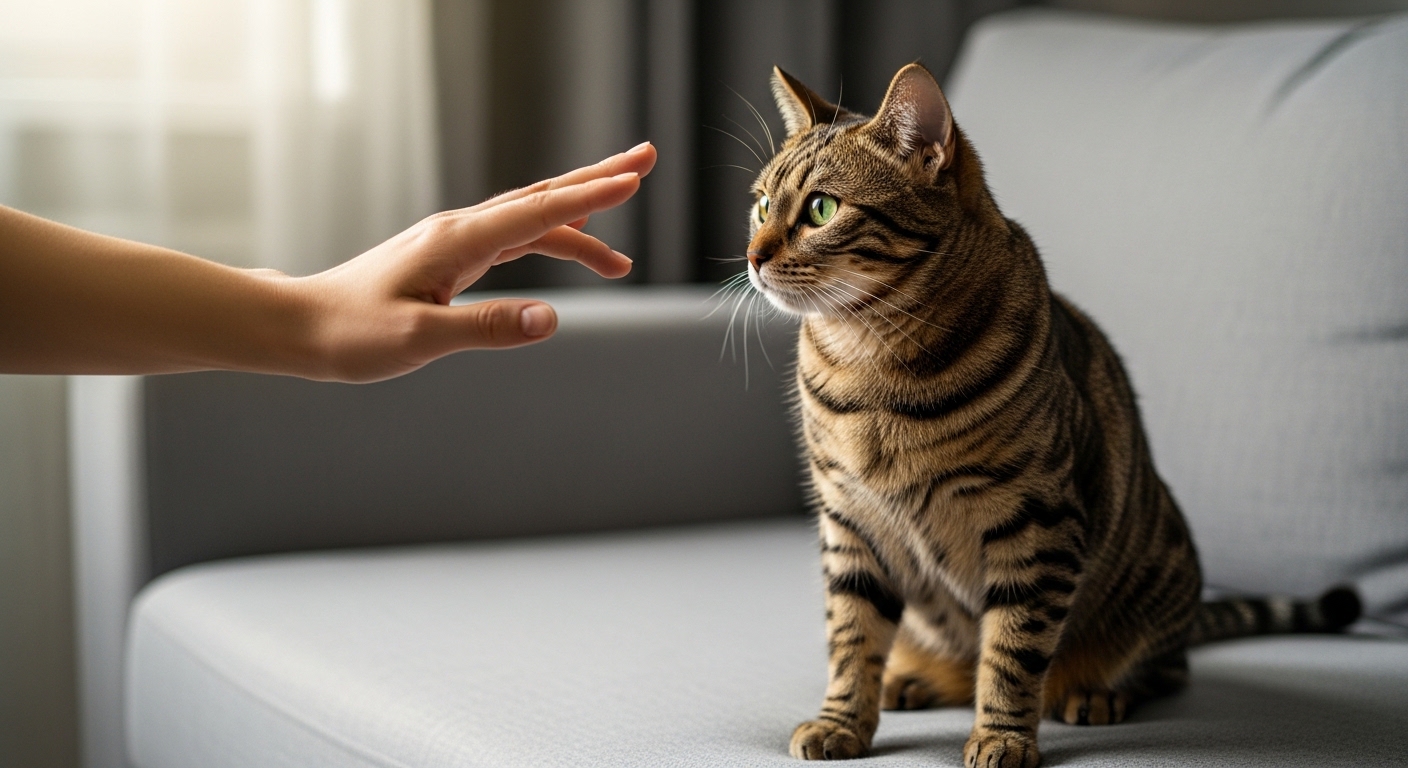
Most people respond to a bite by either pulling away sharply or scolding the cat. Both reactions tend to make things worse over time. A sharp withdrawal can trigger the cat's prey instinct and actually invite a follow-up bite. Scolding does not translate — your cat has no framework for understanding verbal reprimands in this context, and the raised voice just adds stress to an already overstimulated animal.
Another common mistake is pushing through the warning signals because the cat seemed fine a moment ago. Owners sometimes assume the tail flick is just a quirk, or that the skin twitch does not mean anything. After a few bites, many people start to think their cat is simply aggressive by nature, when really the cat has been sending the same messages every single time.
- Continuing to pet after warning signals appear: This is the most direct path to a bite and reinforces the cat's belief that biting is the only effective communication tool.
- Punishing the cat after a bite: Punishment after the fact does not connect to the behavior in a cat's mind and may damage trust significantly.
- Forcing the cat to stay in your lap: Blocking a cat's exit when it wants to leave almost always escalates the situation.
- Petting high-sensitivity areas too early: The belly, the base of the tail, and the lower back are particularly sensitive zones — many cats need a high level of trust before those areas feel acceptable to touch.
Expert Tips for Building a Better Petting Relationship
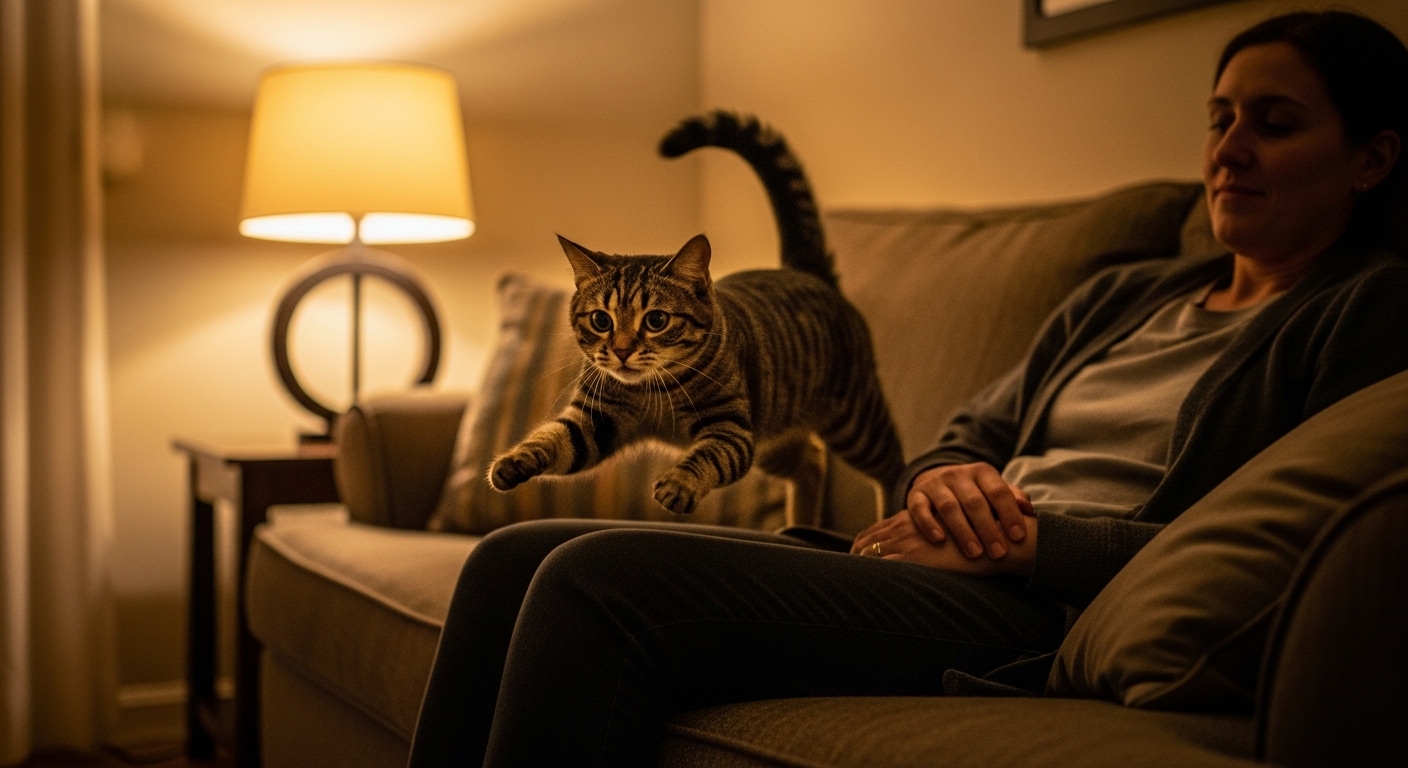
Let the cat initiate. Cats that approach you and choose to engage are starting from a much more comfortable baseline than cats you pick up or pull toward you. This sounds obvious, but it changes the dynamic considerably — and honestly, once you start waiting for your cat to come to you, you notice how often you were the one forcing contact before.
Keep sessions short and end them on a positive note. Three minutes of calm, well-received petting is worth more than ten minutes that ends in a bite. Over time, many cats will actually extend their tolerance because they have learned that petting stops before it becomes unpleasant.
Stick to lower-stimulation areas at first:
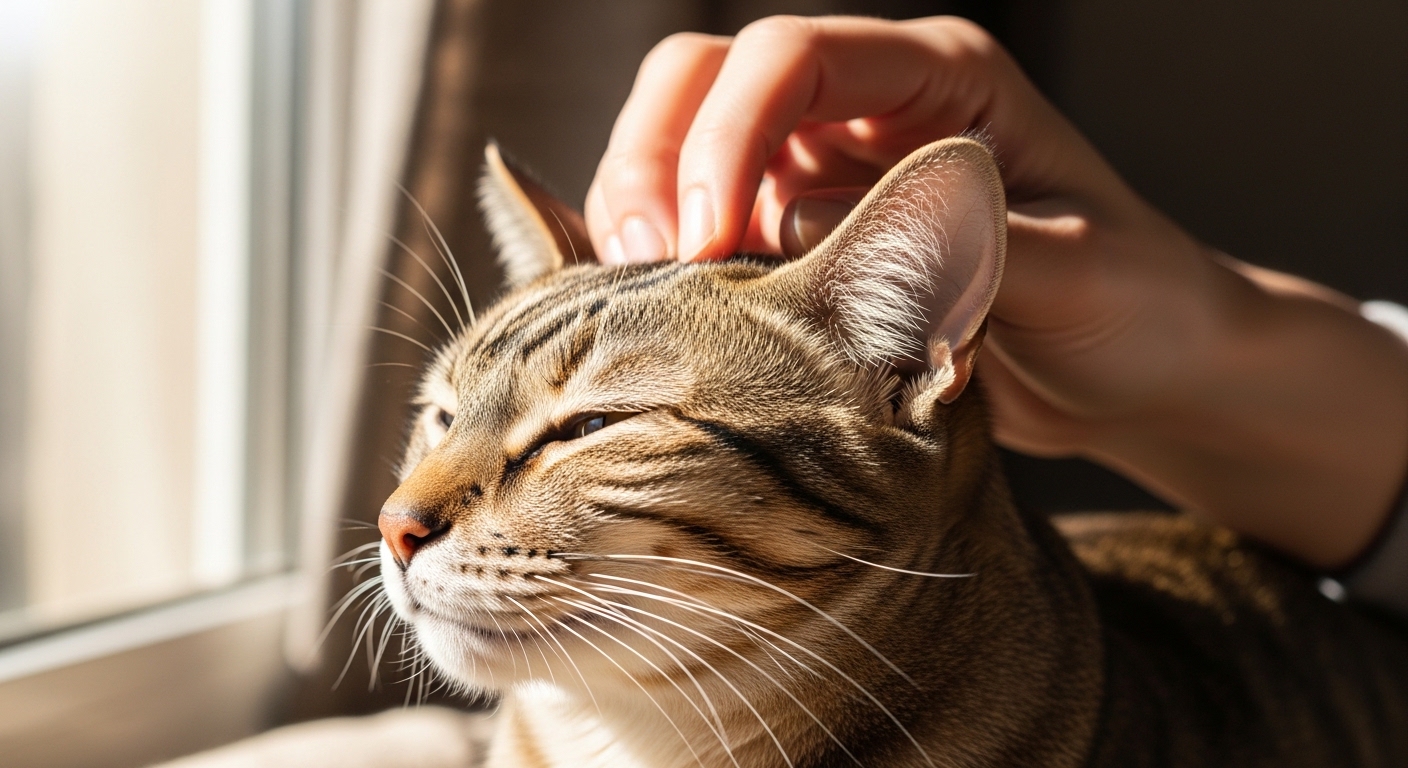
- The base of the ears and the top of the head are generally well-tolerated by most cats.
- Under the chin is another commonly accepted spot, though individual cats vary.
- The cheeks and the area just in front of the ears contain scent glands, and many cats actively enjoy contact there.
- The back, from shoulders to mid-spine, is usually safe — but slow down as you approach the tail base.
Some owners find it helpful to use a consistent verbal cue when ending a session — something like a soft "okay, done" said in the same tone each time. Cats are more attuned to routine than most people give them credit for, and a predictable ending can reduce the anxiety that sometimes builds during petting.
When to See a Pro
Overstimulation biting is normal feline behavior, but there are situations where professional input makes sense. If your cat bites hard enough to break skin regularly, escalates quickly from zero to full aggression with no visible warning signals, or has recently changed its behavior significantly, a veterinary visit is the right first step. Sudden behavioral changes can sometimes reflect pain or an underlying health issue — a cat with arthritis, for example, may bite when touched in areas that hurt, and that is a medical problem, not a training problem.
A certified cat behavior consultant can also help if the biting is frequent and you have not been able to identify a clear pattern despite paying attention. They can observe your specific cat's signals and give you a much more tailored read of what is happening than any general guide can.
Frequently Asked Questions
Is my cat being aggressive, or is this just play biting?
Overstimulation biting and play biting feel different. Play biting usually happens during active interaction — when your hand is moving, when you are wiggling fingers, or during a chase game. Overstimulation biting happens during what should be a calm moment, often after a period of stillness. Play bites also tend to be softer and less sudden. If the bite comes out of a quiet petting session with no movement involved, overstimulation is the more likely explanation.
Will my cat ever be okay with longer petting sessions?
Many cats do expand their tolerance over time when petting sessions are consistently kept within their comfort zone. The key is not pushing past the threshold repeatedly — each bite that happens may actually reinforce the behavior and lower the cat's trust. Some cats, particularly those with limited handling as kittens, may always have a relatively short window, and that is simply their personality. Accepting that and working within it tends to produce a calmer, more affectionate cat overall than trying to override it.
Should I use gloves or other protection when petting my cat?
Gloves are not generally recommended as a long-term solution because they do not address the underlying dynamic and may actually reduce your ability to feel the subtle muscle tension that precedes a bite. They can be useful in the very short term if bites are frequent and severe, but the more practical investment is in learning to read your cat's signals earlier. Most owners who get good at spotting the warning signs find that bites become rare within a few weeks of consistent practice.
Overstimulation biting is one of those things that feels mysterious until you understand it, and then it seems almost obvious in hindsight. Your cat is not broken, and it is not trying to punish you. It is just a cat with a nervous system that has limits — and once you learn where those limits are, the whole relationship tends to get noticeably easier. You will probably still get bitten occasionally. That is just part of sharing space with a cat.
Comments
Post a Comment