If you have ever watched a dog fixate on a squirrel through the window and then glanced nervously at your cat, you already understand the concern. Not every dog is a threat to feline housemates, though — and some breeds genuinely seem to regard cats as furniture rather than prey. The difference often comes down to prey drive, early socialization, and plain old temperament. This guide ranks the breeds most likely to share a couch peacefully with your cat, along with honest notes on what living with each one actually looks like day to day.
Quick Comparison Table
Before diving into each breed, here is a side-by-side snapshot of how they stack up on the traits that matter most when cats are in the picture.
| Breed | Prey Drive | Energy Level | Cat Compatibility | Size |
|---|---|---|---|---|
| Golden Retriever | Low | Medium-High | ★★★★★ | Large |
| Cavalier King Charles Spaniel | Very Low | Low-Medium | ★★★★★ | Small |
| Basset Hound | Low | Low | ★★★★☆ | Medium |
| Labrador Retriever | Low | High | ★★★★☆ | Large |
| Pug | Very Low | Low | ★★★★★ | Small |
| Bichon Frise | Very Low | Medium | ★★★★★ | Small |
Keep in mind that individual personality and early socialization can shift any dog up or down this scale. A breed rating is a starting point, not a guarantee.

Top Picks: Low Prey Drive Breeds Deep Dive
The breeds at the top of the compatibility list share a common thread — they were not historically bred to chase and catch small animals. That breeding history matters more than most people realize when you are trying to predict how a dog will react to a cat sprinting across the hallway at midnight.
Golden Retriever
Goldens were bred to retrieve shot birds gently — "soft mouth" is the technical term — which means their instinct leans toward carrying, not killing. Most Goldens will attempt to befriend a cat with an enthusiasm the cat will find deeply annoying at first. Give it a few weeks and the cat usually establishes the rules. The dog, being a Golden, will accept those rules with minimal complaint. The main practical downside is the fur. You will find it in the cat's food bowl, on the cat, and in places that defy explanation.
Cavalier King Charles Spaniel
Small enough not to intimidate most cats, gentle enough not to try. Cavaliers were bred purely as companion dogs, which means they have almost no working-dog instincts to override. They tend to follow cats around with a hopeful expression rather than a predatory one. Many owners report that the cat ends up being the bossier of the two, which is usually fine for a Cavalier. Health monitoring is important with this breed — many vets suggest regular cardiac check-ups, as heart conditions may develop with age.
Pug and Bichon Frise
Both breeds land in the "genuinely unbothered by cats" category. Pugs are too busy breathing to chase anything, and Bichons were bred as lap companions in French noble households — chasing livestock was never part of the job description. A Bichon's coat does require consistent grooming, which is something prospective owners sometimes underestimate until they are booking their third groomer appointment in a month.

Middle-Tier Picks: Good but Needs Management
Labrador Retrievers and Basset Hounds both score well for cat compatibility, but with a caveat each.
Labrador Retriever
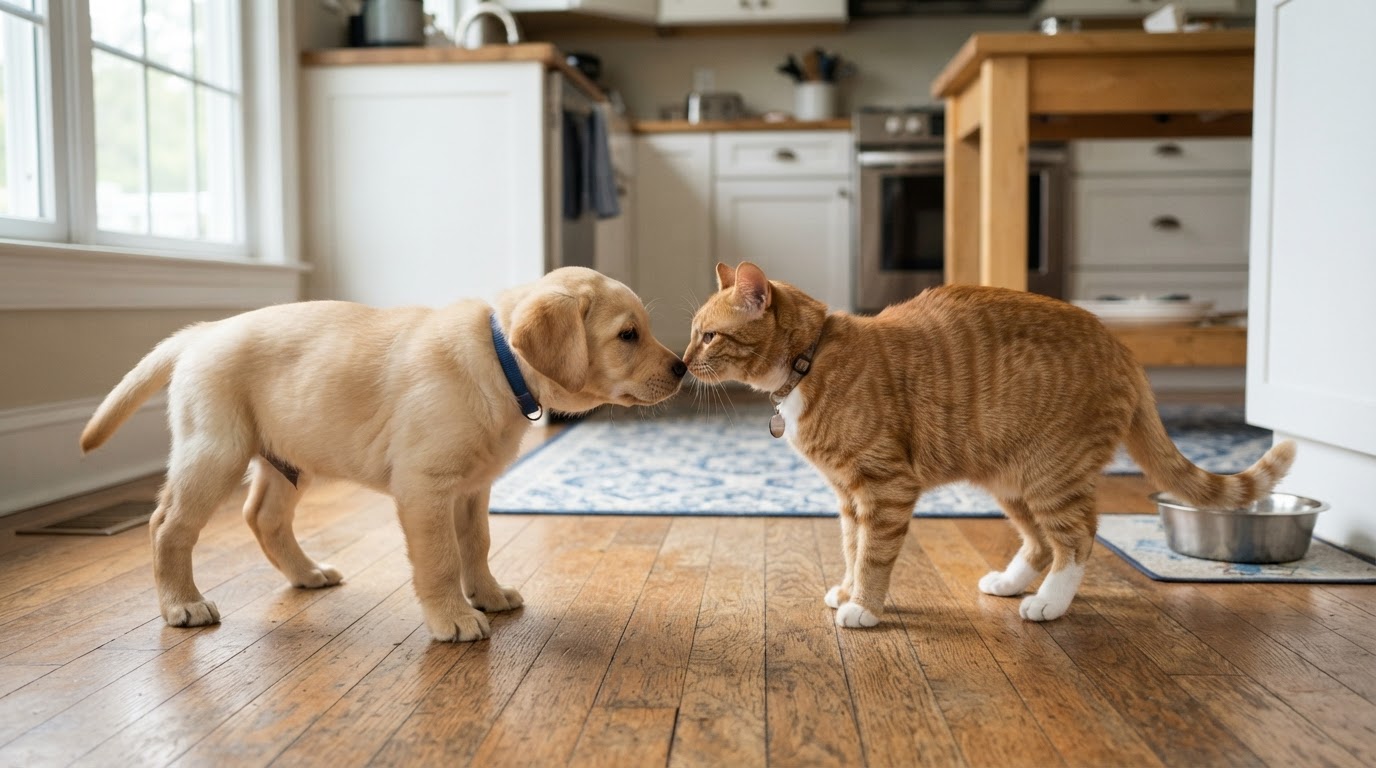
Labs are friendly to a fault, but their sheer size and enthusiasm can be a problem. A Lab that wants to play does not always read the cat's "I am done with you" signals correctly, and a 70-pound dog bounding toward a cat is stressful even when the intent is friendly. Early introductions done slowly and calmly make a significant difference. Labs that grow up alongside cats from puppyhood tend to be genuinely relaxed housemates. One honest note: Labs counter-surf, steal food, and will absolutely eat the cat's dinner if given the chance — keep food separate.
Basset Hound
Bassets are scent hounds, which means their nose rules their brain. They may track a cat's scent trail around the house with intense focus, which can unsettle a cat even if the dog has zero aggressive intent. That said, Bassets are slow, low-energy, and generally too laid-back to actually chase anything with conviction. Most cats figure this out quickly. The droopy ears need regular cleaning — ear infections are common in the breed, and it is the kind of maintenance task that sneaks up on new owners.
Key takeaway: A breed's prey drive history is the single most reliable predictor of cat compatibility — more so than size, energy level, or how friendly the dog seems with humans.
Which Is Right for You?
The honest answer depends on your cat's personality as much as the dog's breed. A bold, confident cat can handle a bouncy Labrador. A timid cat that hides under the bed at loud noises will do better with a Cavalier or a Pug — something small and quiet that will not send them into permanent hiding.
Space matters too. In a smaller apartment, a large enthusiastic dog and a cat sharing the same square footage can create tension even when both animals are well-intentioned. Smaller breeds like the Bichon or Cavalier tend to be easier to manage in tighter living situations, simply because there is less dog to accidentally overwhelm a cat.
Consider these practical questions before choosing:
- Does your cat have a history of living with dogs, or is this their first experience?
- Are you prepared to do a slow, structured introduction over several weeks rather than just letting them "figure it out"?
- Can you provide the cat with high spaces and dog-free zones to retreat to?
- Is the dog you are considering a puppy (more trainable but more chaotic) or an adult with a known history around cats?
- Do you have time for the extra management a higher-energy breed requires during the adjustment period?
Adopting an adult dog with a documented cat-friendly history from a rescue is genuinely one of the lower-risk routes, and many rescues specifically note this in their profiles.
Frequently Asked Questions
Can any dog breed learn to live peacefully with cats?
Many dogs can coexist with cats when introduced carefully and given time, but breeds with very high prey drive — such as Siberian Huskies, Greyhounds, or Jack Russell Terriers — may always require close supervision around cats regardless of training. The risk never fully disappears in high-drive breeds, and that is worth being realistic about before bringing one home to a cat household.
How long does it take for a dog and cat to get used to each other?
Most behaviorists suggest allowing anywhere from a few weeks to several months for a genuine, relaxed coexistence to develop. The first week is usually the hardest. Rushing the introduction — skipping the scent-swapping phase or allowing face-to-face contact too soon — tends to set the relationship back significantly. Patience during those early weeks pays off in a much calmer household long-term.
Should I get a puppy or an adult dog if I have a cat?
Both have trade-offs. Puppies can be socialized with cats from an early age, which often produces a very relaxed adult dog around felines — but the puppy phase is chaotic and a cat may find a bouncy, unpredictable puppy extremely stressful for months. An adult dog with a verified cat-friendly background removes a lot of the guesswork, though the adjustment period still applies. If your cat is elderly or particularly anxious, an adult dog with a calm, known temperament is often the more considerate choice.
Whichever breed you land on, the introduction process matters as much as the breed itself. A Golden Retriever introduced badly can terrorize a cat; a Labrador introduced patiently can become a cat's preferred napping companion. The breed gives you a probability, not a promise — and the work you put in during those first weeks shapes the actual outcome. Keep the cat's escape routes open, go slowly, and consult your veterinarian or a certified animal behaviorist if the introduction is not progressing smoothly.

Comments
Post a Comment