Ask anyone who has lived with an Australian Shepherd and they will tell you the same thing: the dog was ready to work before you finished your first cup of coffee. These are not casual pets. They are high-drive working dogs bred to manage livestock across rough terrain for hours at a stretch, and that heritage does not disappear just because you live in a suburb. If you are researching Aussies because one caught your eye at the park, this guide will give you an honest look at what daily life with one actually involves — the good, the demanding, and the fur-covered furniture you did not plan for.
Origins & History
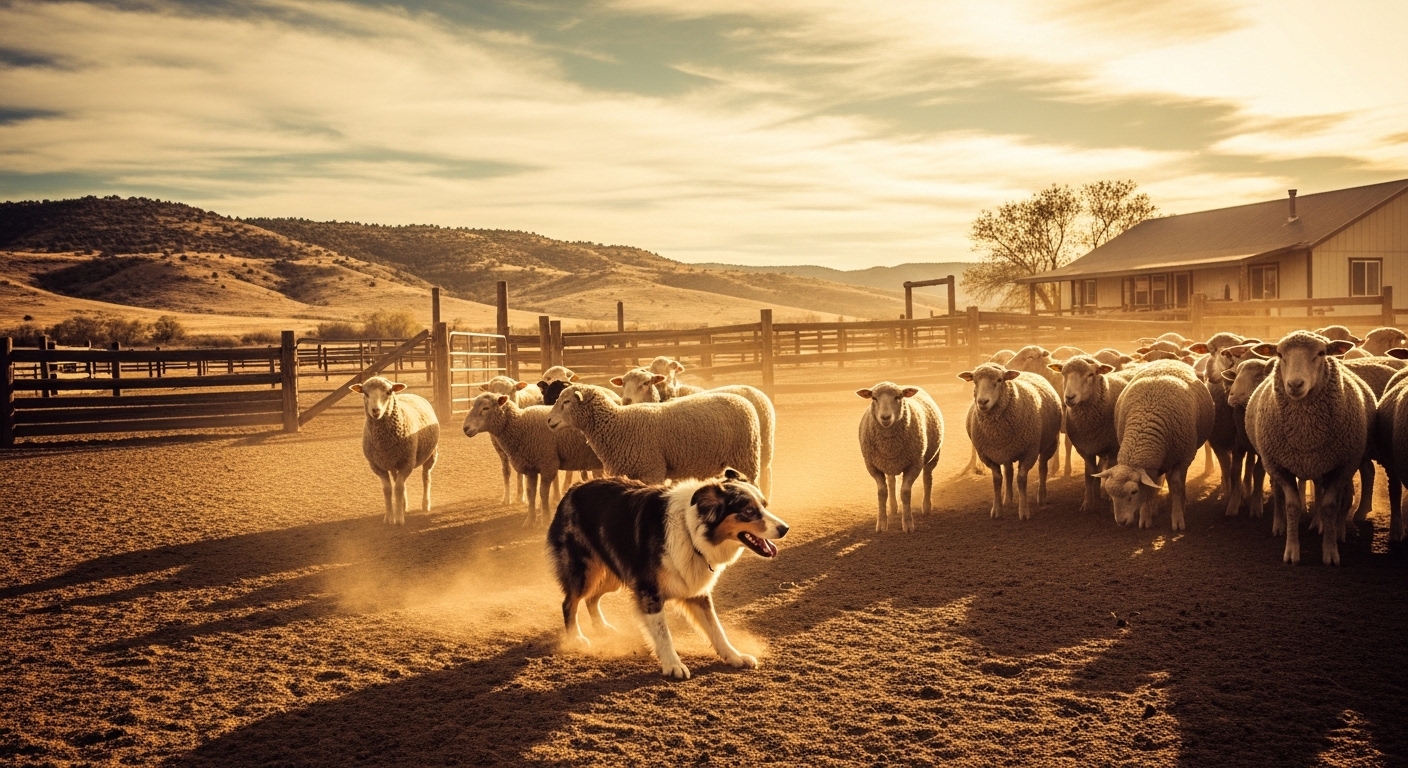
Despite the name, the Australian Shepherd was largely developed in the western United States during the 19th century. The "Australian" label most likely came from the Basque shepherds who arrived via Australia, bringing their herding dogs with them. American ranchers then refined the breed for their own conditions — vast open land, unpredictable livestock, and long working days that demanded a dog with both stamina and independent problem-solving ability.
The breed gained wider public recognition through rodeo performances in the mid-20th century, where Aussies demonstrated their agility and trainability to audiences across the country. Jay Sisler, a rodeo performer, is often credited with popularizing them through trick-dog acts that showcased their athleticism. The Australian Shepherd Club of America was founded in 1957, and the AKC officially recognized the breed in 1991 — relatively late for a dog that had already been a working staple for over a century.
That long working history matters. Every behavioral quirk you will encounter — the herding of children, the intense staring, the refusal to settle when under-stimulated — traces directly back to what these dogs were selectively bred to do for generations.
Appearance & Size
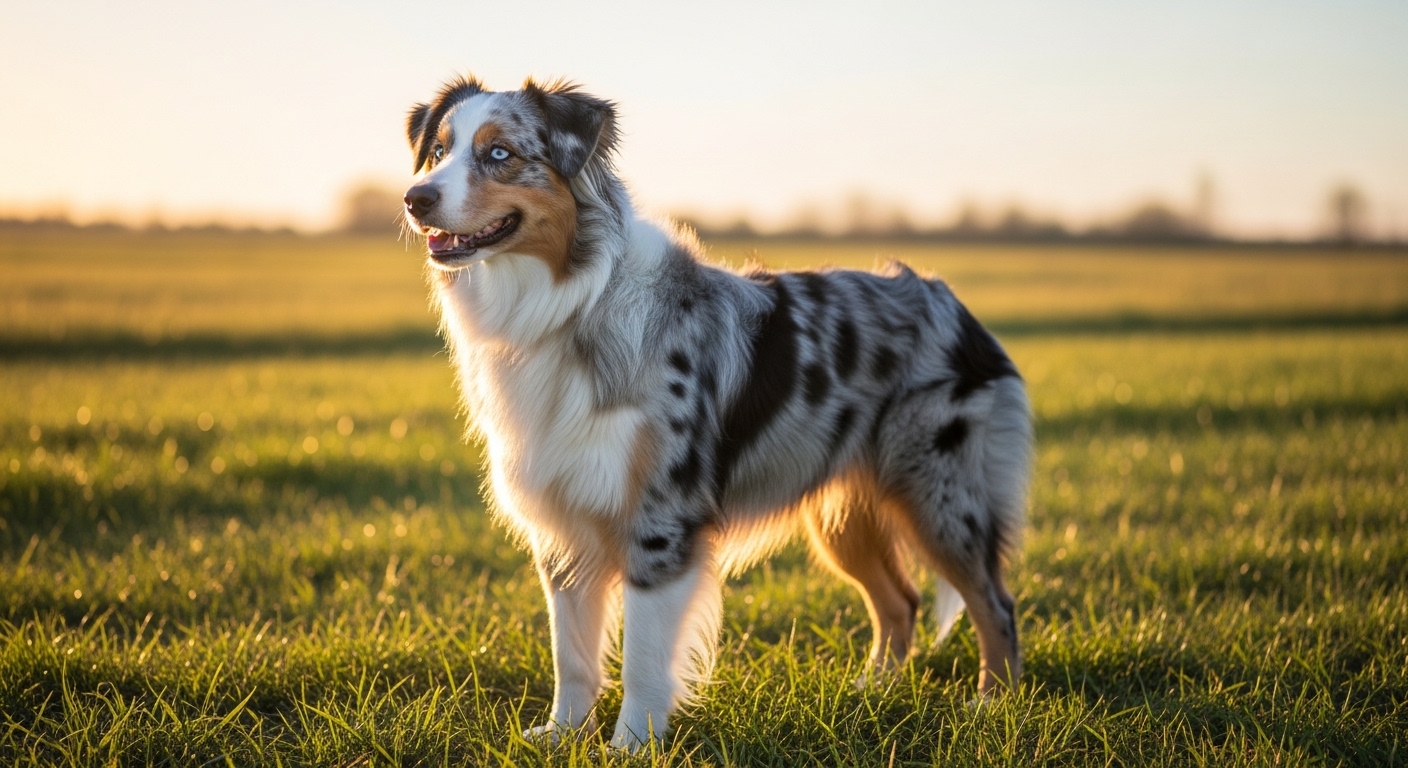
Aussies are medium-sized dogs with a build that says "functional athlete" rather than "show piece." Males typically weigh between 50 and 65 pounds and stand 20 to 23 inches at the shoulder; females run slightly smaller at 40 to 55 pounds and 18 to 21 inches. They are solidly muscled without being bulky, and they move with a smooth, ground-covering stride that makes them look effortless even at speed.
The coat is one of the breed's most recognizable features — medium length, slightly wavy, and dense enough to handle cold mornings and light rain. It also sheds. A lot. If you have ever owned a double-coated breed before, you know what to expect; if you have not, plan on vacuuming more often than you currently do and accepting that your dark clothing will carry a permanent light dusting of fur.
Coat colors include blue merle, red merle, black, and red, all of which may appear with or without white markings and copper points. The merle pattern — that mottled, marbled look — is what draws many people to the breed initially. Eye color ranges from deep brown to amber to vivid blue, and heterochromia (two different-colored eyes) is common and considered a normal trait rather than a fault.

Temperament
Intelligent. Intense. Deeply attached to their people. Those three phrases cover most of what you need to know before the details fill in. Aussies form strong bonds with their family and tend to be reserved — not aggressive, but genuinely cautious — around strangers until they have had time to assess the situation. Early socialization matters enormously with this breed; a poorly socialized Aussie can become anxious or reactive in ways that are genuinely difficult to manage later.
The herding instinct shows up in everyday life more than most new owners expect. Children running in the yard, guests moving quickly through a room, other dogs at the park — all of these can trigger a chase-and-nudge response that is completely natural to the dog and completely bewildering to everyone else. It is not aggression. It is the dog doing what its genetics are telling it to do. Redirecting that drive into structured activities is far more effective than trying to suppress it entirely.
They are also vocal. Not incessantly barky in the way some small breeds can be, but communicative — they will alert you to arrivals, express frustration when bored, and occasionally offer running commentary on events you did not ask them to narrate.
Real Owner Reality: Many Aussie owners describe a honeymoon period of about two weeks where the dog seems manageable, followed by a sharp realization that the dog has been quietly mapping the household routine and is now prepared to challenge any part of it that does not suit them. They are not difficult out of stubbornness so much as out of sheer cognitive engagement — they notice everything, remember everything, and will test boundaries with a persistence that can feel personal.
Health & Lifespan
Aussies generally live 12 to 15 years, which is a reasonable lifespan for a medium-sized dog. They are considered a relatively hardy breed, but there are several health conditions that appear with enough frequency in the breed that any prospective owner should be aware of them before committing.
- MDR1 gene mutation (now called ABCB1): A genetic variant that makes affected dogs sensitive to certain common medications, including some antiparasitic drugs. DNA testing can identify carriers, and many vets suggest testing Aussies before prescribing affected medications.
- Hip and elbow dysplasia: Joint malformation that may cause pain and mobility issues, particularly in older dogs. Reputable breeders screen breeding stock for this.
- Epilepsy: Idiopathic epilepsy appears in the breed at a higher rate than in many others. In some cases it can be managed, but always consult your veterinarian for guidance specific to your dog.
- Eye conditions: Collie Eye Anomaly (CEA) and progressive retinal atrophy (PRA) both occur in Aussies. Eye exams through a veterinary ophthalmologist are recommended, especially in dogs from merle-to-merle breeding.
- Double merle risks: Breeding two merle dogs together produces a statistical likelihood of "double merle" offspring, which are associated with deafness and vision impairment. Responsible breeders avoid this pairing entirely.
If you are purchasing from a breeder, ask specifically about health testing for hips, eyes, and the MDR1 mutation. If you are adopting, consult your veterinarian about baseline testing. None of this is meant to alarm — many Aussies live long, healthy lives — but going in informed means you are less likely to be caught off guard.

Is This Breed Right for You?
Honestly? For a lot of people, no. That is not a criticism of the breed — it is just arithmetic. Aussies need significant daily exercise, consistent mental stimulation, structured training, and an owner who finds engagement with a demanding dog rewarding rather than exhausting. If your lifestyle involves long work hours, limited outdoor access, or a preference for a dog that will mostly hang out quietly, there are better matches.
Where Aussies genuinely thrive:
- Active households where the dog can participate in hiking, running, or cycling alongside their owner.
- Families or individuals committed to dog sports like agility, flyball, herding trials, or competitive obedience.
- Homes with a securely fenced yard — not because they cannot do without one, but because it dramatically reduces the daily management load.
- Owners who have experience with high-drive or working breeds and understand that "tired dog" is a daily goal, not an occasional achievement.
Apartment living is not automatically a dealbreaker, but it raises the bar considerably. You will need to be more deliberate about exercise and enrichment, and you should expect that a bored Aussie in a small space will find creative — and destructive — ways to occupy itself. The baseboards in your kitchen are more interesting than you think, apparently.
A two-hour hike will not "tire out" a well-conditioned Aussie the way it might a Labrador. Mental work — puzzle feeders, training sessions, scent games — is often what actually settles them down.
Frequently Asked Questions
How much exercise does an Australian Shepherd actually need each day?
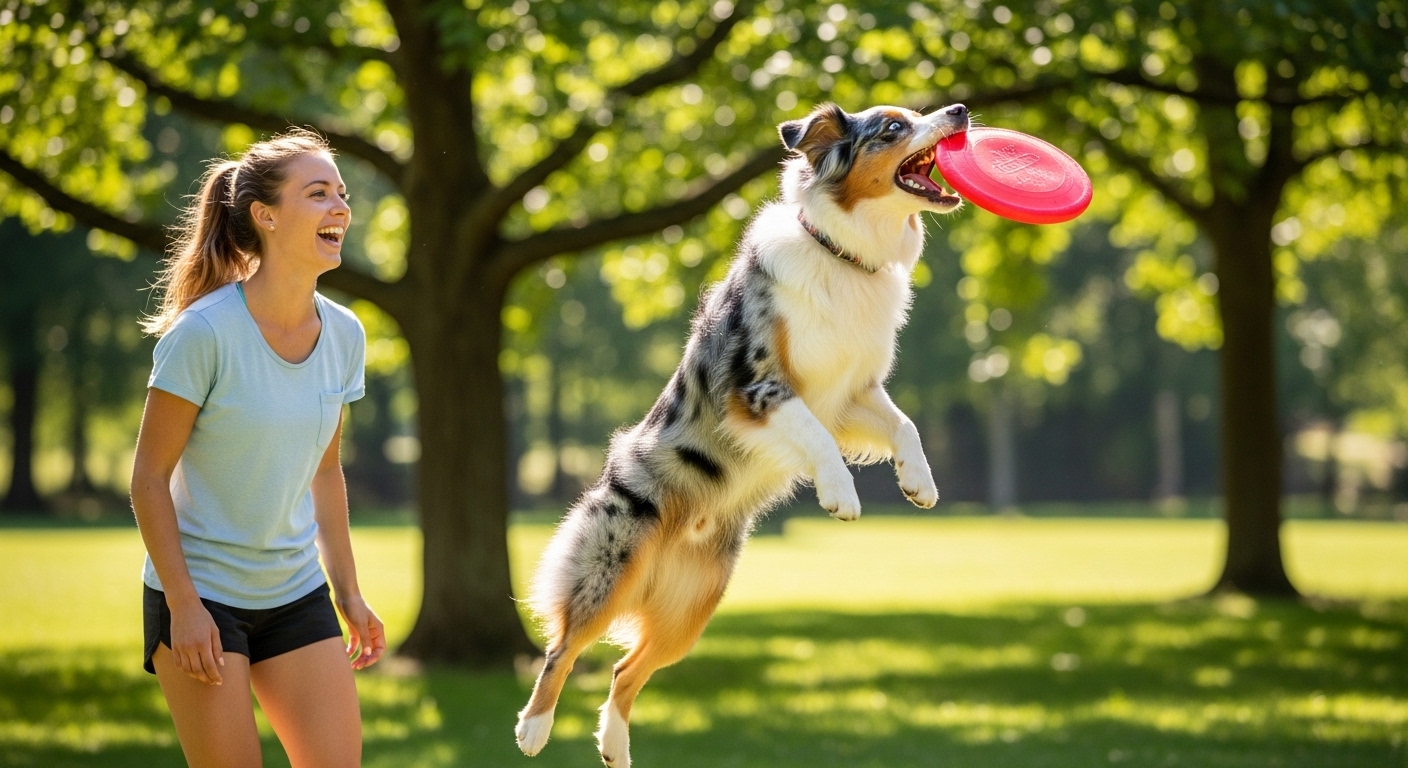
Most adult Aussies need a minimum of 90 minutes of physical activity daily, and that number climbs if the exercise is low-intensity like leash walking. High-intensity activities — fetch, agility work, off-leash running — are more efficient. Beyond physical exercise, daily training sessions of even 10 to 15 minutes provide mental engagement that many owners find is what actually makes the dog calm enough to settle in the evening.
Are Australian Shepherds good with children?
They can be, with proper socialization and supervision. The herding instinct means they may nip at or chase running children, which is not aggression but can still be startling or upsetting. Teaching children how to interact calmly with the dog, and teaching the dog an alternative behavior when the urge to herd kicks in, goes a long way. Families with very young children should be especially consistent about management until the dog has solid training in place.
Do Australian Shepherds bark a lot?
More than average, yes. They are alert dogs with strong watchdog tendencies, and they will vocalize when they notice something worth reporting — which, in their view, is quite a lot. Boredom and under-stimulation significantly increase barking. A well-exercised, mentally engaged Aussie is noticeably quieter than one that has been left to its own devices for hours. Training a reliable "quiet" cue early is worth the effort.
Living with an Australian Shepherd is genuinely rewarding if you go in with clear expectations. They are sharp, capable dogs that respond well to consistent handling and thrive when given a job to do — even if that job is learning a new trick or completing an agility course in your backyard. The grooming sessions take longer than you expect, the shedding is real, and the energy demands are not exaggerated. But for the right owner, the engagement and responsiveness of this breed is hard to match.

Comments
Post a Comment