A neighbor once told me she got a Corgi because they looked like small, manageable dogs. Six months later, she was laughing — slightly exhausted — explaining how her Pembroke Welsh Corgi had reorganized her entire daily schedule around his exercise needs, herding her ankles every morning like clockwork. That gap between expectation and reality is exactly why a thorough breed profile matters before you bring one of these dogs home. Corgis are clever, sturdy, and genuinely entertaining to live with, but they come with a specific set of needs that not every owner is prepared for on day one.

Origins & History
The Pembroke Welsh Corgi's roots go back over a thousand years to the farms of Pembrokeshire, Wales, where these compact dogs were bred with a single serious purpose: moving cattle. That might sound unlikely given their low-slung frame, but the design was intentional — a dog short enough to duck beneath a cow's kick while still being fast and assertive enough to nip at heels and redirect livestock across rough terrain.
The breed's ancestry is debated among historians, but many believe Flemish weavers brought ancestors of the Corgi to Wales around the 10th century. Over generations, selective breeding refined the dog into the recognizable form we know today: fox-like face, upright ears, and that famously short-legged silhouette. The Pembroke and the Cardigan Welsh Corgi are distinct breeds — the Pembroke is the more popular of the two, partly due to its association with the British Royal Family. Queen Elizabeth II kept Pembroke Welsh Corgis for most of her reign, which did wonders for the breed's global visibility.
The American Kennel Club recognized the Pembroke Welsh Corgi in 1934, and the breed has remained consistently popular ever since — ranking in the top 15 most popular breeds in the U.S. for several years running.

Appearance & Size
Pembrokes are unmistakable. They typically weigh between 25 and 30 pounds and stand about 10 to 12 inches at the shoulder — low to the ground but surprisingly solid when you actually pick one up. The body is long relative to the legs, the chest is broad, and the hindquarters are well-muscled. This is not a fragile dog despite the compact size.
The double coat comes in several color combinations:
- Red and white — the most common, ranging from light golden-red to deep mahogany
- Sable and white — with darker tipping on the fur that gives a slightly shaded appearance
- Tri-color — black, white, and tan markings
- Fawn and white — a lighter, cream-toned variation
That double coat is beautiful and also relentless in its shedding. If you are particular about furniture and clothing, budget for a good vacuum and a lint roller you keep in every room. Twice-yearly heavy shedding seasons — often called "blowing the coat" — will test your patience in ways no breeder brochure fully prepares you for. The Pembroke is also typically born without a tail or with a very short natural bobtail, which distinguishes it from the Cardigan, which has a full fox-like tail.

Temperament
Corgis are, in a word, opinionated. They are affectionate with their families but carry a self-assurance that is unusual in a dog this size. They were bred to make independent decisions in the field — when a cow moves unexpectedly, a herding dog cannot wait for human instruction — and that independent streak shows up in daily life whether you want it to or not.
Most Pembrokes are:
- Highly intelligent and quick to learn new commands
- Vocal — they bark readily and will alert you to everything from strangers to squirrels to the mail carrier
- Playful and energetic, especially in the first few years
- Loyal and people-oriented without being clingy in the way some smaller breeds can be
- Occasionally stubborn when they have decided something is not worth their time
The herding instinct is real and active. Many Corgi owners discover this when their dog starts circling children or nudging guests toward a particular room. It is generally harmless but worth redirecting early, especially around small kids who may find the ankle-nipping startling.
A Corgi's confidence often surprises first-time owners — this is a dog that will hold eye contact, push back on commands it finds boring, and still curl up on your feet at the end of the day like it owns the place. Because, in its mind, it does.
Socialization from a young age makes a meaningful difference. Pembrokes that meet a wide variety of people, dogs, and environments early tend to be more adaptable and less reactive as adults. Without it, the natural wariness toward strangers can tip into excessive barking or territorial behavior.

Health & Lifespan
Pembrokes generally live 12 to 15 years, which is a solid lifespan for a dog of any size. They are a reasonably hardy breed, but their body structure and genetics do come with some health considerations that prospective owners should understand before committing.
Several conditions appear more frequently in the breed:
- Intervertebral disc disease (IVDD) — the long spine and short legs create mechanical stress on the vertebral discs, and in some cases this may lead to pain or mobility issues
- Hip dysplasia — a developmental condition affecting the hip joint that many vets suggest screening for in breeding dogs
- Progressive retinal atrophy (PRA) — a hereditary eye condition that may affect vision over time
- Degenerative myelopathy — a progressive neurological condition seen in some older Corgis
- Obesity — Corgis have enthusiastic appetites and will overeat if given the opportunity, which puts additional strain on their already-stressed spines
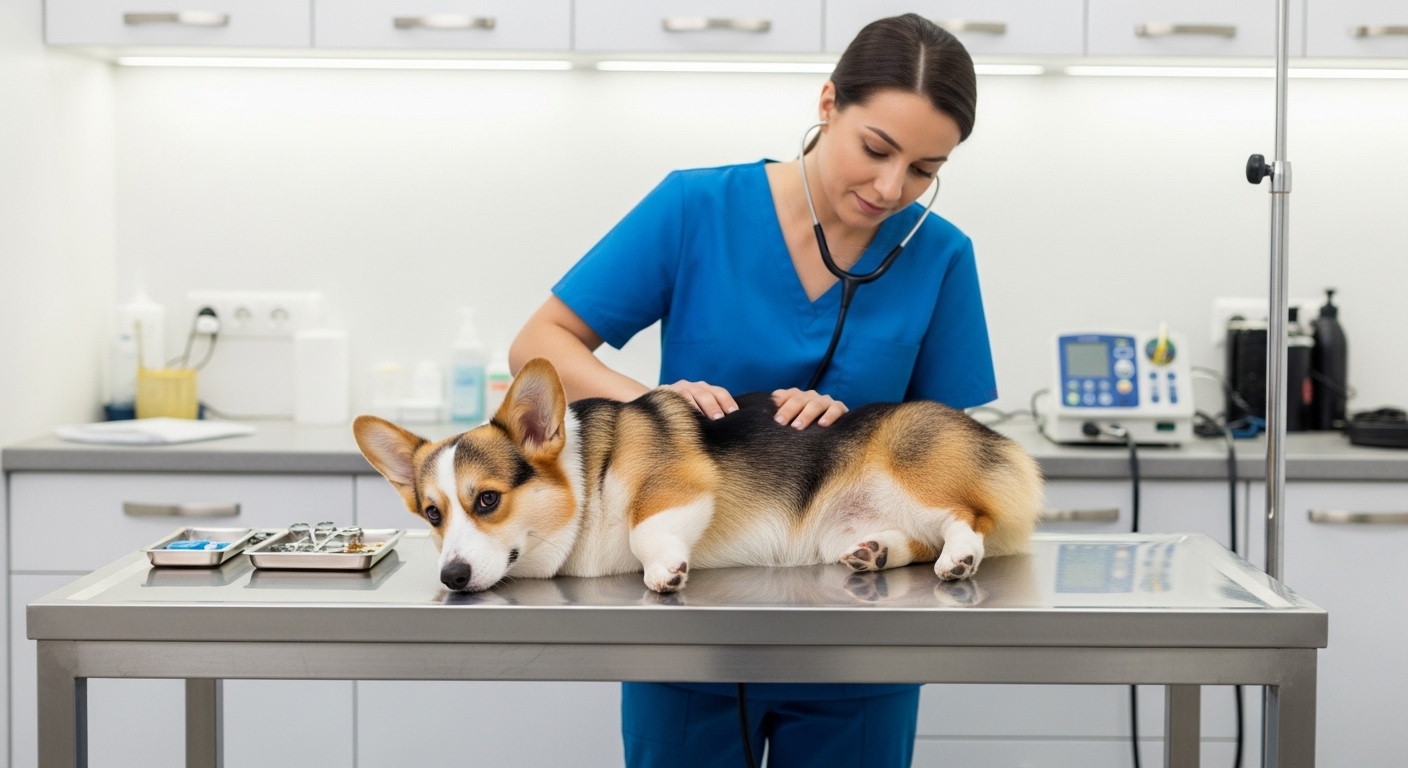
Weight management is genuinely important for this breed — not just a nice-to-have. A Corgi carrying extra pounds is a Corgi at higher risk for back and joint problems. Reputable breeders will screen for genetic conditions and provide health clearances, so asking for documentation is not being difficult; it is being responsible. Always consult your veterinarian for personalized health guidance and screening schedules.
Is This Breed Right for You?
The honest answer depends heavily on your lifestyle and your tolerance for a dog that has genuine opinions about how the day should go.
Corgis do well with active owners who can provide at least 45 to 60 minutes of real exercise daily — not just a slow walk around the block, but purposeful activity that engages their minds as well as their bodies. Puzzle feeders, agility work, and obedience training all help burn the mental energy that, left unspent, tends to come out as barking or destructive chewing.
Apartment living is possible, but it requires commitment. A Corgi in a small space without adequate daily exercise and mental stimulation will make its dissatisfaction known loudly and creatively. Several apartment-dwelling Corgi owners manage it well by building structured routines — morning walks, midday play sessions, evening training — but it takes real effort. The breed is not naturally suited to low-activity environments.
They tend to do well with children and other dogs when properly socialized, though the herding behavior around younger kids is worth monitoring. Cats are a mixed result — some Corgis coexist peacefully, others spend their lives convinced the cat needs to be relocated to a different corner of the room.
Training is rewarding but requires consistency. Corgis respond well to positive reinforcement and get bored quickly with repetitive drills. Keep sessions short, varied, and genuinely engaging, and you will find they pick up new skills faster than most breeds. Let training become a chore and they will let you know by doing something else entirely.
Real Owner Reality: The internet version of Corgi ownership is all floofs and funny videos. The daily version involves fur on every surface, a dog that will bark at a leaf blowing past the window at 6 a.m., and a creature that has somehow learned exactly which commands it can selectively ignore. Most Corgi owners would not trade it — but going in clear-eyed makes the adjustment much smoother.
Frequently Asked Questions
Are Corgis good for first-time dog owners?
They can be, but they are not the easiest starting point. Their intelligence works in your favor during training, but their stubbornness and vocal nature can be frustrating without experience. First-time owners who commit to consistent training, early socialization, and adequate daily exercise tend to do well. Those expecting a low-maintenance companion may find the reality surprising.
How much do Corgis shed, and can it be managed?
Quite a lot, consistently, with two heavier shedding periods per year. Regular brushing — several times a week, daily during heavy shed seasons — helps manage the volume significantly. It will not eliminate the fur from your life, but it keeps it from becoming completely overwhelming. Many owners find a slicker brush and an undercoat rake to be the most useful tools.
Do Corgis bark a lot?
Yes, in many cases. The breed was developed to be alert and communicative, and that trait is deeply ingrained. They may bark at strangers, other animals, unfamiliar sounds, or simply when they want attention. Training can help establish boundaries around barking, and early socialization reduces reactivity, but expecting a quiet Corgi is generally setting yourself up for disappointment.
Living with a Pembroke Welsh Corgi is rarely boring. They are dogs that show up fully — present, engaged, and ready to be involved in whatever you are doing, whether you invited them or not. The exercise commitment is real, the shedding is real, and the stubbornness will surface at some point. So will the loyalty, the humor, and the particular satisfaction of earning genuine respect from a dog that does not hand it out automatically. For the right owner, that trade-off lands squarely on the worthwhile side.

Comments
Post a Comment