Few dogs capture hearts quite like the Golden Retriever. With that signature flowing coat, perpetually wagging tail, and a smile that seems almost human, it is easy to understand why this breed has ranked among America's most beloved companions for decades. Whether you are a first-time dog owner weighing your options or a lifelong Golden enthusiast looking to deepen your knowledge, this complete breed profile covers everything you need to know — from ancient Scottish origins to daily grooming routines and the kind of family that will make a Golden truly thrive.

Origins & History
The Golden Retriever's story begins in the Scottish Highlands during the mid-19th century. Dudley Marjoribanks, later known as Lord Tweedmouth, set out to create the ideal gundog — one capable of retrieving waterfowl across the rugged, wet terrain of the Scottish estate. Between 1868 and 1890, he carefully crossed a yellow Flat-Coated Retriever with the now-extinct Tweed Water Spaniel, later adding Irish Setter and Bloodhound bloodlines to refine the breed's nose, stamina, and gentle mouth.
The result was a dog of remarkable versatility: soft-mouthed enough to carry game without damage, athletic enough to work all day in cold water, and gentle enough to be a trusted household companion. The breed was officially recognized by the Kennel Club in England in 1911 and by the American Kennel Club (AKC) in 1925. Over the following century, Goldens transitioned from elite hunting estates to suburban living rooms, guide-dog harnesses, search-and-rescue vests, and therapy-dog programs worldwide — a testament to their extraordinary adaptability.
The Golden Retriever was literally bred to be cooperative, eager to please, and gentle — qualities that make it one of the most trainable dogs on the planet.

Appearance & Size
The Golden Retriever is a sturdy, medium-to-large breed with a balanced, athletic build that hints at its working heritage. Here is a quick look at the typical physical characteristics:
- Height: Males typically stand 23–24 inches at the shoulder; females 21.5–22.5 inches.
- Weight: Males generally weigh 65–75 pounds; females 55–65 pounds.
- Coat: Dense, water-repellent double coat with a wavy or flat outer layer and a thick undercoat.
- Color: Ranges from pale cream to rich golden — all shades are accepted by major kennel clubs.
- Eyes: Medium-sized, dark brown, with a friendly and intelligent expression.
- Ears: Short, pendant ears that hang close to the cheeks.
- Tail: Thick at the base, carried level with or slightly above the back — almost always in motion.
It is worth noting that there are subtle differences between American, British (English Cream), and Canadian lines. British Goldens tend to be stockier with a broader skull and a lighter cream coat, while American lines are often leaner with a deeper golden hue. Canadian Goldens may have a thinner coat and a slightly taller frame. All three share the same warm, expressive character that defines the breed.

Temperament
Ask any Golden Retriever owner to describe their dog in one word and you will likely hear: joyful. These dogs approach life with an infectious enthusiasm that is difficult not to love. But beyond the exuberance lies a genuinely thoughtful, sensitive, and deeply social animal.
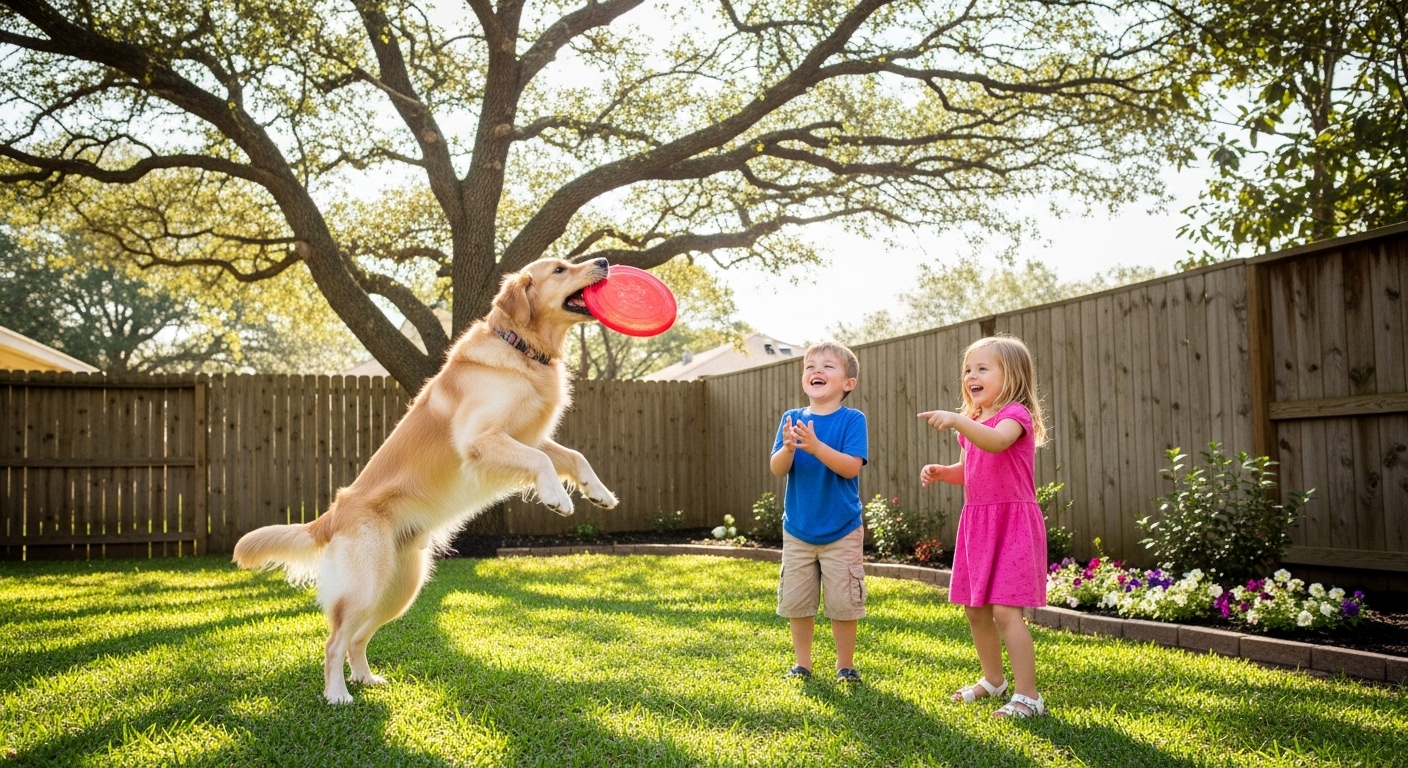
- Family-friendly: Goldens are famously patient and gentle with children of all ages, making them one of the top family dog choices worldwide.
- Sociable with strangers: Most Goldens greet new people with a wagging tail and a toy in their mouth — do not count on them as guard dogs.
- Good with other pets: Their cooperative nature means they typically get along well with other dogs and even cats, especially when socialized early.
- Highly trainable: Ranked among the top five most intelligent dog breeds, Goldens excel in obedience, agility, and service work.
- Emotionally sensitive: They pick up on human emotions quickly and may become anxious if the household is frequently tense or chaotic.
- Prone to separation anxiety: Goldens bond deeply with their people and can struggle when left alone for long periods.
One important note for prospective owners: the Golden Retriever puppy phase can last well into the second or even third year of life. Many owners describe their adolescent Golden as a 60-pound puppy — full of energy, easily distracted, and absolutely convinced that everything is a toy. Patience and consistent positive reinforcement training are your best friends during this stage.
Health & Lifespan
Golden Retrievers are generally robust, active dogs with a typical lifespan of 10–12 years. Like all purebred dogs, however, they are predisposed to certain health conditions that every owner should be aware of. Always consult your veterinarian for personalized health guidance, screening schedules, and any concerns about your individual dog.
- Hip and elbow dysplasia: A common orthopedic concern in larger breeds; responsible breeders screen parent dogs through OFA (Orthopedic Foundation for Animals) certification.
- Cancer: Studies suggest Golden Retrievers may have a higher rate of certain cancers compared to many other breeds; regular veterinary check-ups are especially important.
- Heart conditions: Subvalvular aortic stenosis (SAS) is a hereditary heart defect that reputable breeders screen for.
- Eye conditions: Progressive retinal atrophy (PRA) and cataracts may affect some individuals; annual eye exams are often recommended.
- Hypothyroidism: In some cases, Goldens may develop an underactive thyroid, which can affect weight and energy levels.
- Skin conditions: Their dense coat can make them prone to hot spots, allergies, and fungal infections, particularly in humid climates.
Choosing a puppy from a reputable breeder who conducts health testing on both parents — or adopting from a rescue that provides a veterinary history — can meaningfully reduce the risk of inherited conditions. Many vets suggest scheduling wellness exams at least once a year for adult Goldens and twice a year once they reach their senior years (around age 8).

Is This Breed Right for You?
The Golden Retriever is one of the most adaptable breeds in the world, but 'adaptable' does not mean 'low-maintenance.' Before bringing one home, honestly assess whether your lifestyle matches what this breed genuinely needs.
- Exercise: Goldens need at least 1–2 hours of vigorous exercise daily — think fetch, swimming, hiking, or off-leash play. A bored Golden is a destructive Golden.
- Mental stimulation: Puzzle feeders, obedience training, nose work, and interactive games are just as important as physical exercise for this intelligent breed.
- Grooming commitment: Expect to brush that beautiful coat at least 3–4 times per week (daily during heavy shedding seasons) and schedule professional grooming every 6–8 weeks.
- Time and companionship: This is not a breed that thrives in a home where everyone is away 10+ hours a day. They need human connection to be emotionally healthy.
- Space: While Goldens can adapt to apartment living with sufficient exercise, they are happiest with access to a securely fenced yard.
- Budget: Between quality food, routine vet care, grooming, and potential health costs, owning a Golden is a meaningful financial commitment.
The ideal Golden Retriever home is an active family or individual who has time to train, exercise, and simply hang out with their dog. They are exceptional companions for families with children, households with other pets, active retirees, and anyone who wants a dog that is deeply invested in being your best friend. If you can meet their needs for exercise, grooming, and companionship, few breeds will reward you as generously as a Golden Retriever.
Owning a Golden Retriever is less a hobby and more a lifestyle — one filled with muddy paws, golden fur on every piece of furniture, and a level of unconditional love that is genuinely hard to put into words. The Golden Retriever truly embodies everything a devoted canine companion can be, and for the right owner, life with one is simply golden.

Comments
Post a Comment