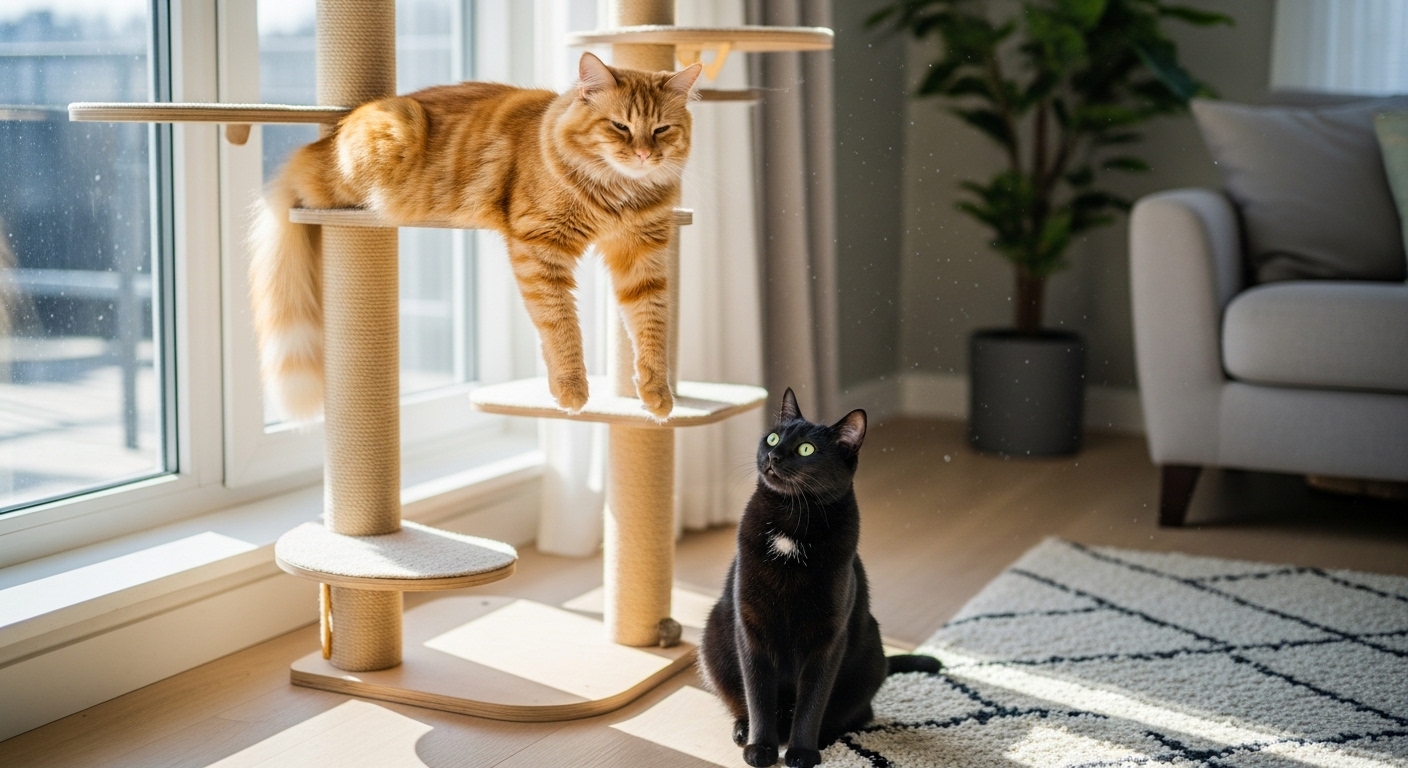
Bringing a new cat into your home is an incredibly exciting milestone, but it can also be a source of anxiety for both you and your resident feline. Cats are creatures of habit, and suddenly dropping a stranger into their territory can lead to stress, hissing, and behavioral issues. However, with a slow, safe, and deliberate introduction protocol, you can minimize territorial tension and set the stage for a lifelong friendship. Let's take a look at a peaceful scene of two cats comfortably sharing a sunny spot in the living room, which is the ultimate goal of this process!

Why It Happens: The Science of Feline Territory
To understand why introductions must be slow, we have to look at feline instincts. In the wild, cats are solitary hunters who rely heavily on scent to establish and defend their territory. When a new cat arrives, it completely disrupts the resident cat's carefully curated scent profile and daily routine. This perceived invasion triggers a natural fight-or-flight response, which is why you may see your normally sweet cat suddenly hissing or growling. You might initially see your resident cat sniffing cautiously under a closed door, trying to investigate the mysterious new scent.

Step-by-Step Training Method for Introductions
Patience is your best tool when blending a multi-cat family. By following a gradual, step-by-step method, you allow both cats to adjust at their own pace without feeling threatened.
- The Safe Room: Confine the new cat to a comfortable, separate room with their own litter box, food, water, and toys. This gives them time to decompress while the resident cat gets used to the idea of a newcomer in the house.
- Scent Swapping: After a few days, take a blanket or bed the new cat has slept on and place it in the resident cat's area, and vice versa. You can also gently rub a clean sock on one cat's cheeks and let the other smell it.
- Site Swapping: Once they are calm with each other's scents, allow the new cat to explore the main house while the resident cat spends time in the safe room. This lets them investigate territories without direct confrontation.
- Visual Introductions: When both cats seem relaxed, it is time for them to see each other. A great way to manage their first visual contact is by feeding both cats on opposite sides of a sturdy baby gate.

Common Mistakes to Avoid
Even with the best intentions, it is easy to make missteps that can set the relationship back. Here are a few common pitfalls you should avoid during the introduction phase:
- Rushing the process: Forcing cats together before they are ready is the most common mistake. Let the cats dictate the timeline; this process can take anywhere from a few weeks to a few months.
- Forcing physical interaction: Never pick up a cat and force it into the face of the other. This removes their ability to retreat and almost always results in a negative association.
- Punishing hissing or growling: Hissing is simply a cat's way of communicating boundaries. Punishing them for this will only increase their stress and fear.
If you rush things, it is important to avoid situations where a stressed cat feels cornered and ends up hiding under the furniture with wide, anxious eyes.

Expert Tips for a Smoother Transition
To give your cats the best chance at a harmonious relationship, you can employ a few expert strategies to reduce environmental stress. Synthetic feline pheromone diffusers can be incredibly helpful; plugging these into the rooms where the cats spend the most time may help signal to their brains that the environment is safe and calm. Additionally, always use high-value treats to create positive associations whenever the cats are near each other.
The golden rule of multi-cat households is the "N plus one" rule for litter boxes: you should always have one box for each cat, plus one extra, spread throughout the home.
Resource guarding is a major source of feline conflict. Providing plenty of vertical space, like a tall cat tree where one feline can perch safely above the other, can drastically reduce household tension.
When to See a Pro
While most cats will eventually learn to tolerate—or even love—one another, some introductions do not go as planned. If the cats are engaging in severe fights where blood is drawn, or if one cat is being relentlessly bullied to the point where they refuse to use the litter box, it is time to seek outside help. Furthermore, if either cat stops eating or shows physical signs of extreme distress, always consult your veterinarian to rule out underlying medical issues. In some cases, a certified feline behaviorist may be needed to help mediate the situation and provide a customized behavior modification plan.
Introducing a second cat to your home is a journey that requires empathy, observation, and a lot of patience. Remember that every cat is a unique individual, and there is no set timeline for success. By respecting their boundaries, providing plenty of resources, and keeping interactions positive, you are setting the foundation for a peaceful multi-cat household. Soon enough, you will hopefully be rewarded with the heartwarming sight of two fluffy feline best friends curled up together for a cozy afternoon nap.

Comments
Post a Comment