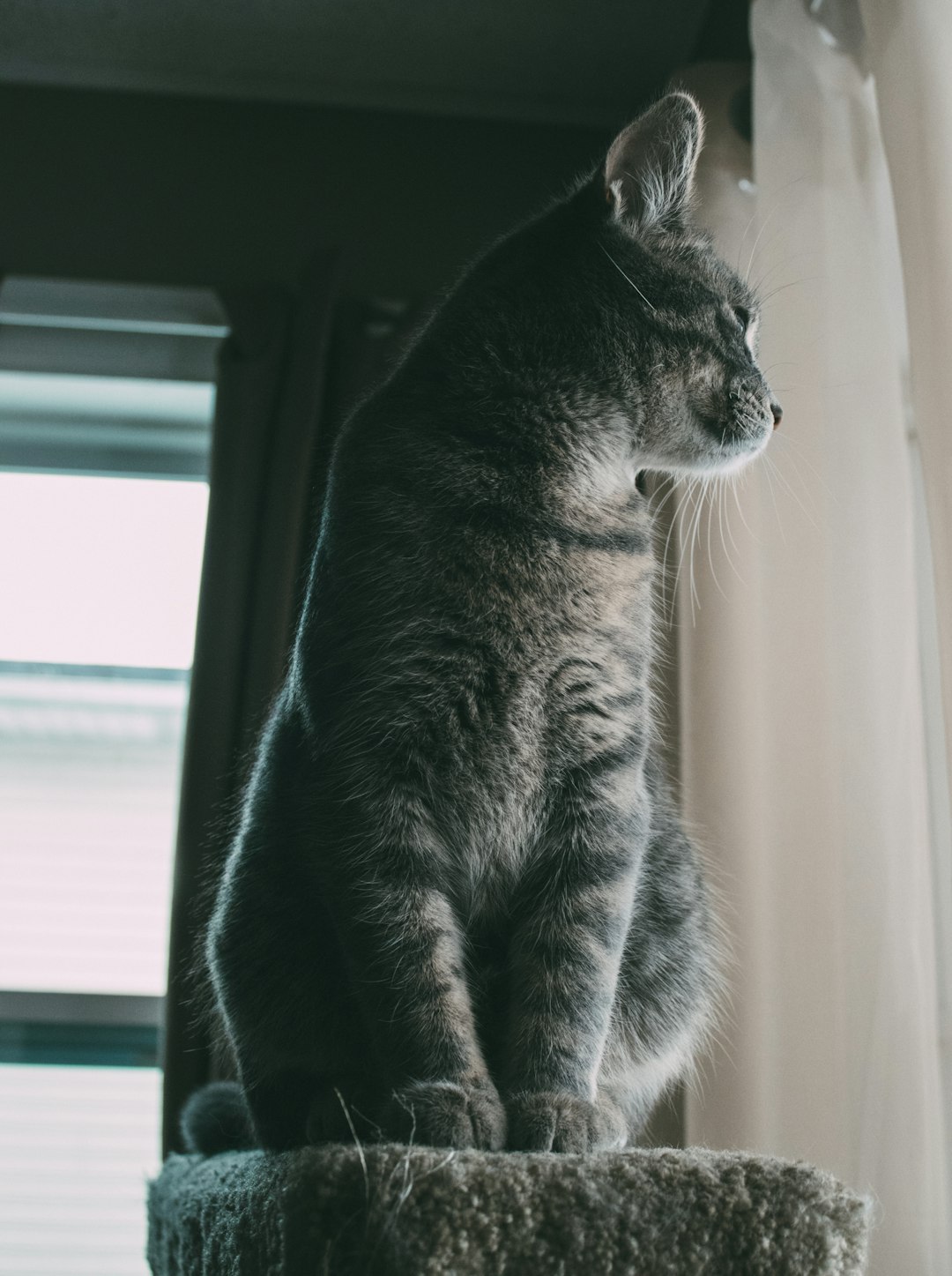
Bringing a new cat into your home is a joyous experience, but watching them sink their claws into your expensive living room sofa can quickly dampen the mood. If you are struggling with a feline friend who prefers furniture over their designated toys, you are not alone. Training a cat to use a scratching post is entirely possible with a little patience, the right texture, and some positive reinforcement. Let's take a look at a happy feline enjoying a tall, sturdy scratching post right in the middle of a cozy living room.
Why It Happens
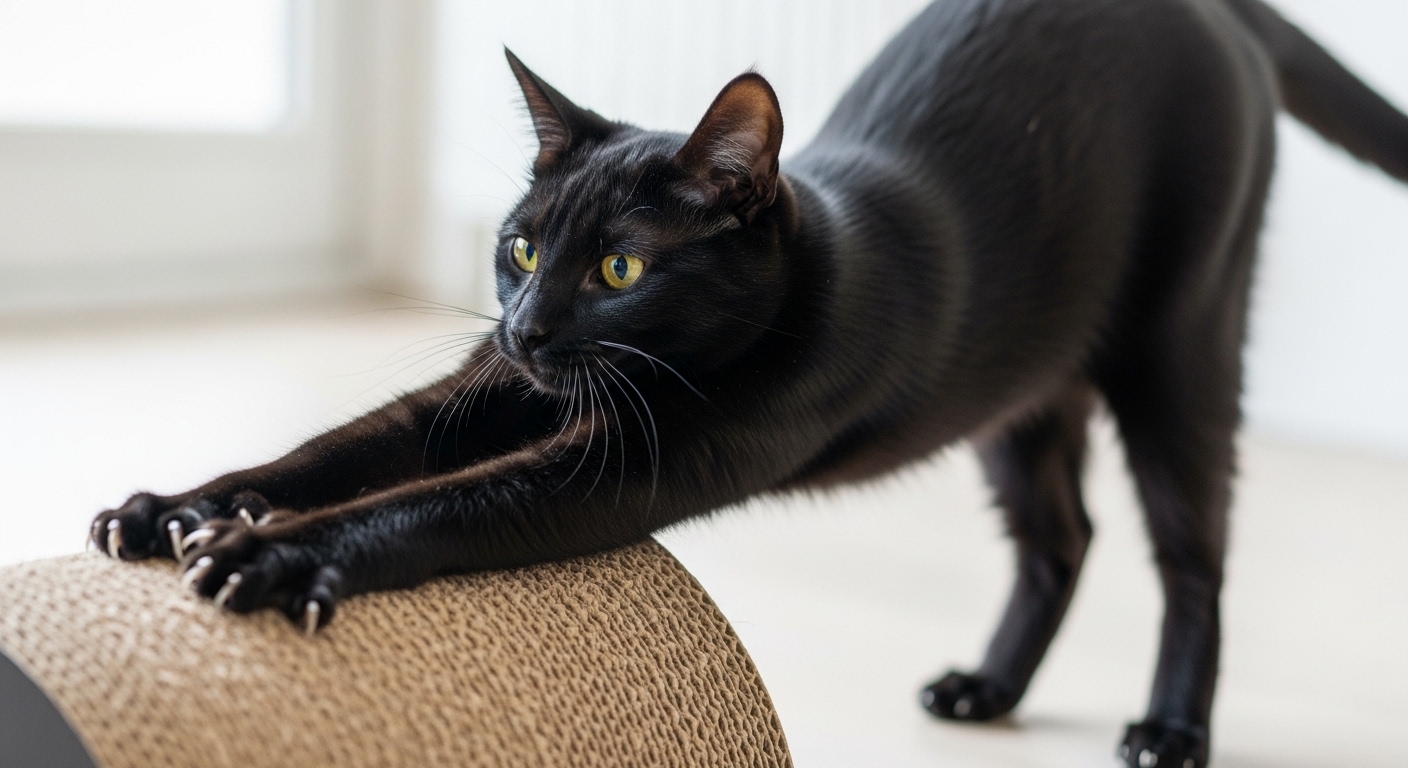
Before we can change the behavior, it is important to understand why cats scratch in the first place. Scratching is not a malicious act aimed at destroying your home; it is a deeply ingrained biological instinct. Cats scratch to shed the dead outer layers of their claws, mark their territory with scent glands located in their paws, and stretch their muscles. You will often see a cat stretching their entire body while digging their claws into a textured surface, just like the one pictured here.
Step-by-Step Training Method
Redirecting your cat's scratching habits requires a strategic approach. Follow these steps to encourage your cat to choose the post over your furniture:
- Choose the right texture and height: Most cats prefer rough materials like sisal rope or corrugated cardboard. Ensure the post is tall enough for them to fully stretch and sturdy enough not to wobble.
- Strategic placement: Place the scratching post right next to the piece of furniture they currently target, or in high-traffic areas where they like to mark their territory.
- Use positive reinforcement: Whenever your cat approaches or uses the post, immediately offer praise and a high-value reward.
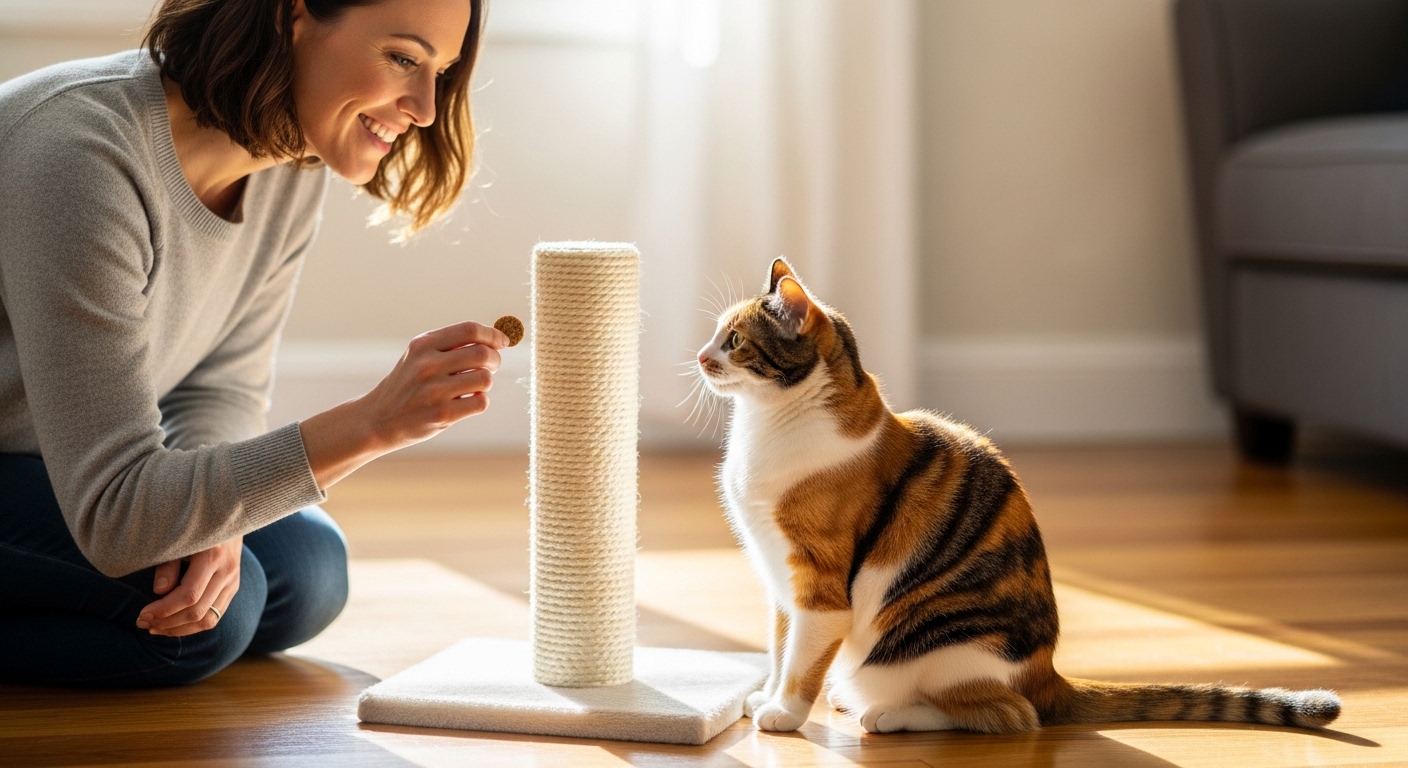
Here is a great example of a pet parent rewarding their kitty with a tasty treat right next to a brand-new sisal post.
Common Mistakes
Even with the best intentions, it is easy to make a few missteps during the training process. Avoid these common pitfalls to ensure success:
- Punishing the cat: Yelling or using spray bottles can damage your bond and increase anxiety, which may actually lead to more scratching.
- Buying a wobbly post: If the post tips over when your cat puts their weight on it, they will likely never use it again.
- Hiding the post out of sight: Cats scratch to leave a visual and olfactory mark in socially significant areas of the home.
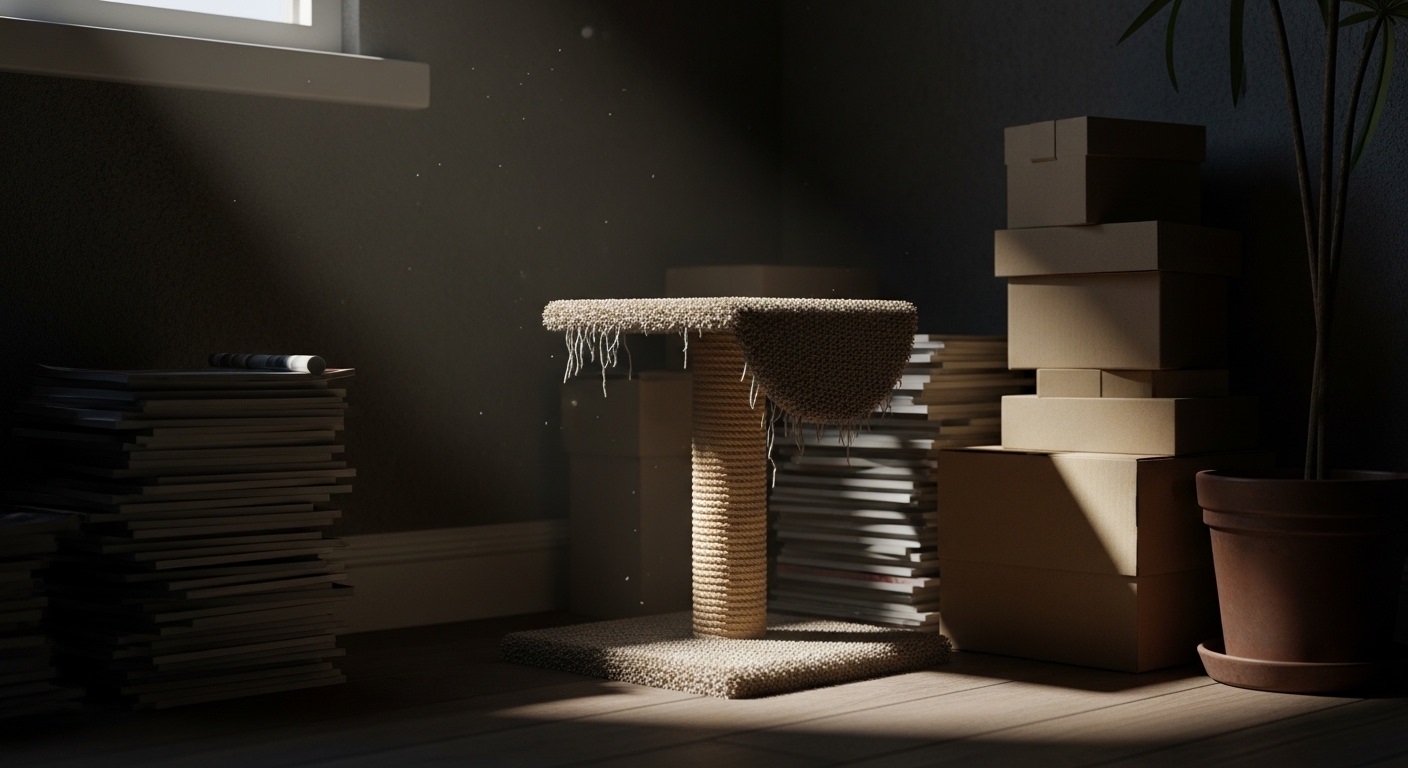
If you hide the post in a dark, unused corner of the room like this one, your cat will likely ignore it completely.
Expert Tips
To make the scratching post absolutely irresistible, you can employ a few expert tricks. Try dragging a wand toy around the base of the post to encourage your cat's hunting instincts to engage with the material. You can also use feline pheromone sprays on the furniture you want them to avoid, which signals to them that the area is already "claimed" and relaxing, rather than a place to scratch.
Consistency is key: every time you gently redirect your cat to the post and reward them, you are building a positive association that will last a lifetime.
Sprinkling a little dried catnip on the base of the post, as shown below, can instantly capture your feline friend's attention.

When to See a Pro
While scratching is a normal behavior, sudden changes in how or where your cat scratches can sometimes indicate an underlying issue. If your cat's scratching seems obsessive, or if they are excessively chewing at their nails and paws, it may be a sign of stress or a medical issue. In some cases, feline anxiety can manifest as destructive behavior. Always consult your veterinarian to rule out health concerns or to get a referral to a certified feline behaviorist.
Training your cat to use a scratching post takes a bit of time, but by understanding their needs and providing the right outlets, you can protect your home while keeping your kitty happy. Soon enough, your furry best friend will be happily scratching away at their designated tower, leaving your favorite couch completely untouched, just like the proud kitty pictured here.

Comments
Post a Comment