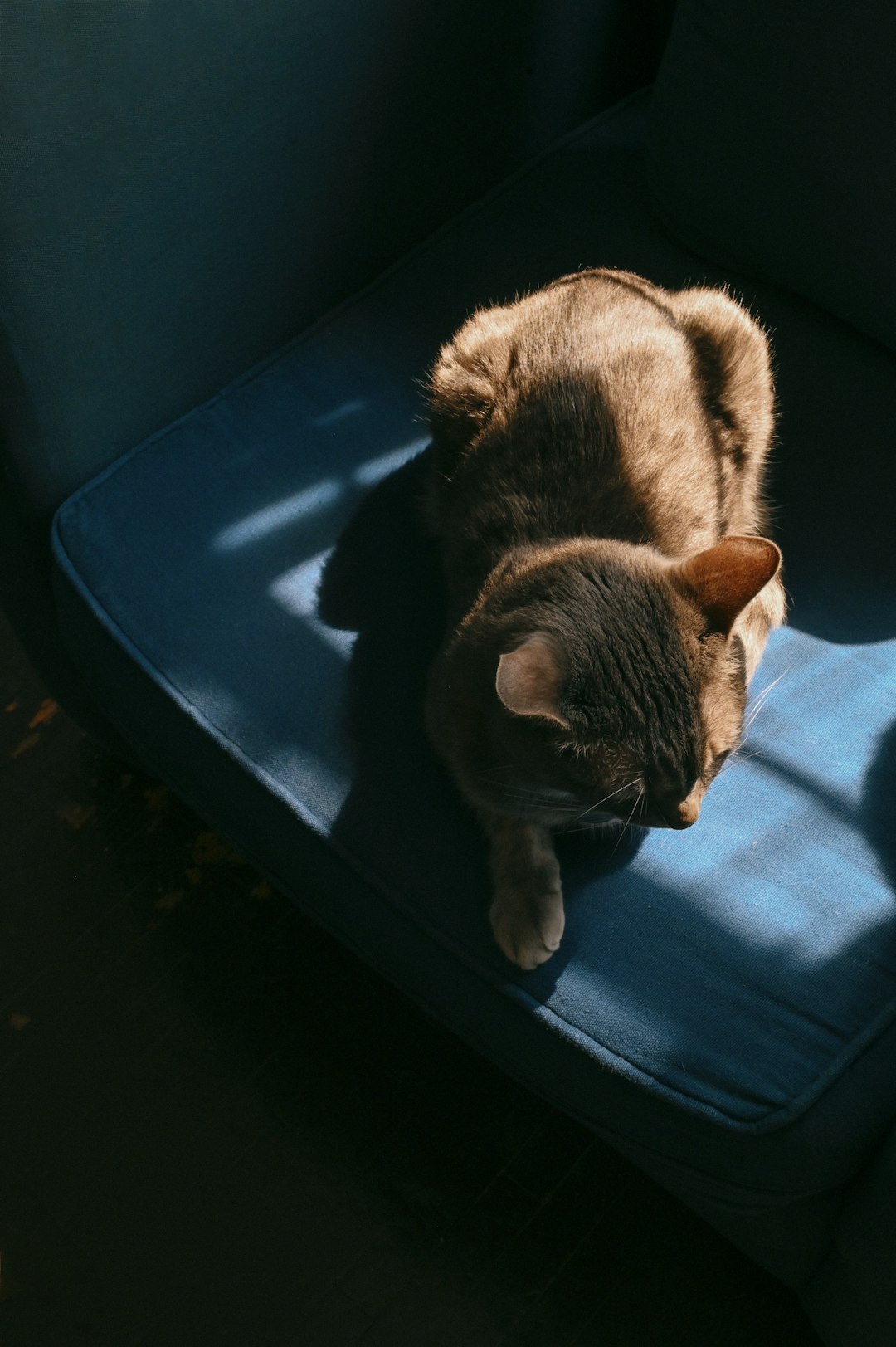
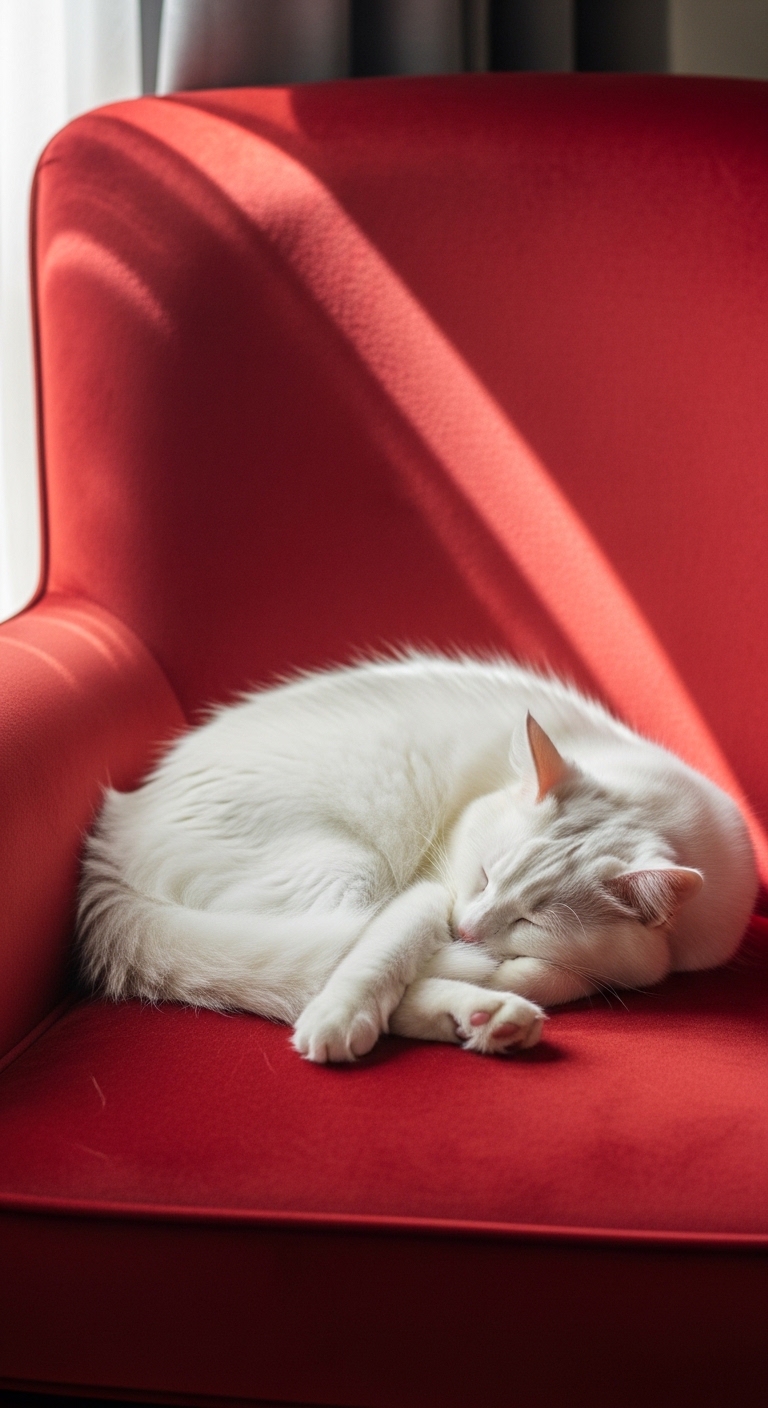
If you are a cat owner, you probably know the sinking feeling of discovering shredded fabric on the arm of your favorite sofa. It is a common struggle, but the good news is that you do not have to choose between having a beautiful home and a happy feline. By understanding your cat's natural instincts and providing the right alternatives, you can protect your upholstery for good. Let's look at a familiar scene: a beautiful living room where a mischievous feline is caught in the act of stretching out on a favorite armchair.
Why It Happens
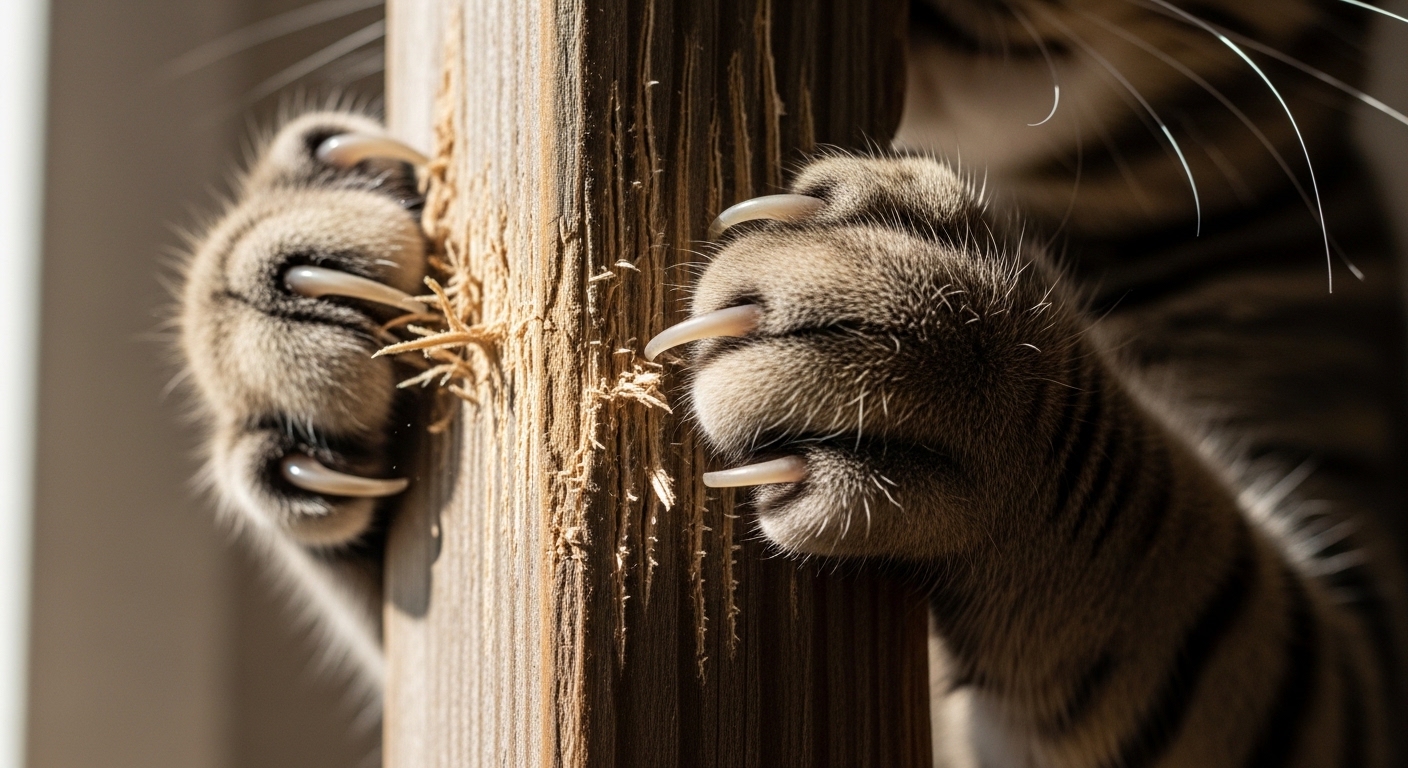
Before we can fix the problem, we have to understand why cats scratch in the first place. Scratching is not a malicious act aimed at ruining your decor; it is a deeply ingrained biological need. Cats scratch to remove the dead outer layers of their claws, stretch their bodies, and flex their feet and claws. Furthermore, scratching leaves both visual and olfactory markers, as cats have scent glands in their paws that help them claim their territory. You can often see this instinct in action when a cat reaches high up to drag their claws down a sturdy vertical surface.
Step-by-Step Training Method
Redirecting your cat's scratching behavior requires consistency and the right tools. Follow these steps to encourage better habits:
- Choose the right scratcher: Cats have different preferences. Some prefer vertical posts covered in sisal rope, while others like horizontal corrugated cardboard pads.
- Place it strategically: Put the scratching post right next to the piece of furniture your cat currently targets. Once they use the post regularly, you can slowly move it to a more preferred location.
- Use deterrent sprays: Pet-safe deterrent sprays containing citrus or herbal scents can make your furniture smell unappealing to your cat. Always test sprays on a hidden patch of fabric first.
- Consider nail caps: Soft plastic nail caps can be glued over your cat's claws. They are safe, temporary, and prevent damage while you work on behavioral training.
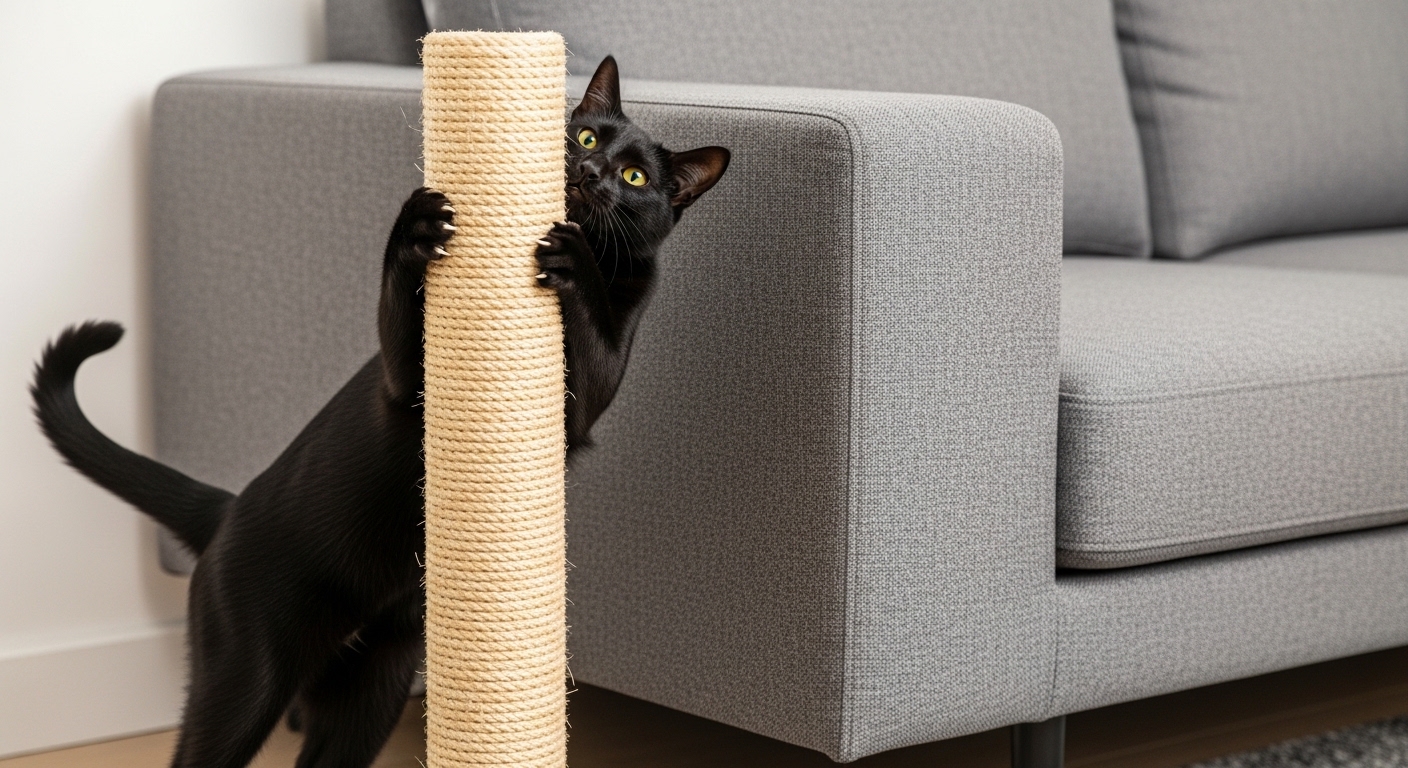
A perfectly placed, tall sisal scratching post right next to the sofa is often the best first step in redirecting this behavior.
Common Mistakes
When trying to modify a cat's behavior, certain missteps can actually make the problem worse. Here are the most frequent errors pet owners make:
- Hiding the scratching post: Tucking the post away in a spare bedroom defeats the purpose. Cats want to mark territory in socially significant areas, like the living room.
- Buying wobbly posts: If a post tips over when your cat leans into it, they will likely never use it again. Stability is crucial.
- Punishing the cat: Yelling or using squirt bottles usually only teaches your cat to fear you and to scratch the furniture when you are not around.
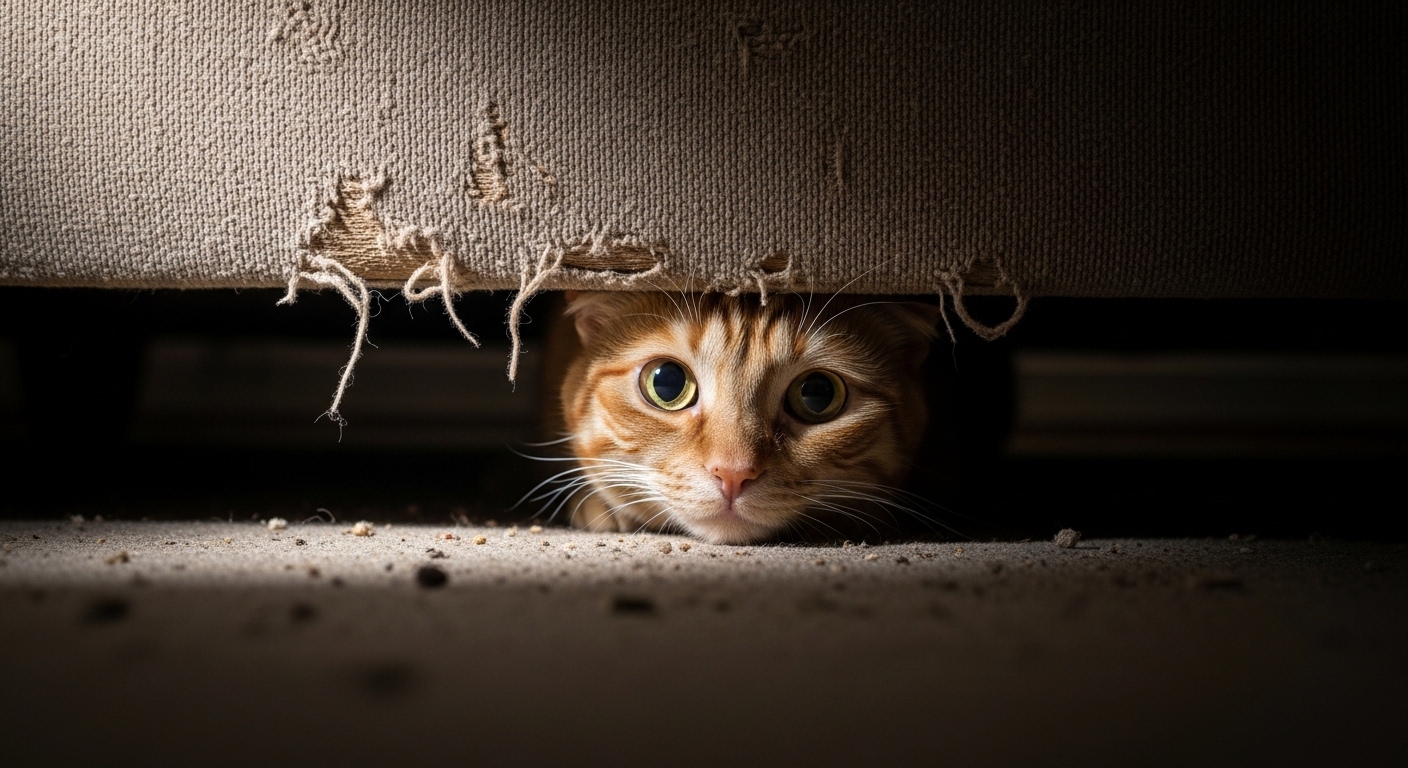
It is easy to get frustrated, but remember that a stressed cat hiding under a scratched couch is much harder to train.
Expert Tips
To make the transition smoother, you can use positive reinforcement to make the new scratching areas irresistible. Reward your cat with treats and praise every time they use the designated post.
The secret to saving your furniture is making the scratching post more appealing than the couch. Location, texture, and stability are everything.
Sprinkling a generous amount of dried catnip on a cardboard scratcher can instantly make it more appealing than your upholstery.

When to See a Pro
In most cases, scratching is a normal behavior that just needs redirection. However, if the scratching seems obsessive, or if it is accompanied by other destructive behaviors, sudden changes in litter box habits, or over-grooming, it may be a sign of underlying stress or medical issues. Many vets suggest that sudden behavioral shifts warrant a professional evaluation. Always consult your veterinarian to rule out anxiety or health concerns before assuming it is just a training issue.
Training your cat to leave your furniture alone takes time, but the payoff is a peaceful home where both you and your pet can relax. With a little patience and the right tools, your furry friend will happily choose their own toys, leaving your beautiful furniture completely claw-free.
Comments
Post a Comment