Bringing a new puppy home is an incredibly exciting experience, but it often comes with a sharp, pointy surprise: puppy biting. Those needle-like teeth can turn a fun play session into a painful ordeal in seconds. If you are dealing with a mouthy pup, know that you are not alone and this is a standard developmental phase. You might be wondering how your sweet little furball turned into a tiny land shark, but rest assured, a puppy playfully chewing on a toy in a cozy living room is a completely normal sight.
Why It Happens
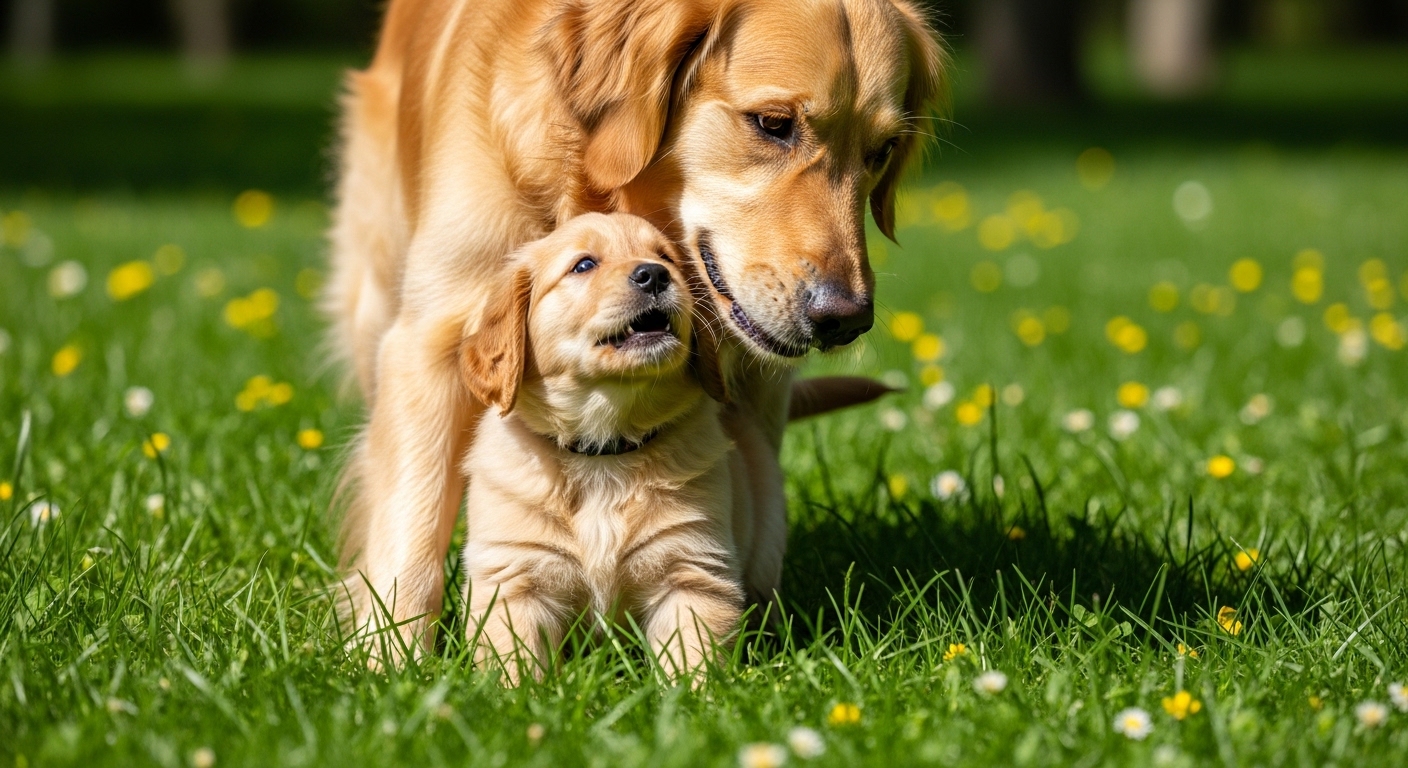
Puppies explore the world with their mouths. Just like human babies grab things with their hands, puppies use their teeth to investigate textures, tastes, and objects. This behavior is also deeply tied to teething, which may cause discomfort that chewing helps relieve. Furthermore, interacting with littermates teaches them "bite inhibition"—the ability to control the force of their mouthing. It is fascinating to watch a mother dog gently correcting her young pup when playtime gets a little too rough in the grass.
Step-by-Step Training Method
Teaching your puppy that human skin is sensitive requires patience and a clear, consistent approach. Follow these steps to help redirect their mouthing habits naturally:
- The Yelp and Freeze: When your puppy bites too hard, let out a high-pitched "Ouch!" and let your hand go limp to signal that play has stopped.
- Redirect to a Chew Toy: After pausing, offer an appropriate item for them to bite instead of your skin.
- Implement Time-Outs: If the puppy continues to bite, calmly walk away and ignore them for 30 to 60 seconds to show that biting ends the fun.
- Reward Good Behavior: Praise and treat your puppy when they choose to chew on their toys or lick you gently.
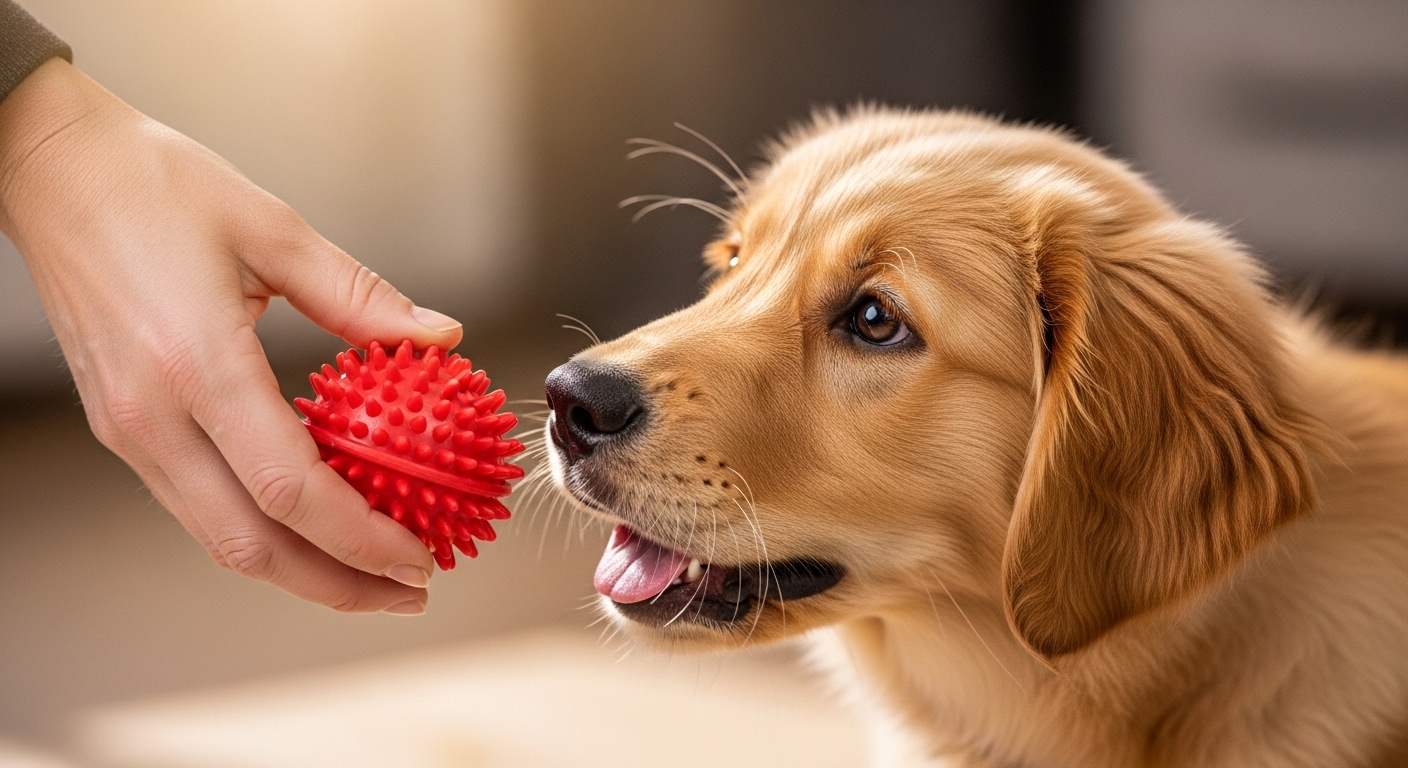
The best way to redirect those sharp little teeth is by offering a brightly colored, textured chew toy right when they get mouthy.
Common Mistakes
When trying to stop puppy biting, it is easy to accidentally reinforce the behavior. Avoid these common pitfalls to ensure your training is effective:
- Using Physical Punishment: Tapping a puppy's nose or holding their mouth shut can create fear or escalate the biting into true aggression.
- Inconsistency Among Family Members: If one person allows nibbling but another does not, the puppy will become confused.
- Wrestling with Bare Hands: Always use a toy for roughhousing rather than your fingers or toes.
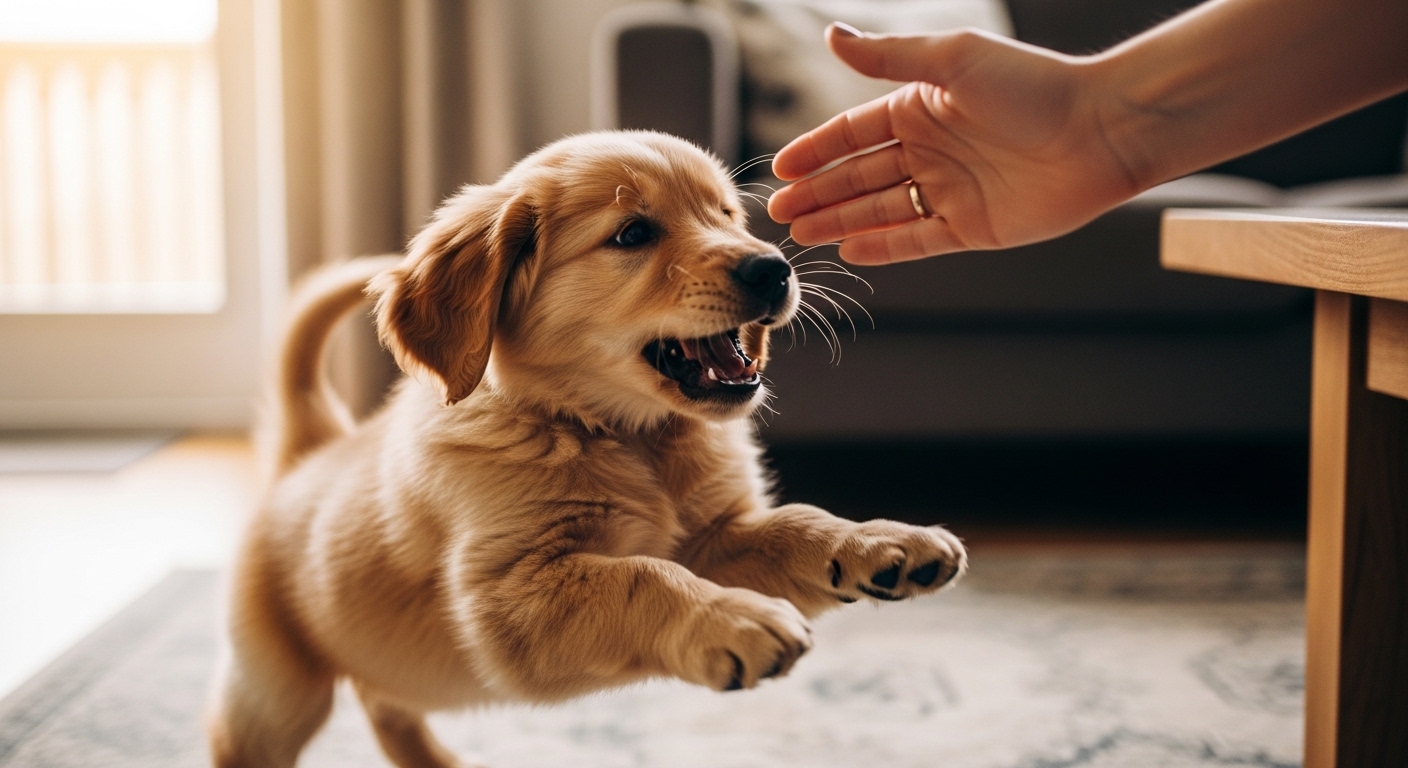
Pulling your hand away too fast can accidentally trigger their prey drive, making the puppy lunge playfully toward your moving fingers.
Expert Tips
Beyond immediate redirection, managing your puppy's environment and daily routine plays a massive role in their behavior. Overtired puppies are notorious for throwing "temper tantrums" that involve excessive biting. Enforcing regular nap times in a crate or quiet pen can drastically reduce mouthiness.
A well-rested puppy is a well-behaved puppy; always ensure your growing dog gets 18 to 20 hours of sleep a day to prevent overstimulation and excessive biting.
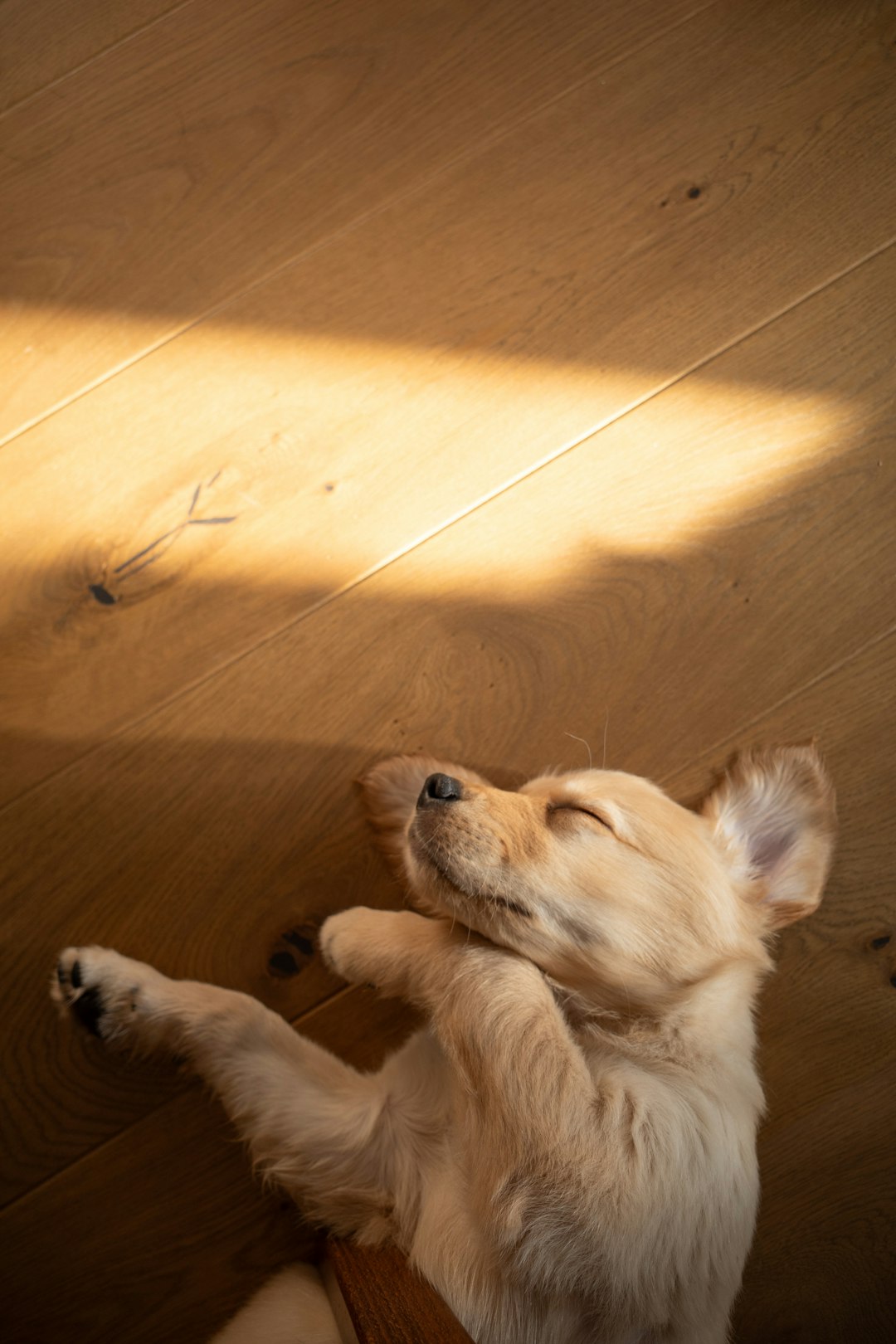
Ensuring your little one gets plenty of rest is crucial, as an overtired puppy sleeping soundly in a plush bed is much less likely to be nippy later.

When to See a Pro
While most mouthing is harmless play, there are times when biting may indicate an underlying issue. If your puppy's biting seems aggressive, is accompanied by stiff body language, or if they guard their toys and food fiercely, it is time to seek professional help. In some cases, excessive chewing might be linked to severe dental discomfort. Always consult your veterinarian to rule out any medical issues or to get a referral to a certified animal behaviorist.
Remember that bite inhibition takes time to learn, and setbacks are a normal part of puppyhood. Celebrate the small victories, keep those chew toys handy, and maintain a calm demeanor. With patience and consistency, your nippy little friend will soon grow into a gentle, well-behaved adult dog sitting proudly by your side.

Comments
Post a Comment