You set your coffee mug on the counter, turn around for ten seconds, and hear that familiar ceramic-on-tile crash. Your cat sits nearby, looking not guilty but almost professionally detached, as if the mug simply fell on its own. If you share your home with a cat, this scene needs no further explanation. The knocking-things-off behavior is so universally recognized that it has become internet shorthand for feline chaos — but there is actually a lot of interesting psychology behind why cats do it, and more importantly, what you can do about it before your favorite houseplants become casualties.
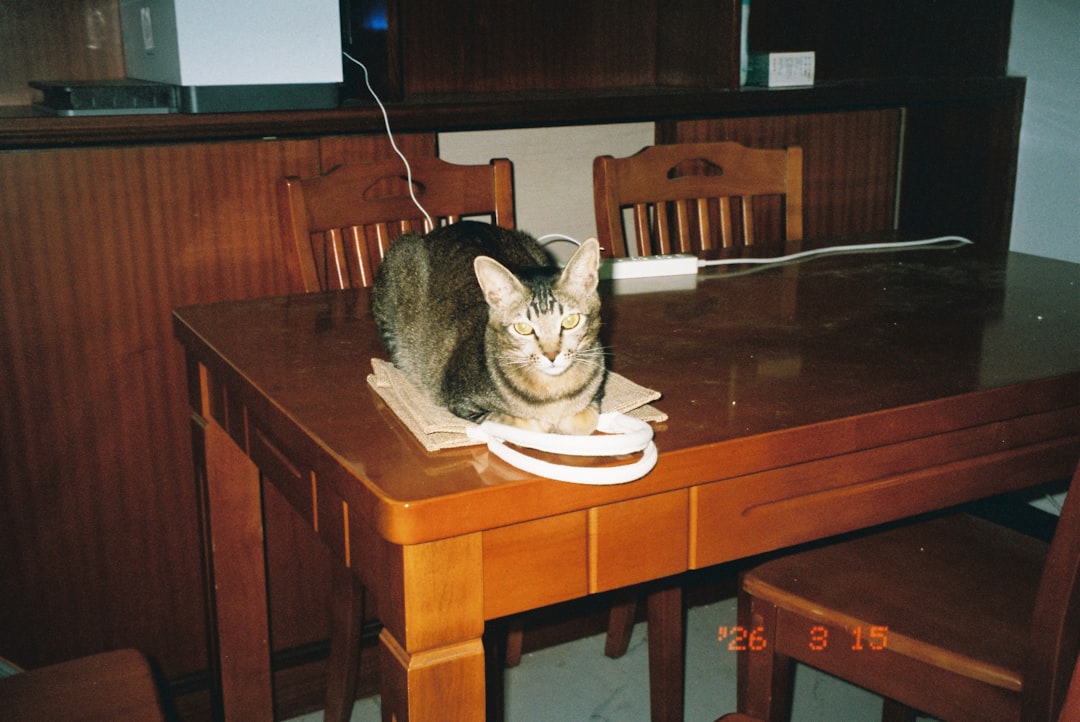
Why It Happens: Instinct, Curiosity, and a Little Bit of You
Cats are hardwired predators. Even the most pampered indoor cat carries the neural programming of an animal that hunts small, fast-moving prey — and that programming does not switch off just because dinner comes from a can. When a cat bats at an object and watches it wobble, roll, or fall, they are essentially running a prey-testing sequence. Wild cats will paw at potential prey before committing to a bite, checking whether it moves, reacts, or fights back. Your pen, your phone, your glass of water — they all qualify as interesting targets.
Beyond pure predatory instinct, there is a sensory curiosity component that often gets underestimated. Cats gather information through their paws. The pads and claws are packed with nerve endings, and touching, tapping, and pushing objects is a legitimate way for a cat to understand its environment. Think of it less as vandalism and more as tactile investigation — though that framing is admittedly harder to maintain when it is your third broken glass this month.
Attention-seeking also plays a real role, and this is the part that can feel a little manipulative — because it is. Cats learn quickly. If knocking something off a shelf reliably produces a loud noise, a startled human, and immediate eye contact, that is a rewarding outcome. Many cats have essentially trained their owners to respond on cue, which means the behavior gets reinforced every time you rush over and say their name.
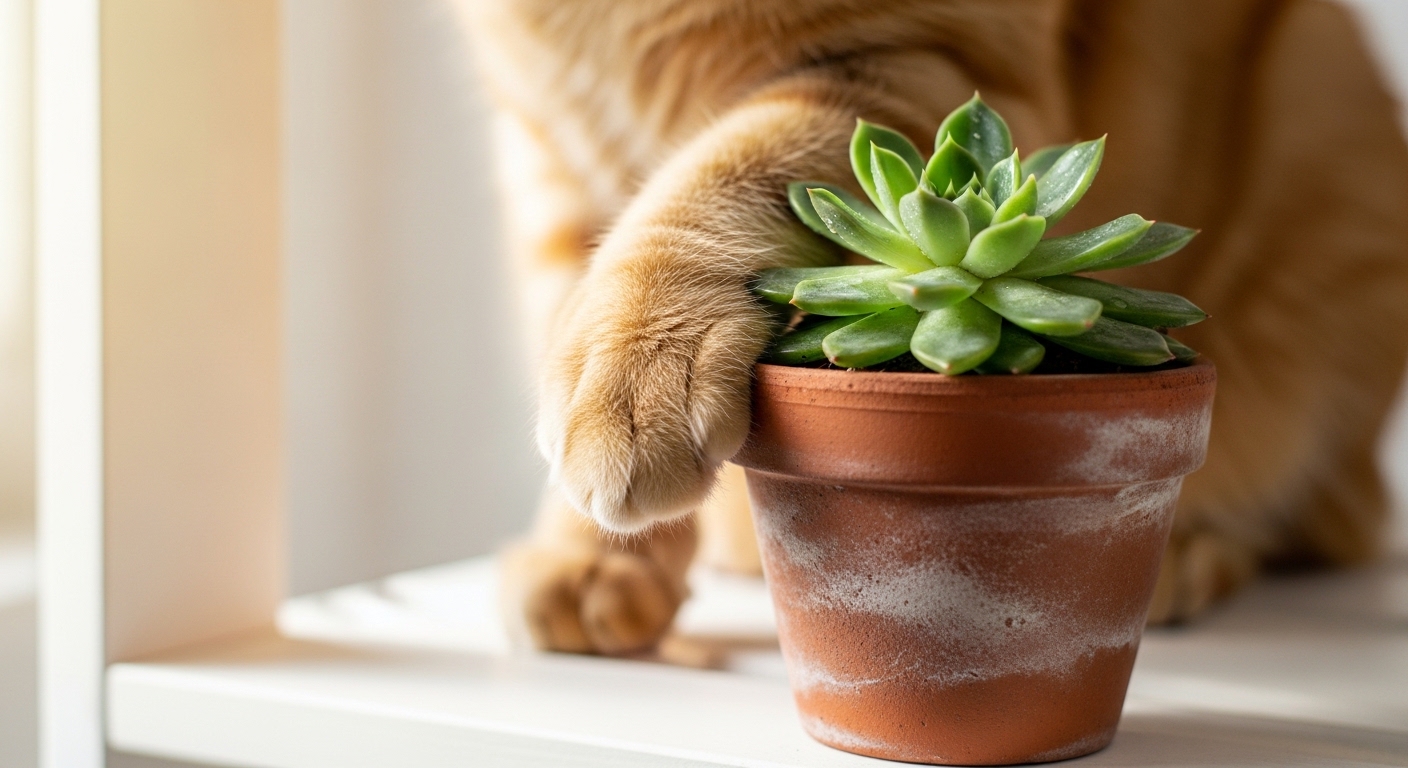
Step-by-Step: Redirecting the Behavior
Redirection works better than punishment here. Cats do not respond well to scolding after the fact — by the time you have picked up the broken object and turned around, the moment is already gone from their perspective. What you can do is build an environment that satisfies the underlying urge while protecting your belongings.
Start with enrichment before you start with rules. A cat that knocks things over out of boredom or understimulation needs more outlets, not more restrictions. Introduce interactive toys, puzzle feeders, or a window perch with a bird feeder outside. Many owners find that adding just fifteen minutes of active play in the evening dramatically reduces destructive behavior overnight — it is one of those fixes that feels almost too simple until you actually try it.
- Schedule two dedicated play sessions daily — morning and evening work well — using wand toys or laser pointers to burn off predatory energy in a controlled way.
- Introduce puzzle feeders or food-dispensing toys so your cat has to work for part of their daily calories, engaging their problem-solving instincts productively.
- Designate a "cat shelf" or cat tree with objects they are allowed to interact with freely — small crinkle balls, lightweight toys — so they have a sanctioned zone for batting behavior.
- Clear high-value surfaces of fragile or dangerous items. This is not giving up; it is just practical management while you work on the underlying behavior.
- When you catch them in the act, calmly redirect with a toy rather than reacting loudly. Loud reactions are often exactly what attention-seeking cats are after.
Consistency matters more than intensity here. A few weeks of deliberate redirection tends to shift the pattern noticeably, though some cats will always be more persistent than others.

Common Mistakes Owners Make
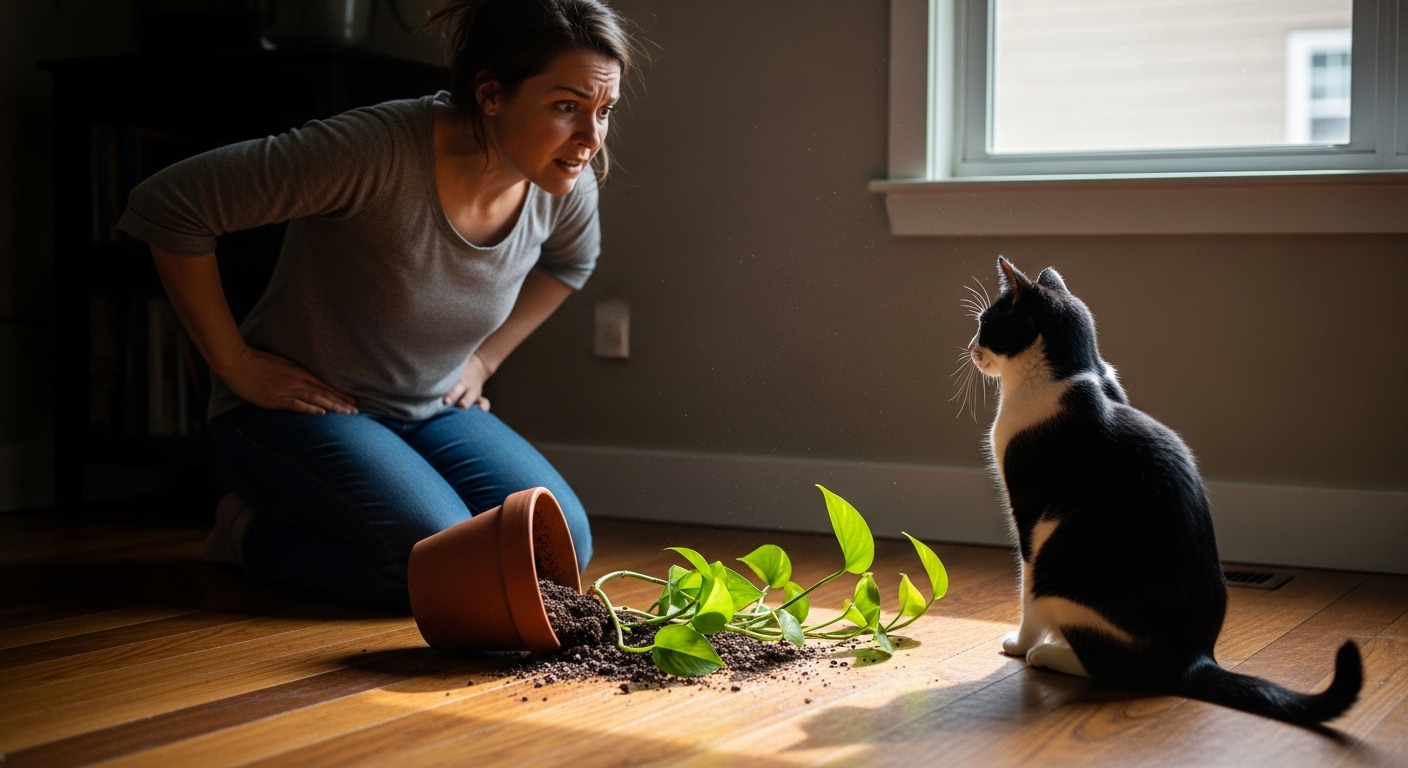
The biggest mistake is also the most understandable one: reacting. Every time you gasp, run over, or even just make eye contact after your cat sends something flying, you are potentially rewarding the behavior. Cats that are doing this for attention have figured out the formula, and your reaction is the payoff. Try the genuinely difficult approach of completely ignoring the behavior when it is safe to do so — no eye contact, no verbal response, no movement toward them.
Another common error is assuming the cat is being spiteful or vengeful. Cats do not operate on spite. Attributing human emotional motivations to the behavior tends to lead owners toward punishment-based responses that do not address the actual cause and can damage the trust between cat and owner. The behavior has a reason rooted in instinct or learned association — work with that, not against a fictional narrative.
- Punishing after the fact, when the cat has already moved on mentally from the incident.
- Using spray bottles or loud noises, which may create anxiety without teaching an alternative behavior.
- Removing all stimulation in hopes of preventing the behavior — this usually makes boredom-driven knocking worse.
- Expecting the behavior to stop entirely without providing a suitable substitute outlet.
The goal is not a cat that never touches anything — it is a cat whose energy has somewhere better to go.
Expert Tips That Actually Help
Veterinary behaviorists and experienced cat trainers tend to emphasize one thing above most others: environmental enrichment is not optional for indoor cats, it is a basic welfare need. A cat living in a flat with no climbing structures, no hunting simulation, and no mental challenge is going to find its own entertainment — and your bookshelf will volunteer.
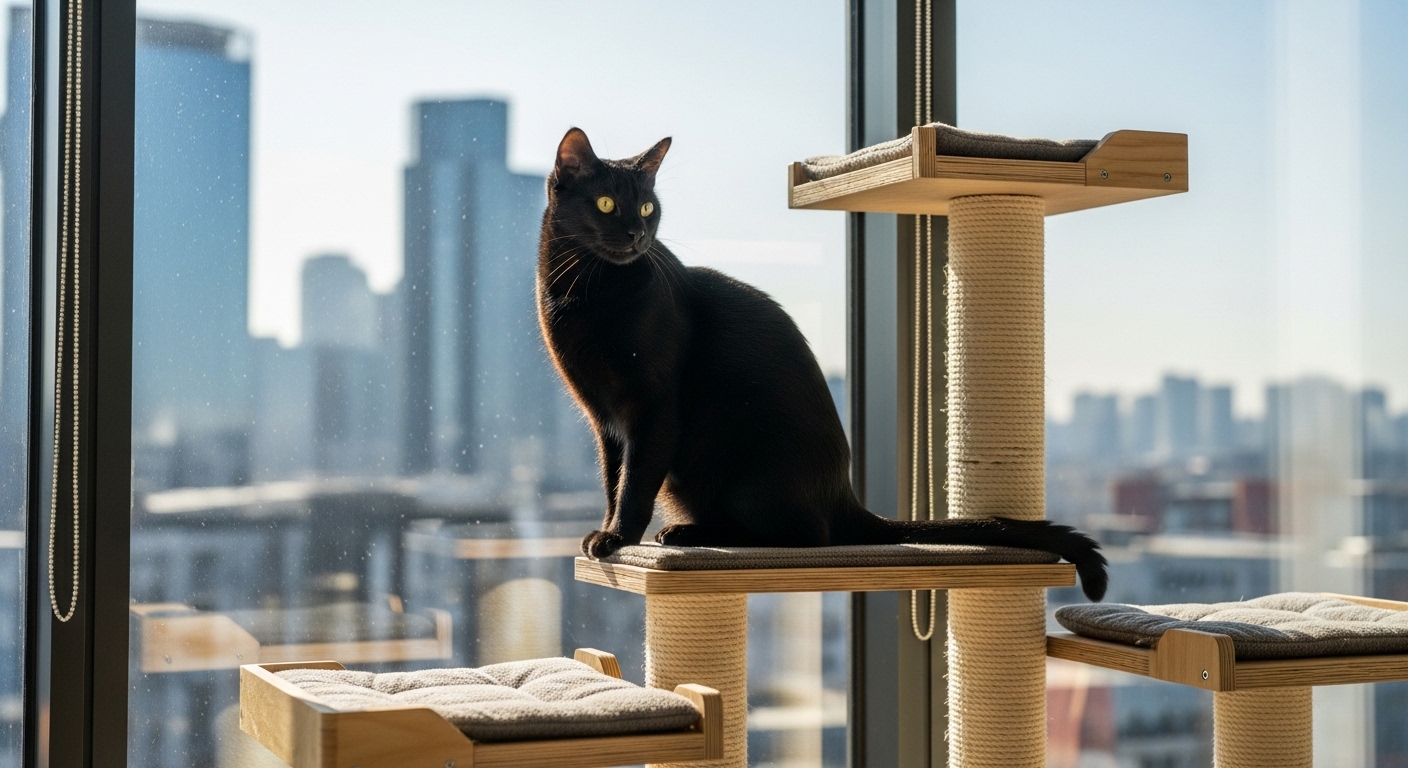
Vertical space helps enormously. Cats feel more secure and more stimulated when they can survey their territory from height, and a well-placed cat tree or set of wall-mounted shelves can redirect a lot of the energy that was previously going into counter-surfing. If you have ever watched a cat spend forty minutes just sitting on top of a refrigerator doing apparently nothing, you already understand how much they value elevation.
Some trainers also recommend clicker training for this specific behavior — teaching a "leave it" cue that the cat associates with a treat reward. It takes patience and short, frequent sessions, but cats are more trainable than their reputation suggests. The challenge is that training requires you to be present and consistent, which is harder than it sounds across a busy week.
For cats that seem to knock things over specifically around feeding time, adjusting the feeding schedule or switching to an automatic feeder can remove the attention-seeking trigger entirely. Hunger-driven behavior has a straightforward fix once you identify it.
When to See a Pro
Most table-clearing behavior is normal and manageable at home. But if the knocking is accompanied by other signs — excessive vocalization, restlessness, changes in appetite, or compulsive repetitive movements — it may be worth a conversation with your veterinarian. In some cases, increased destructive or repetitive behavior can signal anxiety, hyperthyroidism, or other medical conditions that deserve professional attention. Do not assume it is always behavioral.
If you have tried enrichment, consistent redirection, and schedule adjustments for several weeks without improvement, a certified cat behaviorist can observe the specific patterns in your home and give targeted advice. Generic tips only go so far when a cat has developed a deeply ingrained habit or has specific anxiety triggers that need individualized work.
Frequently Asked Questions
Is my cat doing this on purpose to annoy me?
Not in the way the question implies. Cats do not plan ahead to frustrate their owners. What they do is learn which behaviors produce interesting outcomes — including your reaction. If the behavior gets a response from you, it becomes worth repeating. That is learned association, not spite.
Should I just put everything away and accept it?
Clearing fragile or dangerous items from accessible surfaces is sensible practical management, but it should run alongside enrichment and redirection efforts, not replace them. If the underlying need for stimulation is not addressed, the behavior will simply migrate to whatever is left out.
My cat only does this at night — why?
Cats are naturally crepuscular, meaning they are most active around dawn and dusk, and many domestic cats shift toward nocturnal activity patterns. A dedicated play session in the late evening can help discharge that energy before you go to bed. Some owners find this makes a noticeable difference within a few days.
The knocking behavior is one of those things that is genuinely funny until it is your grandmother's vase on the floor. The good news is that it is almost always addressable with some environmental changes and a bit of consistency — no dramatic interventions required. Your cat is not broken, just under-stimulated and possibly very good at reading your reactions. Work on both of those things, and the counter will get a lot quieter.

Comments
Post a Comment