You settle into the couch, maybe with a cup of coffee, and within thirty seconds your dog has planted themselves squarely on top of your feet. It happens so reliably that some owners start planning their movements around it. Foot-sitting is one of those behaviors that looks simple on the surface — cute, even — but there are actually a few distinct reasons dogs do it, and understanding which one applies to your dog can make a real difference in how you respond to it.
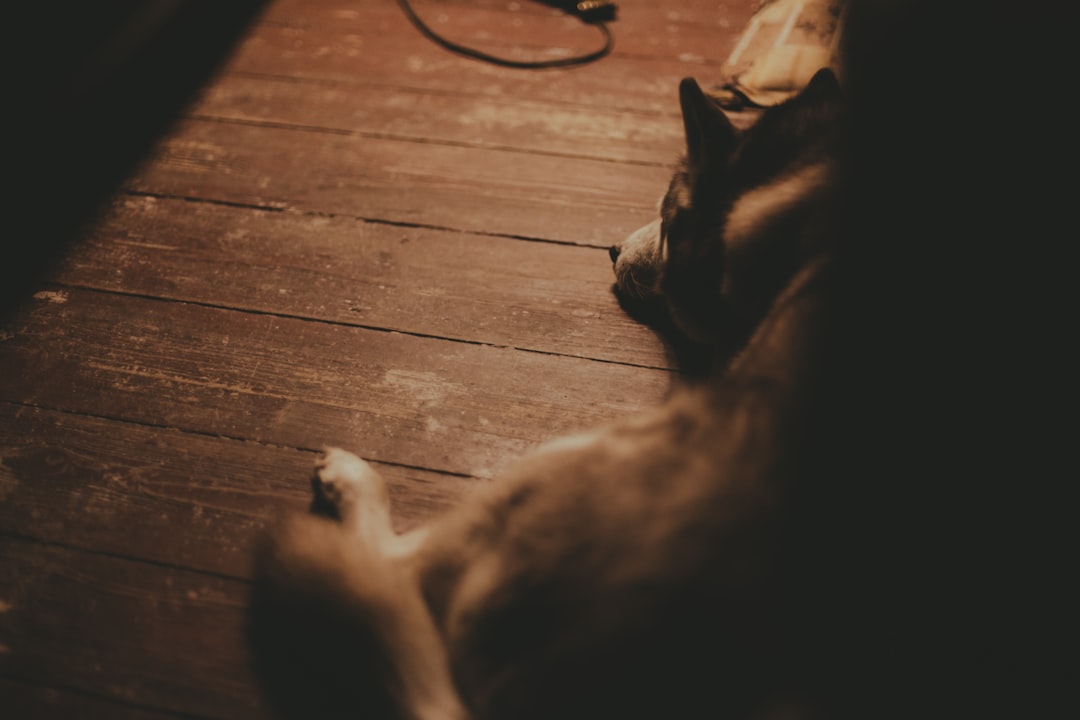
Why It Happens: The Science and Instinct Behind It
Dogs are pack animals, and physical proximity to their people is deeply wired into them. Sitting on your feet is not random — it is a deliberate choice that taps into several overlapping instincts at once.
The most straightforward explanation is attachment. Your feet carry your scent more strongly than almost any other part of your body, and for a dog, being surrounded by that scent is genuinely calming. Studies on canine stress behavior suggest that close physical contact with a trusted human may help regulate a dog's anxiety levels, much the way a weighted blanket works for some people.
Warmth is another real factor, especially for smaller breeds or dogs with short coats. Your feet and ankles generate steady body heat, and a dog who has figured this out will use you as a personal heating pad without a second thought. If your dog tends to do this more in winter or on cold tile floors, warmth is probably a significant part of the equation.
Then there is mild resource guarding — and this one surprises a lot of owners. Some dogs sit on their owner's feet not just to be close, but to signal to other pets or people in the household that this human is theirs. It is a low-level possessive behavior, not aggressive, but worth paying attention to if your dog also stiffens, stares, or grumbles when another pet approaches while they are in foot-sitting mode.

Step-by-Step Training Method
If the behavior is mild and your dog is relaxed when doing it, you may not need to change anything at all. But if the foot-sitting has become clingy, makes it hard to move around your home, or comes with any guarding signals, it is worth gently reshaping the habit.
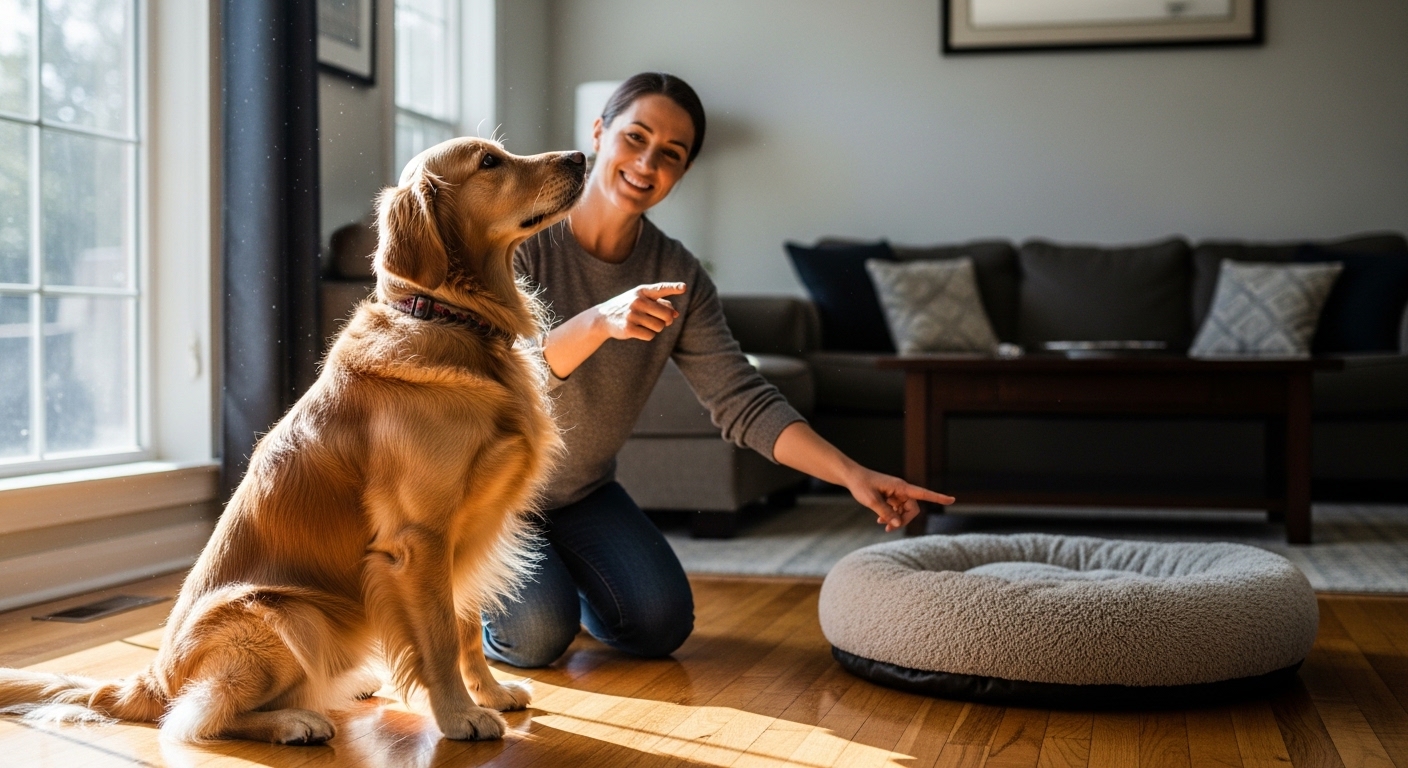
- Establish a designated spot nearby. Place a dog bed or mat within a few feet of where you usually sit. The goal is to give your dog a sanctioned close spot that is not literally on top of you.
- Reward the mat, consistently. Every time your dog chooses the mat on their own, mark it with a calm 'yes' and a small treat. Do not make a huge fuss — you want the mat to feel like a natural, rewarding choice, not a performance.
- Redirect, do not punish. When your dog moves toward your feet, calmly point or gesture toward the mat and wait. If they go there, reward. If they ignore you and sit on your feet anyway, stand up slowly and move away, then redirect again.
- Build duration gradually. Once your dog is reliably choosing the mat, start asking for a 'stay' and extending the time before the reward. Short sessions work better than long ones here — five minutes of focused practice beats thirty minutes of inconsistency.
- Practice during real-life moments. Run through this during your actual daily routines: morning coffee, watching TV, working at a desk. Dogs generalize better when training happens in the contexts where the behavior actually occurs.
Consistency matters more than intensity. If three people in the household allow foot-sitting and one person tries to redirect it, the dog will simply learn who enforces the rule and who does not.
Common Mistakes
Most training setbacks with this behavior come down to a few predictable patterns.
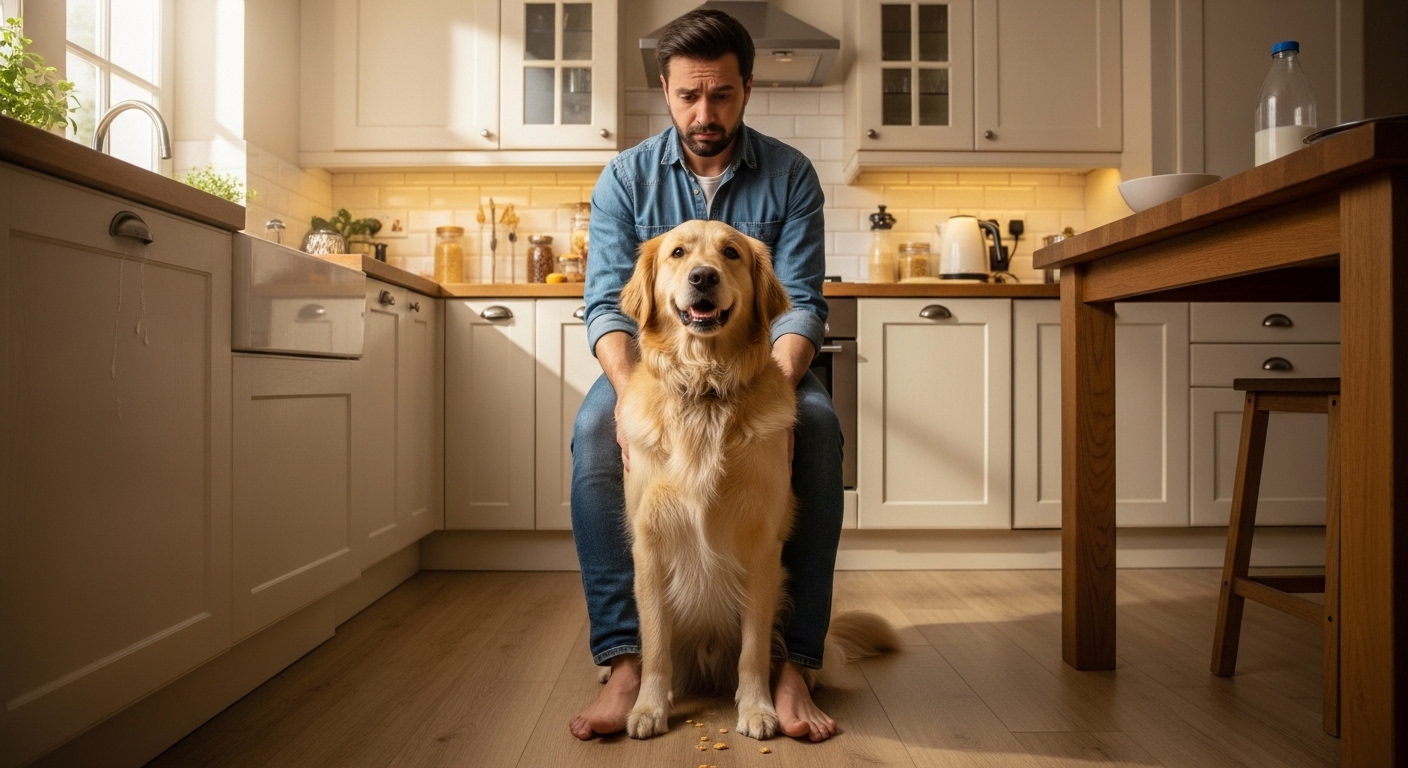
- Accidentally reinforcing it while trying to stop it. If your dog sits on your feet and you respond by petting them, talking to them, or even pushing them off with your hands, you have given them attention — which is often exactly what they wanted. Silence and calm movement are more effective than any verbal correction.
- Inconsistency across family members. This is probably the most common issue. One person's 'it's fine, I don't mind' becomes the dog's loophole. Decide as a household what the rule is before you start.
- Skipping the replacement behavior. Telling a dog 'no' without giving them something else to do leaves a behavioral vacuum. The mat or bed is not optional — it is the whole point.
- Misreading the motivation. A dog sitting on your feet out of anxiety needs a different approach than one doing it out of habit or mild guarding. Treating an anxious dog like a pushy one, or vice versa, tends to make things worse.
Expert Tips
A few practical observations from trainers and experienced owners that do not always make it into the standard advice:
If your dog only sits on your feet when guests arrive or when another pet enters the room, that is a guarding signal worth addressing early — before it escalates into something less subtle.
- Dogs that foot-sit heavily during thunderstorms or fireworks are almost certainly doing it for anxiety reasons. In those cases, many vets suggest looking into anxiety management strategies rather than obedience-based training alone.
- Some breeds — herding dogs especially — are wired to stay in physical contact with their people and will require more consistent long-term management rather than a quick fix.
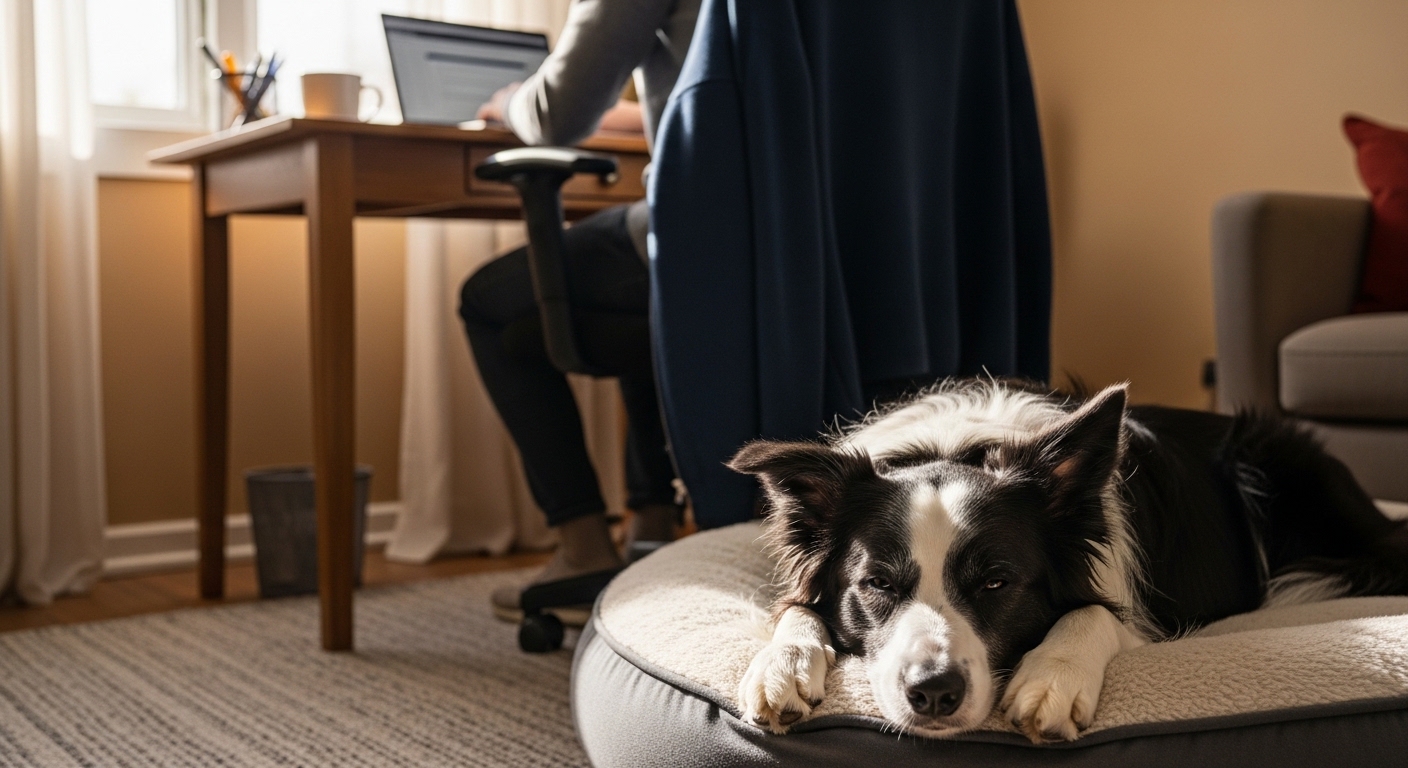
- If you work from home, you may notice the behavior spikes around your usual 'end of workday' time. Dogs track your routines closely, and foot-sitting can be a way of signaling 'I have been patient, now pay attention to me.'
- A dog who has recently lost a companion animal or moved to a new home may foot-sit more than usual as a temporary coping mechanism. Give it a few weeks before deciding it is a training problem.
The placement of the dog bed matters more than most people realize. Put it too far away and the dog will ignore it entirely. Put it right next to your chair — close enough that they can still see and smell you — and adoption rates go up noticeably.
When to See a Pro
Most foot-sitting is harmless and manageable at home. But there are situations where bringing in a certified trainer or consulting your veterinarian makes sense.
If the behavior comes with any stiffening, growling, snapping, or hard staring when another person or animal approaches, that is resource guarding that has moved beyond mild. A certified professional trainer or applied animal behaviorist can assess the situation properly — this is not something to work through with YouTube tutorials alone.
Separation anxiety is another threshold. If your dog cannot be in a room without being physically on you, panics when you leave, or shows destructive behavior in your absence, foot-sitting is just one symptom of a larger issue. Consult your veterinarian first, since in some cases they may suggest behavioral support alongside any other interventions.
Frequently Asked Questions
Is it bad to let my dog sit on my feet?
For most dogs, it is completely fine. If the behavior is calm, your dog is relaxed, and there are no guarding signals involved, there is no harm in allowing it. The main reason to redirect it is if it becomes excessive, if it is accompanied by possessive behavior, or if it is simply inconvenient for you.
Does foot-sitting mean my dog is anxious?
Not necessarily. Anxiety is one possible reason, but attachment, warmth-seeking, and mild habit are just as common. Context matters: a dog who only does it during loud events or stressful situations may be showing anxiety, while a dog who does it consistently during calm moments is more likely expressing closeness or comfort.
My dog only sits on one person's feet. What does that mean?
Dogs often form a primary attachment to one household member — the person who feeds them most consistently, spends the most time with them, or whose routine they have synced with. Sitting on that specific person's feet is a fairly clear expression of that bond. It does not mean they dislike other family members; it just means they have a favorite, which most dogs do.
Foot-sitting is one of those behaviors that rarely needs dramatic intervention. Most of the time, understanding why your dog does it is enough — you can decide whether to redirect it, accommodate it, or just accept that you will never walk to the kitchen unaccompanied again. If you do want to change it, the mat method works well for the majority of dogs, provided everyone in the house is on the same page. And if the behavior feels more intense than 'cute habit,' a conversation with your vet or a trainer is always a reasonable next step.
Comments
Post a Comment