You kick off your shoes after a long day, settle onto the couch, and within thirty seconds your dog is there — nose down, tongue out, completely absorbed in your feet. It is one of those behaviors that makes new dog owners laugh nervously and long-time owners shrug with resigned familiarity. The thing is, foot-licking is not random or weird. Dogs do it for specific, traceable reasons, and understanding those reasons makes it a lot easier to decide whether to let it continue or gently redirect it. Here is what is actually going on.
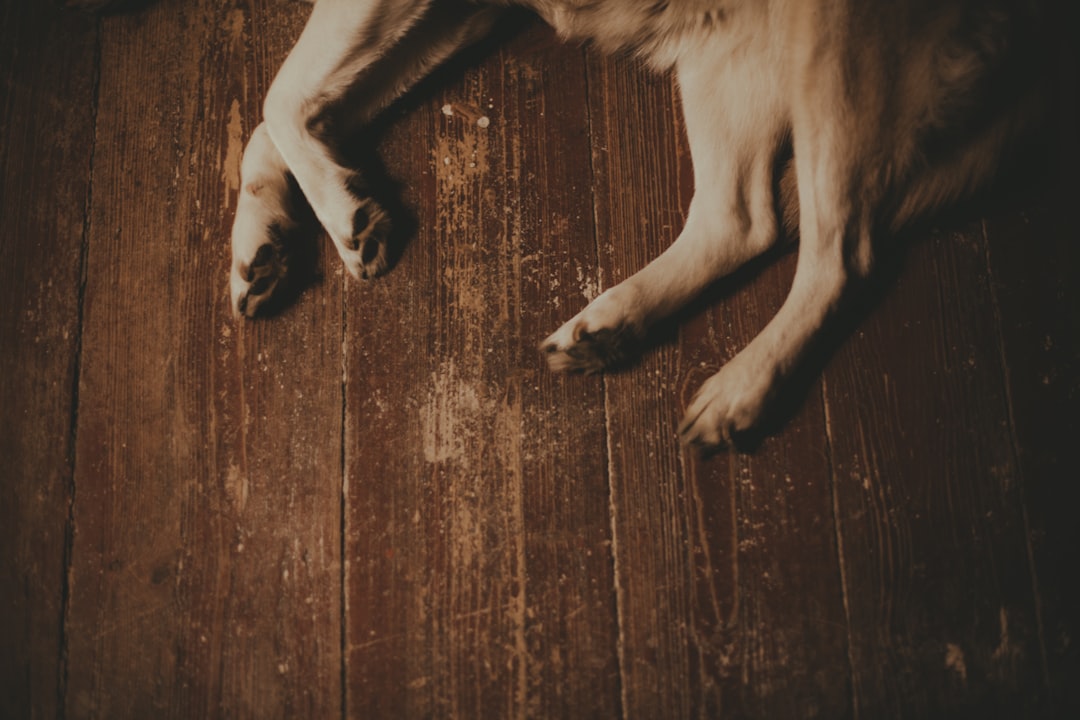
Why It Happens: The Science and Instinct Behind Foot-Licking
Dogs experience the world primarily through scent and taste, and your feet happen to be an extraordinarily rich source of both. The average human foot has roughly 250,000 sweat glands, producing a cocktail of salt, skin cells, and personal scent markers. To your dog, that is not unpleasant — it is genuinely interesting information about where you have been, how you are feeling, and who you are.
There is also a strong social bonding component. Licking is one of the earliest behaviors dogs learn — mothers lick puppies constantly in the first weeks of life, and puppies lick their mothers and littermates as a form of communication and comfort. That behavior does not disappear when a dog joins a human household. It just gets redirected. Your feet are low to the ground, accessible, and often exposed. You are the pack. The licking makes sense.
Some researchers suggest that dogs may also be drawn to the taste of sweat itself — the sodium content is appealing to many animals. If you have just come back from a run or spent time outdoors, expect more enthusiasm than usual. Beyond taste, there is a calming effect for the dog: the repetitive motion of licking releases endorphins, which means your dog may be self-soothing as much as greeting you.
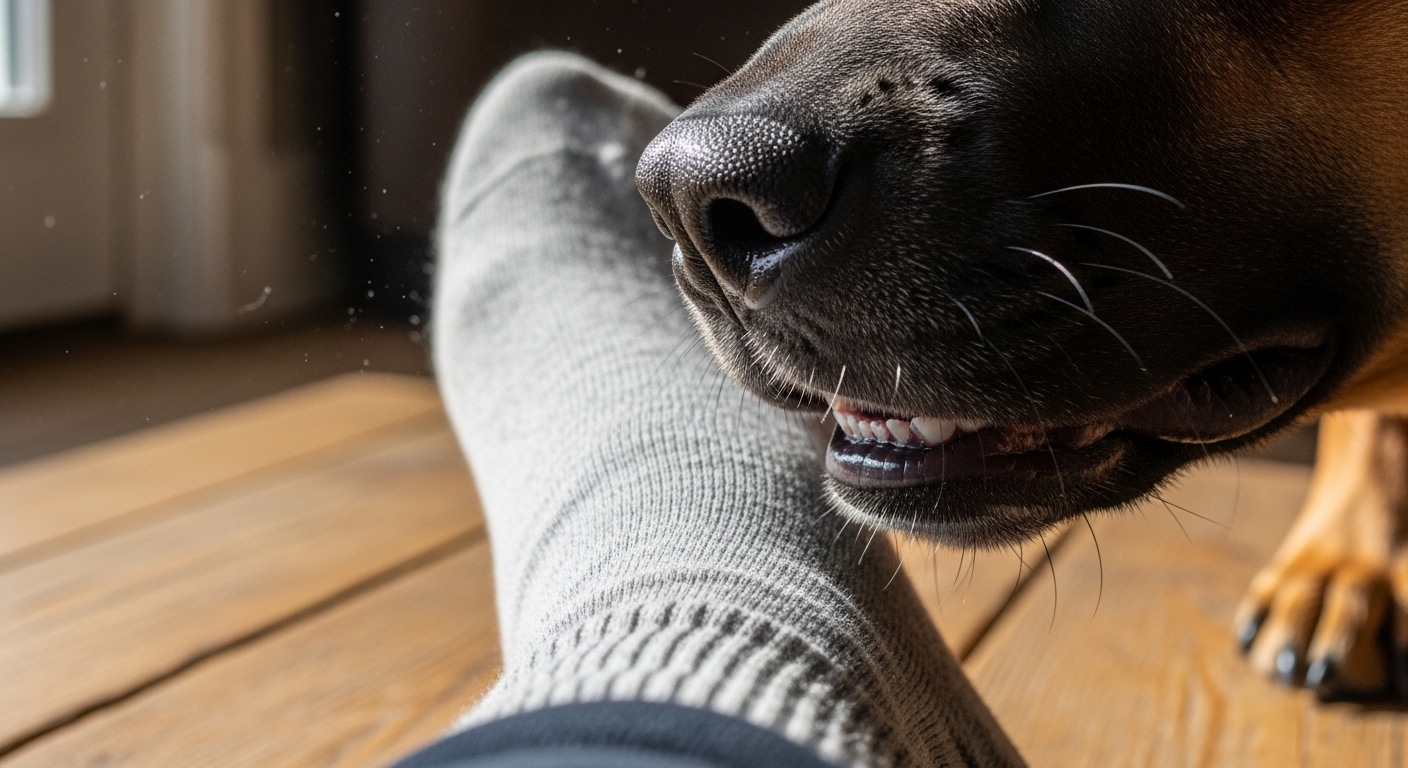
Step-by-Step: How to Redirect or Reduce Foot-Licking
If the behavior does not bother you, there is no urgent reason to stop it. But if you find it annoying, unhygienic, or if guests are less than thrilled, redirecting it is straightforward — it just requires consistency, which is the part most owners underestimate when they first start.
- Interrupt calmly, not dramatically. The moment your dog starts licking, say a neutral cue like "enough" in a flat, even tone. Yelping or pulling your foot away can accidentally turn it into a game.
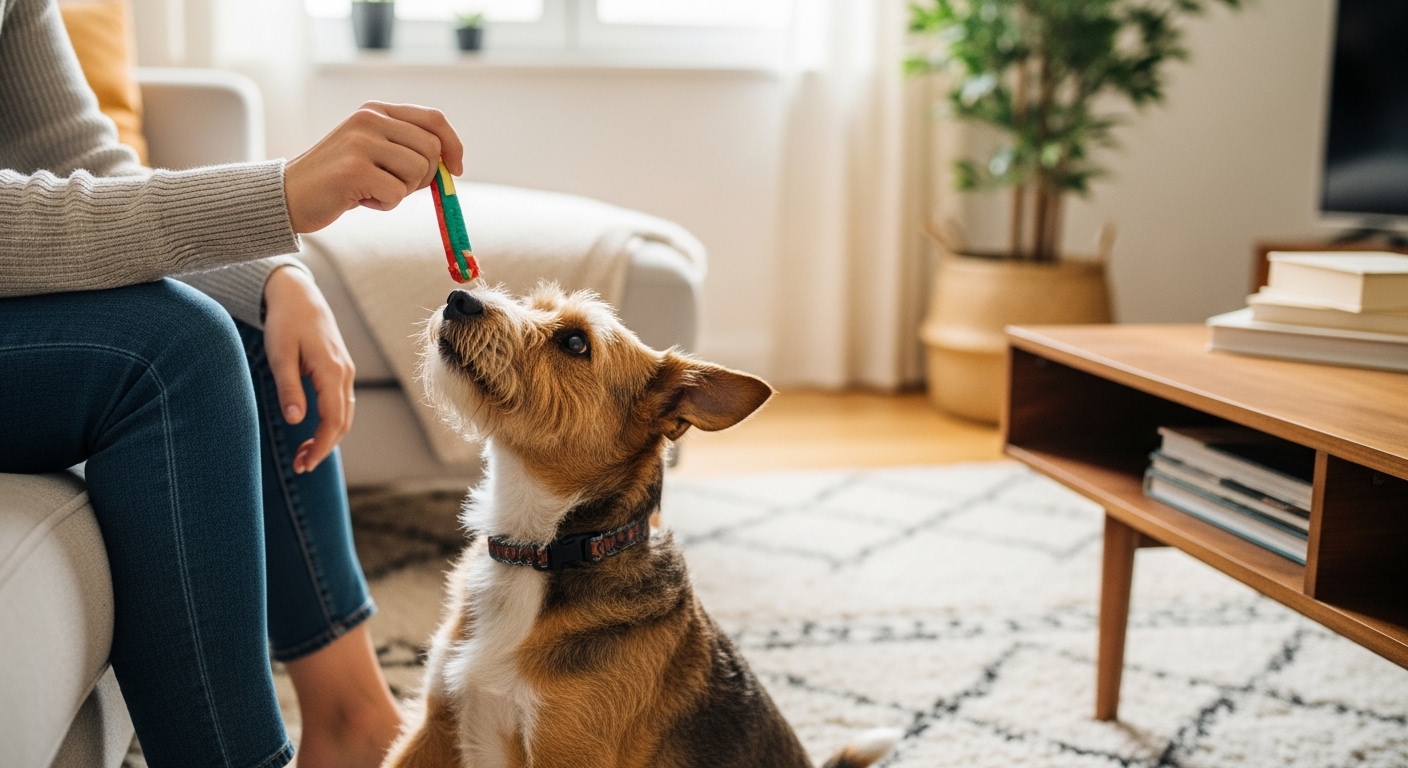
- Redirect to an acceptable behavior. Immediately after the cue, ask for a sit or offer a chew toy. You are replacing the licking with something your dog can do instead, rather than just removing the behavior with nothing in its place.
- Reward the alternative. When your dog takes the toy or sits, offer a small treat or calm verbal praise. Keep the energy low — excitement can loop back into licking.
- Stay consistent across all people in the household. If one person finds it endearing and allows it while another discourages it, the dog will simply lick the permissive person and be confused around the other. Everyone needs to respond the same way.
- Practice before the trigger moment. If your dog reliably licks when you sit down, practice the "enough" cue and redirect during calm moments so the dog has already rehearsed the behavior before the urge hits.
Most dogs respond to this within a week or two of consistent practice. The ones who take longer are usually those whose owners have been accidentally reinforcing the licking by laughing, pulling away playfully, or only sometimes discouraging it.
Common Mistakes Owners Make
The biggest mistake is inconsistency, but it is far from the only one. Here are the patterns that tend to slow progress or make the behavior worse:
- Laughing or reacting with high energy when the licking starts — dogs read animated reactions as engagement, not discouragement.
- Pushing the dog away with your foot, which can become a physical interaction the dog finds rewarding.
- Only discouraging the behavior when it is inconvenient, such as when guests are present, but allowing it at other times — this creates unpredictability, not learning.
- Punishing the dog harshly for licking, which may suppress the behavior temporarily but does not address the underlying motivation and can damage trust.
- Assuming the dog will "grow out of it" without any guidance — some dogs do settle as they mature, but many simply continue because nothing has changed in their environment or routine.
One thing that catches owners off guard is how long it takes to undo a well-established habit. If your dog has been licking your feet every evening for two years, a week of redirection is not going to erase it. Patience matters more than technique here.
Expert Tips for Managing the Behavior Long-Term
A few practical approaches that many trainers and experienced owners find genuinely useful — not just in theory, but in daily life:
- Keep a chew or toy near your usual sitting spot so redirection is immediate and effortless rather than something you have to scramble for.
- Make sure your dog is getting enough mental stimulation throughout the day. Dogs who are under-stimulated often channel energy into repetitive behaviors like licking, and adding a puzzle feeder or a training session can reduce the frequency noticeably.
- If the licking spikes after you return home, give your dog a structured activity right at the door — a sit-stay, a short training game, or a scatter of kibble to sniff out — so the reunion energy has somewhere productive to go before you sit down.
- Wearing socks consistently at home is not a cure, but it does reduce the sensory payoff for the dog and can lower the frequency while you work on redirection.
Dogs lick feet for real, traceable reasons — social bonding, sensory curiosity, and self-soothing. Addressing the behavior works best when you replace it with something, rather than simply trying to stop it.
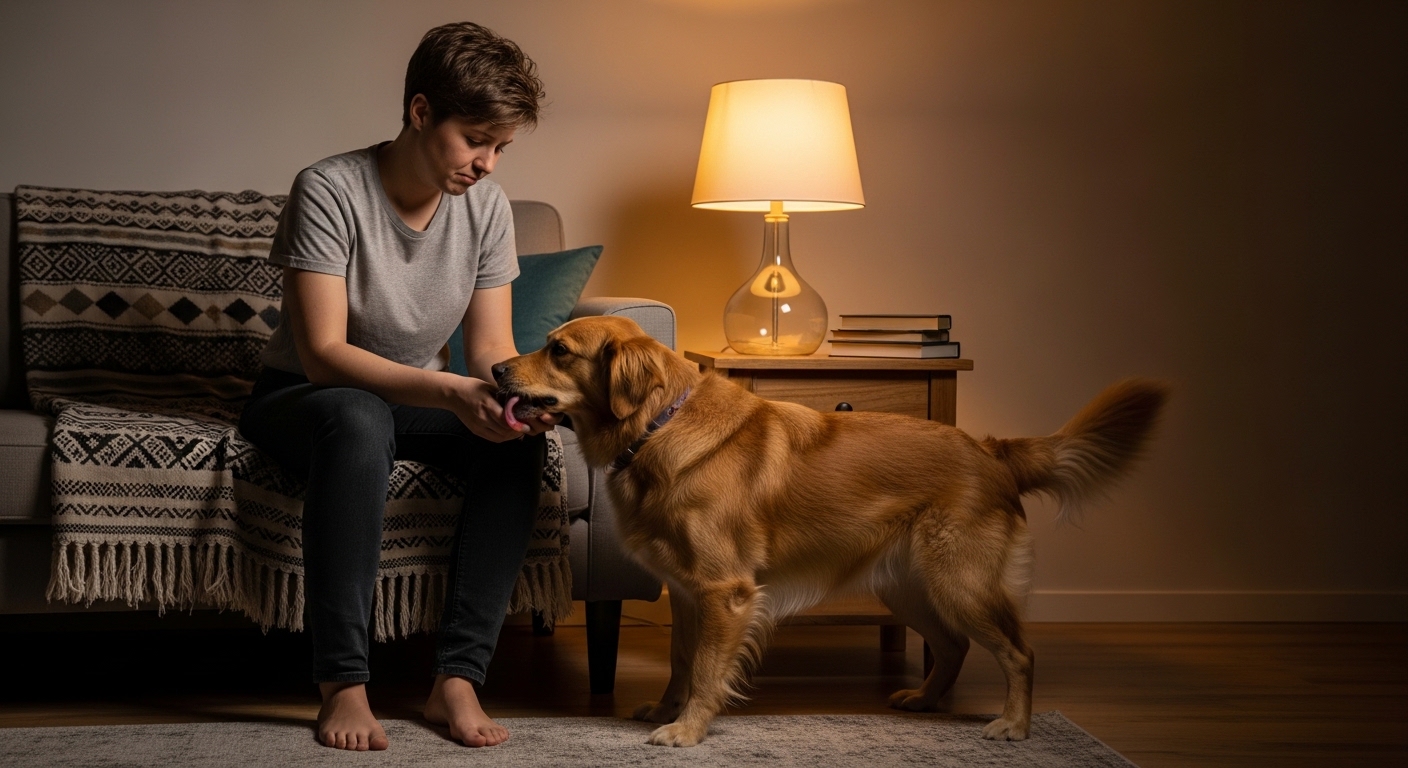
A detail that does not get mentioned often: if your dog seems to lick your feet more on days when you are stressed or unwell, that is not coincidence. Dogs are highly attuned to physiological changes in the people they live with, and some dogs appear to respond to shifts in body chemistry or cortisol levels. Whether that is comfort-seeking on the dog's part or something else is still an open question, but it is worth noticing the pattern.

When to See a Professional
Occasional foot-licking is normal. But there are situations where the behavior warrants a closer look from a veterinarian or a certified behaviorist.
If the licking is compulsive — meaning your dog cannot seem to stop, returns to it immediately after being redirected, or licks to the point of distress — that may indicate an anxiety disorder or obsessive-compulsive behavior pattern. These are not things that respond well to basic redirection alone, and a professional assessment can make a significant difference in the dog's quality of life.
Similarly, if your dog is licking their own paws excessively in addition to your feet, that combination may point to allergies, skin irritation, or discomfort that deserves a veterinary evaluation. Do not assume it is purely behavioral if the licking is widespread or accompanied by redness, hair loss, or changes in the dog's overall demeanor. Consult your veterinarian if you notice those signs.
A sudden increase in licking behavior — especially in a dog that did not do it much before — can sometimes signal that something has changed in the dog's environment, health, or stress level. That shift is worth paying attention to rather than dismissing.
Frequently Asked Questions
Is it safe to let my dog lick my feet?
For most healthy adults, occasional foot-licking poses minimal risk. However, if you have open cuts, wounds, or compromised skin on your feet, it is sensible to discourage the behavior, as dogs' mouths carry bacteria that may cause infection. People with weakened immune systems should be especially cautious and may want to consult a doctor about their specific situation.
Why does my dog only lick my feet and not anyone else's?
Dogs are drawn to familiar scent, and your specific body chemistry, the shoes you wear, and the places you walk all contribute to a scent profile your dog knows well. They may also have learned through experience that licking your feet specifically gets a particular reaction — even a mild one — that they find rewarding. It is usually a combination of scent preference and learned behavior rather than one factor alone.
Could the licking mean my dog is anxious?
It can be one signal among several, but licking alone is not a reliable indicator of anxiety. If the licking is accompanied by other signs — pacing, excessive yawning, destructive behavior, clinginess, or changes in appetite — then anxiety may be worth exploring with a veterinarian or certified behaviorist. A single behavior in isolation rarely tells the whole story.
Foot-licking is one of those dog behaviors that is easy to dismiss as quirky but actually tells you something real about how your dog communicates and self-regulates. Whether you choose to redirect it or live with it, understanding the reason behind it puts you in a better position to respond thoughtfully. Most dogs are not doing it to annoy you — they are just doing what makes sense to them, with the information and instincts they have. That is a reasonable starting point for working with it rather than against it.

Comments
Post a Comment