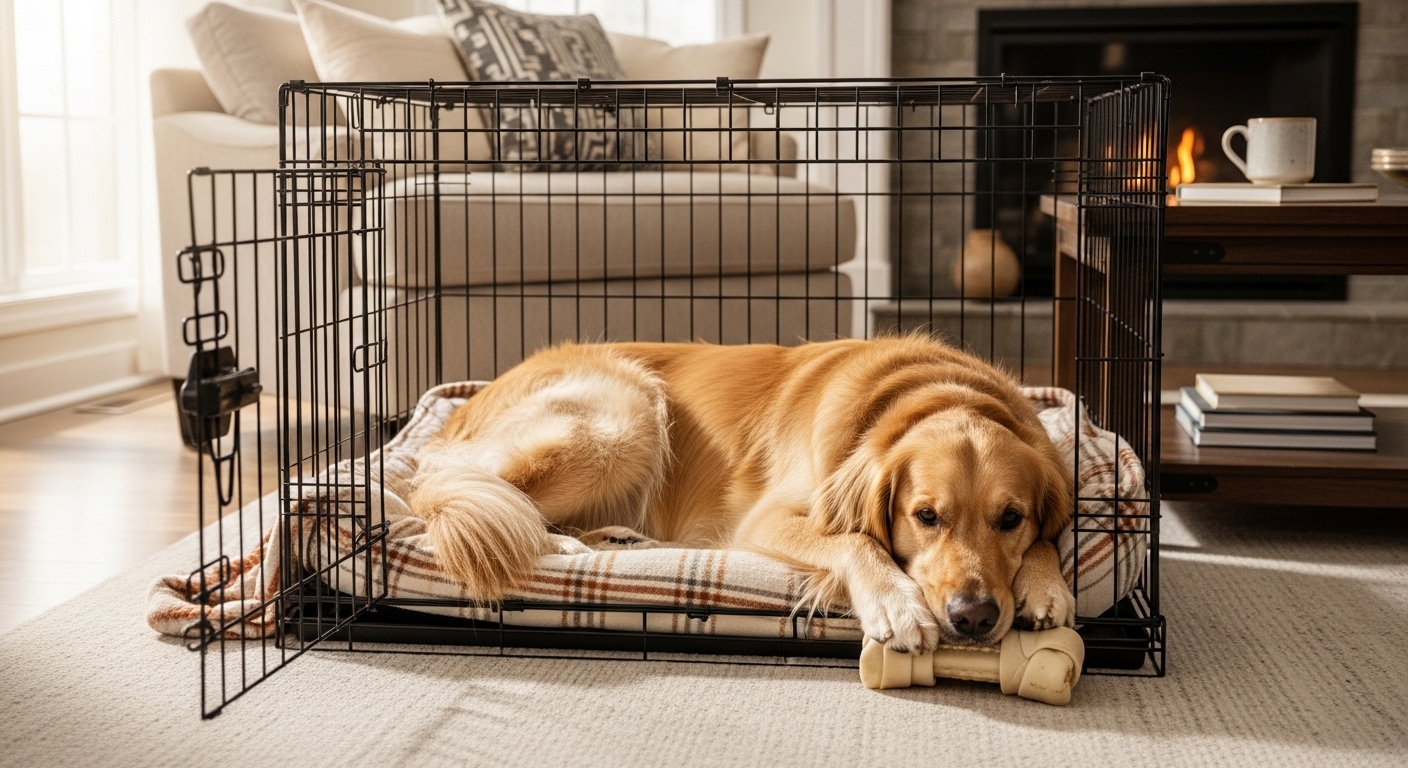
Welcome to the wonderful, sometimes challenging world of crate training! Many new pet parents worry that putting their furry friend in a crate feels like a punishment. However, when done correctly, crate training provides your pup with a secure, comfortable space to call their own. The goal is to make this space feel like a safe den from day one, giving them a retreat when they need to rest or decompress. Let's take a look at a happy pup relaxing comfortably inside an open crate with a favorite toy.
Why It Happens: The Denning Instinct
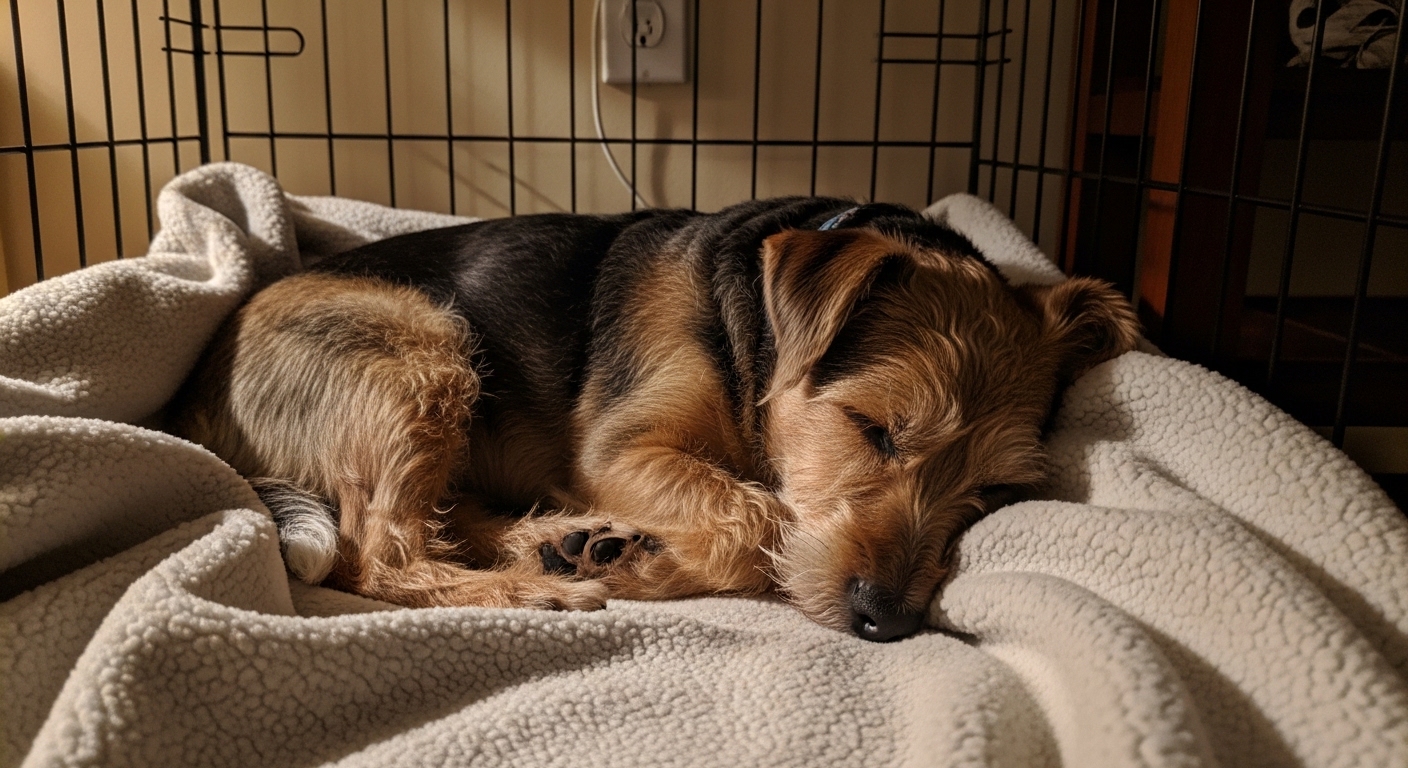
To understand why crate training works, we have to look at your dog's wild ancestors. Dogs have a natural denning instinct, meaning they seek out small, enclosed spaces for shelter, security, and raising their young. A crate taps into this primal need, offering a predictable environment where they can lower their guard. It is not about locking them away; it is about providing a personal sanctuary. You can see this instinct in action when you observe a dog sleeping peacefully in a cozy, blanket-filled crate.
Step-by-Step Training Method
Building a positive association takes time and patience. Follow these gradual steps to ensure success:
- Introduce the crate: Leave the door open and toss treats inside so your dog can explore at their own pace.
- Serve meals inside: Place their food bowl near the back of the crate to build a strong, positive association.
- Close the door briefly: Once they are comfortable eating inside, close the door for a few seconds, opening it before they finish.
- Extend the time: Gradually increase the duration the door is closed while you are in the room, then step out for short intervals.
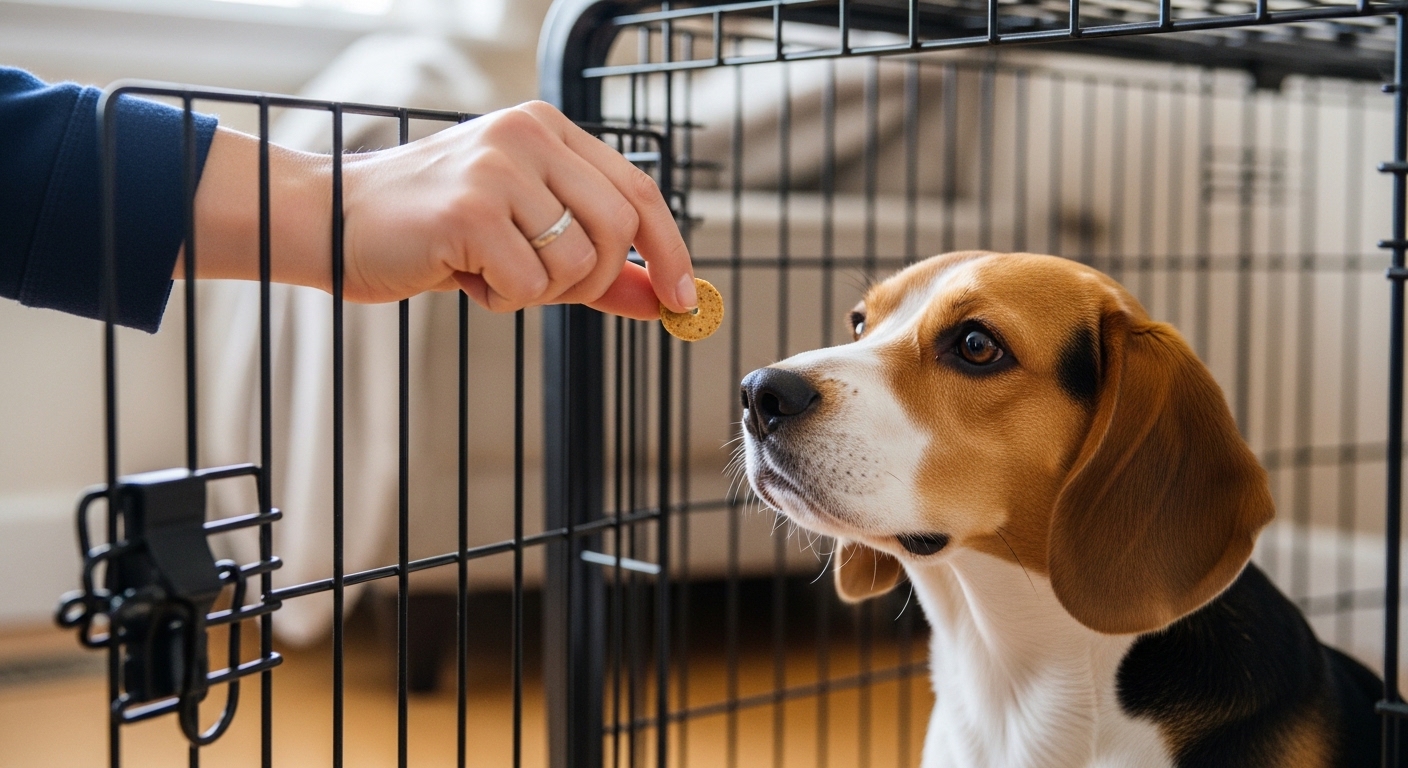
Positive reinforcement is the key to making this process smooth. Here is a great example of a pet parent rewarding a dog sitting calmly inside the crate.
Common Mistakes
Even with the best intentions, it is easy to stumble during the training process. Avoid these priority-ordered mistakes to keep your dog feeling secure:
- Using the crate as punishment: Never force your dog into the crate when you are angry, as this instantly creates fear and resentment.
- Rushing the process: Moving too quickly before your dog is comfortable can cause lasting anxiety and a refusal to enter.
- Leaving them in too long: Puppies and adult dogs have physical limits; over-crating can lead to distress, joint stiffness, and bathroom accidents.
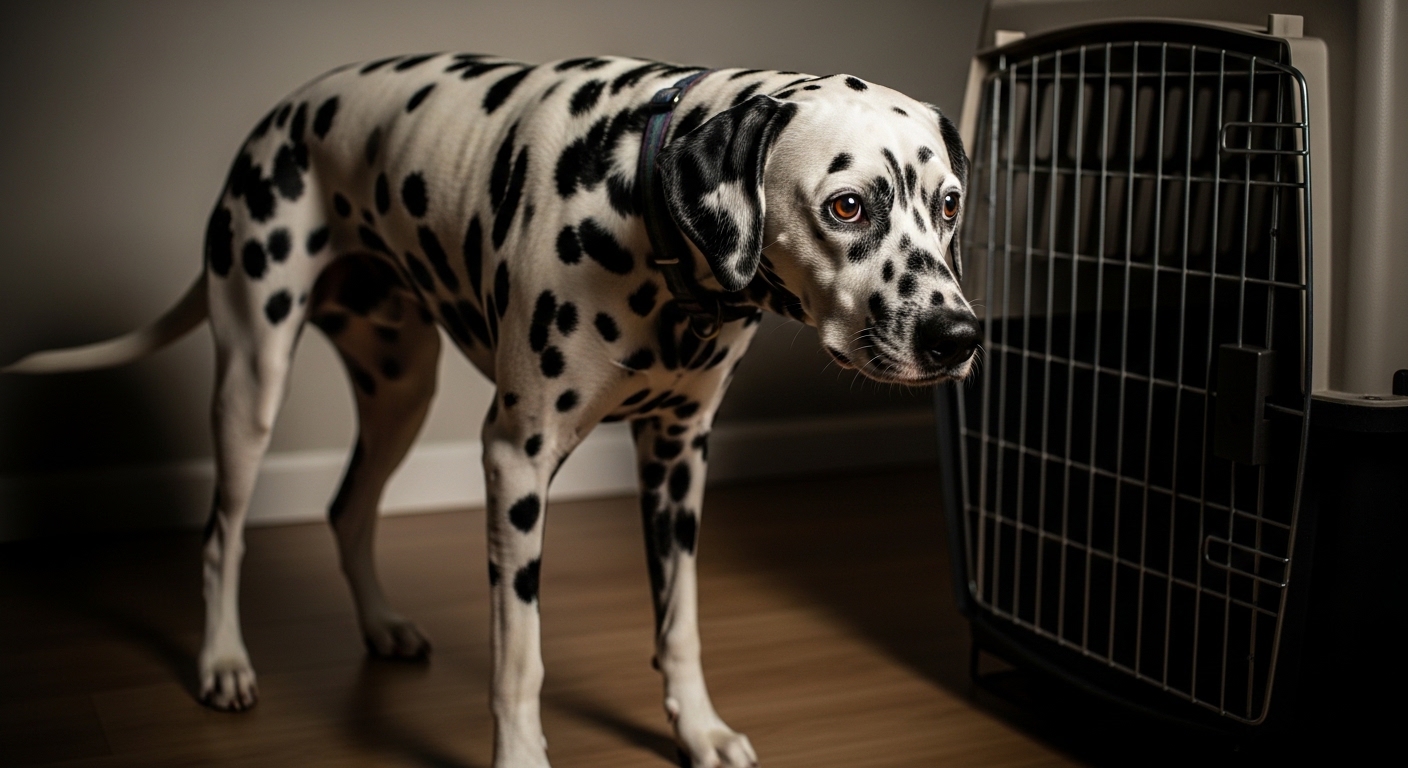
If you move too fast, you might end up with a dog looking hesitant and stressed near a closed crate door.
Expert Tips
To elevate your crate training game, try incorporating a few professional strategies to make the space irresistible.
- Use a breathable crate cover to create a darker, more den-like atmosphere that encourages sleep.
- Play crate games, like hiding their favorite toys inside for them to discover on their own.
- Invest in a high-quality, supportive crate pad for maximum joint comfort.
"The secret to crate training is making the crate the most wonderful place in the house, filled with treats, toys, and peace."
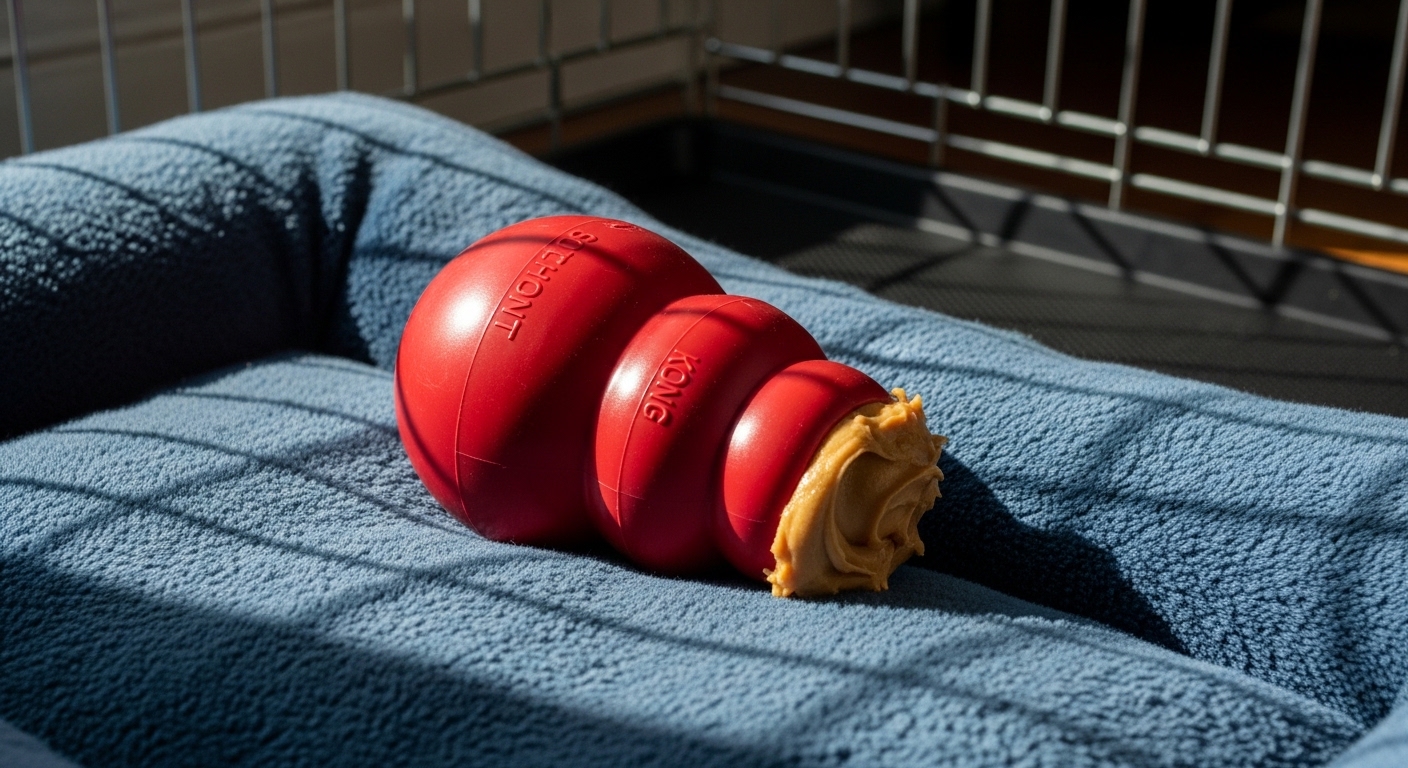
A fantastic way to keep them occupied is to leave a durable chew toy filled with treats inside the wire crate.
When to See a Pro
While most dogs adapt well to crate training, some may exhibit severe distress, such as excessive drooling, frantic digging, or self-injury. These can be signs of deep-rooted separation anxiety or confinement phobia. If you notice these severe panic responses, please consult your veterinarian to rule out any underlying medical issues. In many cases, vets suggest partnering with a certified canine behaviorist to develop a specialized modification plan rather than forcing the issue.
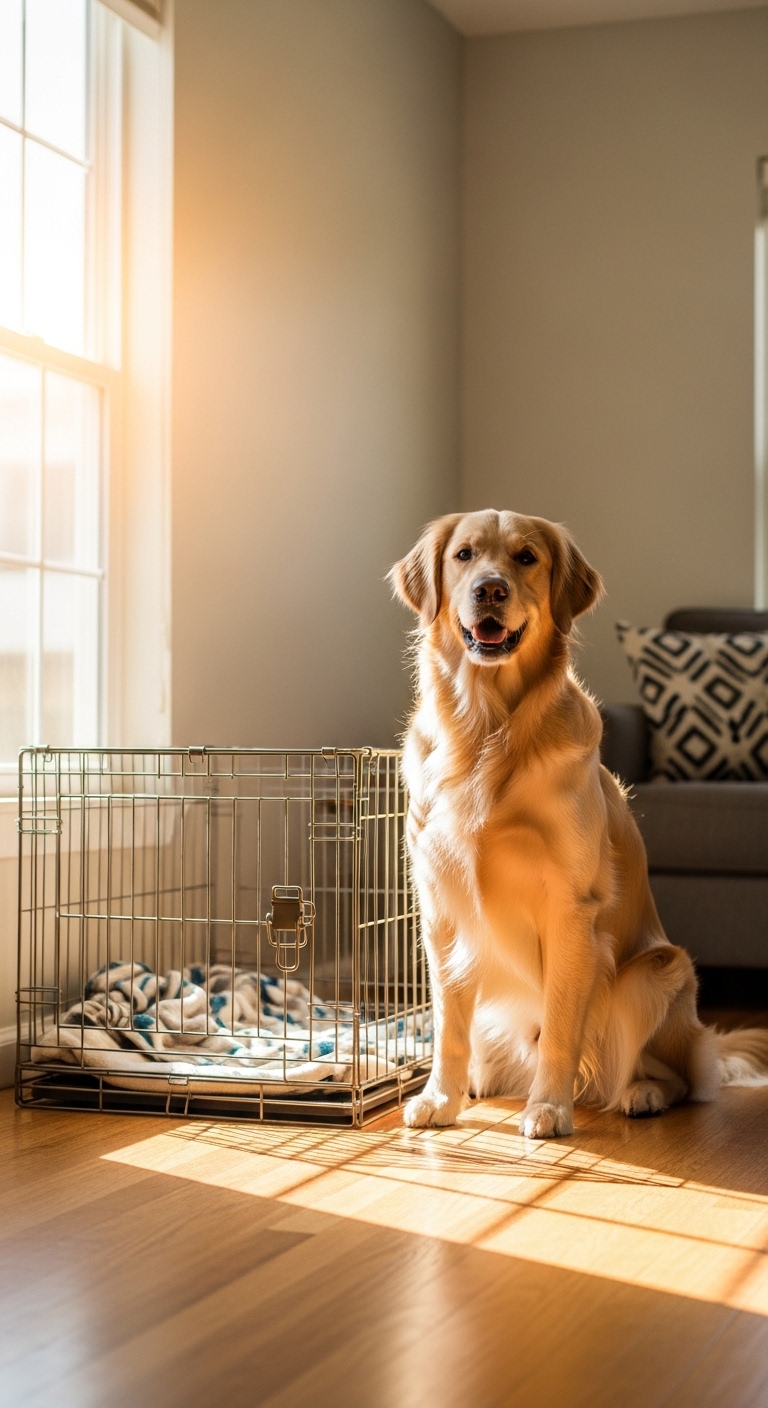
Crate training is a journey that requires empathy, consistency, and plenty of treats. By respecting your dog's pace and focusing on positive reinforcement, you will give them a lifelong gift: a safe haven of their very own. Celebrate the small victories, and soon enough, you will have a happy, well-adjusted dog sitting proudly beside its crate.
Comments
Post a Comment