Few grooming tasks make pet owners more nervous than nail trimming — and honestly, most dogs aren't thrilled about it either. But keeping your dog's nails at a healthy length is one of the most important things you can do for their comfort and long-term joint health. Overgrown nails can alter the way your dog walks, put stress on their paw pads, and in some cases even curl back into the skin. The good news? With the right tools, a calm approach, and a little patience, trimming your dog's nails at home can become a stress-free routine for both of you. Here is everything you need to know to get started safely and confidently.
Why This Matters
It might be tempting to push nail trims to the back burner, especially if your dog puts up a fuss. But the consequences of neglected nails go well beyond aesthetics. Understanding why regular trims matter can give you the motivation to stay consistent.
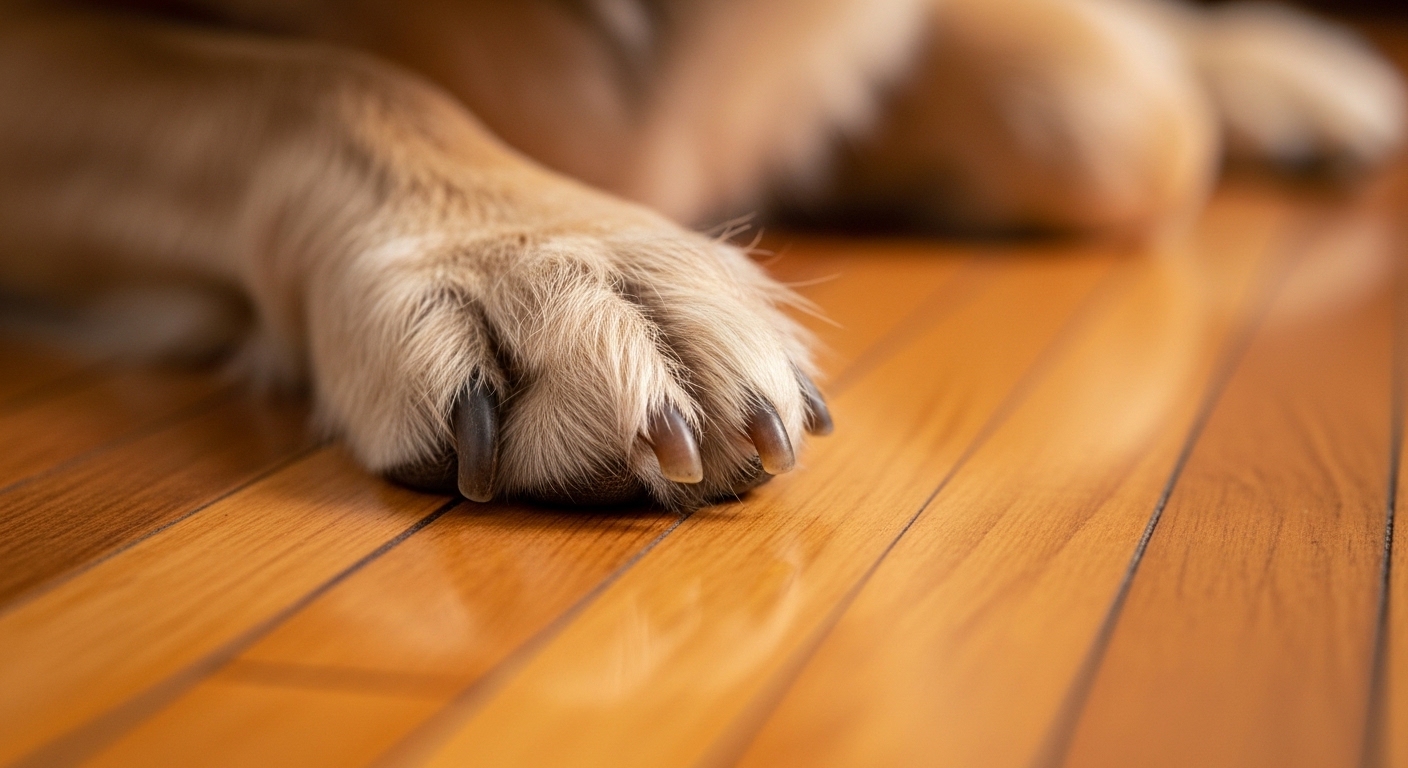
When a dog's nails grow too long, they make contact with the floor with every step, effectively pushing the toe backward. Over time, many vets suggest this unnatural pressure may contribute to discomfort in the toes, feet, and even the hips and spine. Here is what overgrown nails can lead to:
- Altered gait: Long nails force dogs to shift their weight unevenly, which may cause joint strain over time.
- Painful splitting or breaking: Nails that grow too long are more prone to snagging on carpet or cracking, which can be quite painful.
- Ingrown nails: In some cases, nails — especially dewclaws — can curl and grow back into the skin, leading to infection.
- Reduced traction: Long nails can actually reduce your dog's grip on slippery floors, increasing the risk of slips and falls.
- Behavioral issues: Chronic discomfort from overgrown nails may contribute to irritability or reluctance to exercise.
Most dogs benefit from a nail trim every two to four weeks, though the exact frequency depends on how fast their nails grow and how much time they spend on hard surfaces like pavement, which naturally files nails down.
A good rule of thumb: if you can hear your dog's nails clicking on a hard floor, it's time for a trim.
Guidelines & Frequency
Before you pick up the clippers, preparation is everything. A fear-free nail trim starts long before the actual cutting begins. Taking time to desensitize your dog to the tools and process can make a world of difference, especially for anxious pups.
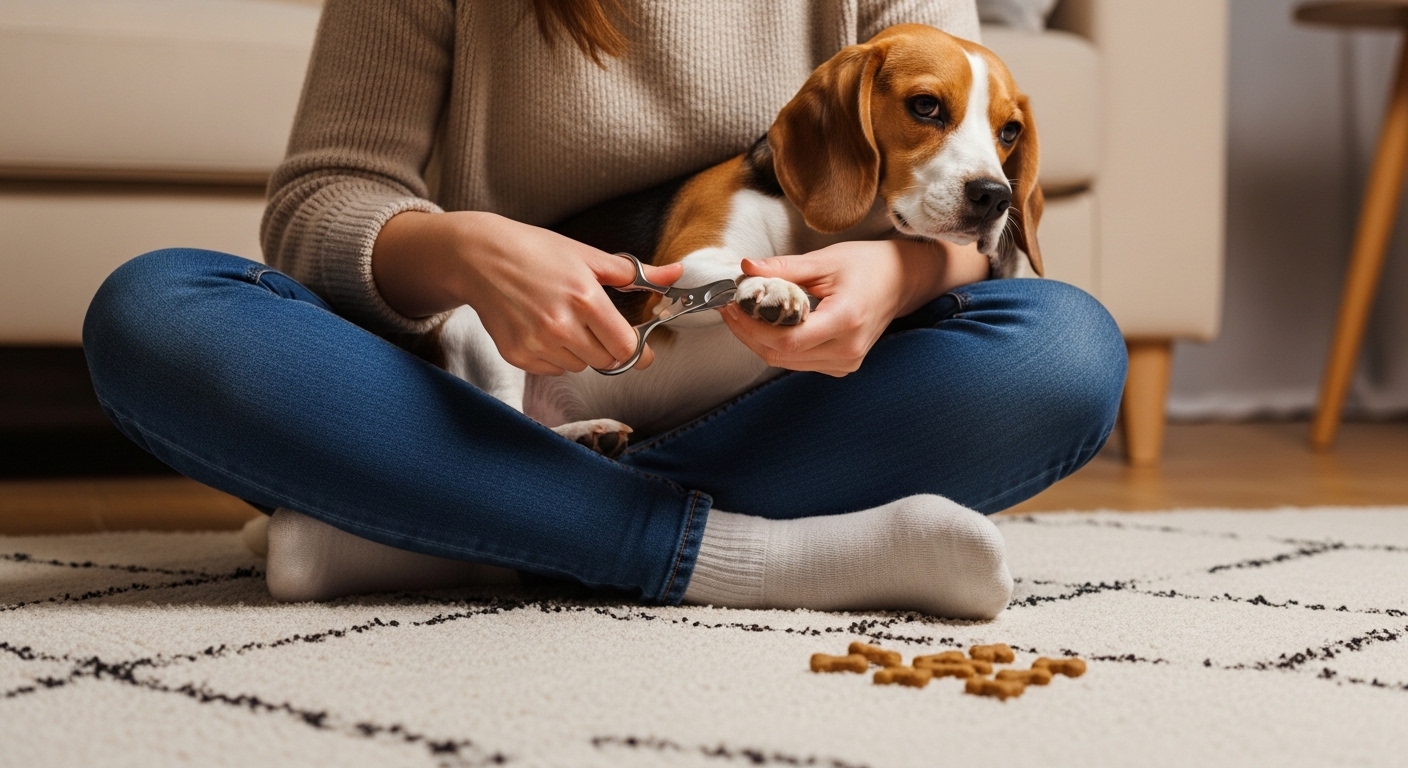
Follow these step-by-step guidelines for a calm, safe nail trimming session:
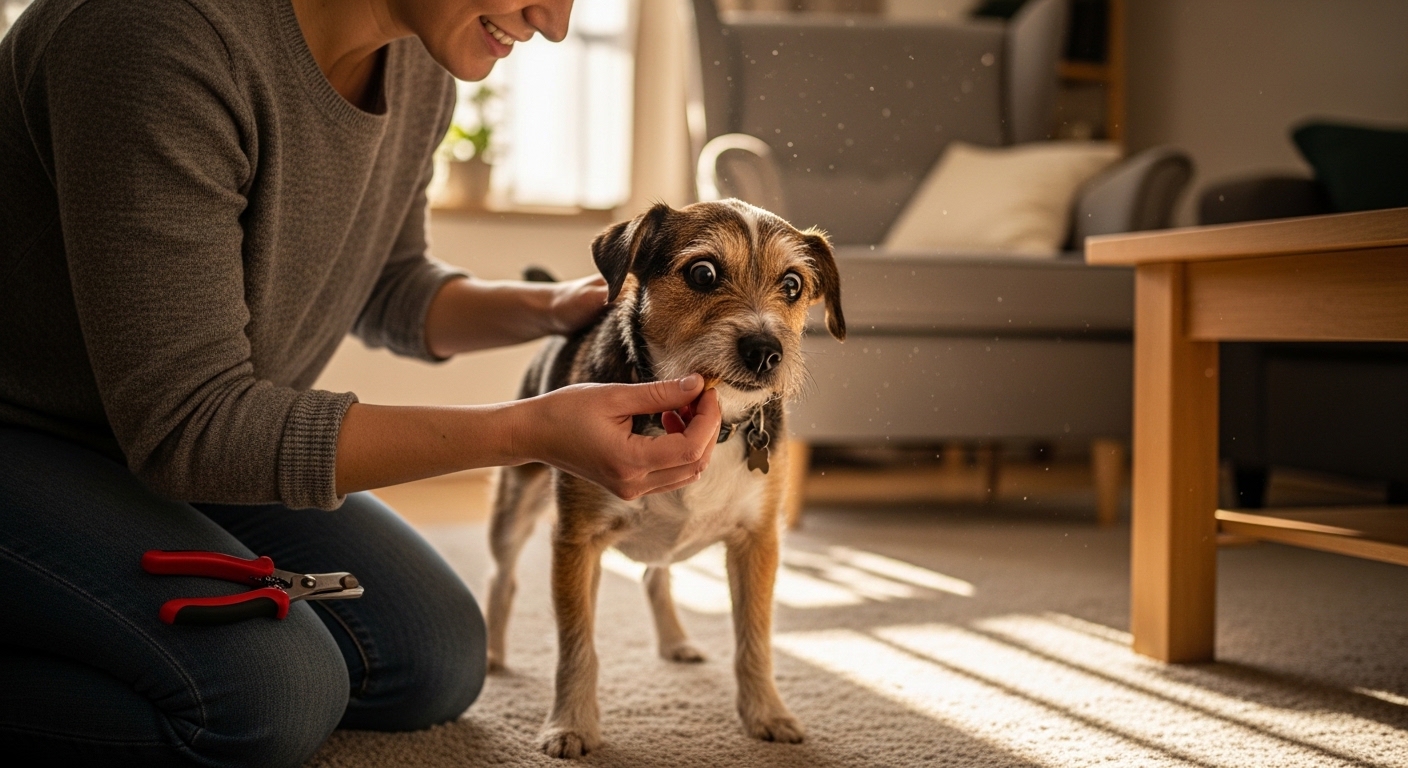
- Gather your supplies: You will need a sharp pair of dog nail clippers (guillotine or scissor-style both work well), styptic powder or cornstarch in case you nick the quick, and plenty of high-value treats.
- Choose the right time: Trim nails when your dog is relaxed — after a walk or a meal is often ideal. Avoid sessions when your dog is already anxious or overstimulated.
- Introduce the clippers first: Let your dog sniff the clippers and reward them with a treat. Do this over several sessions before any actual trimming if your dog is nervous.
- Find a comfortable position: Sit on the floor with your dog, or have them lie on their side. For larger dogs, having a helper to gently hold them steady can be useful.
- Hold the paw firmly but gently: Cup the paw in your non-dominant hand, pressing gently on the pad to extend the nail.
- Identify the quick: On light-colored nails, the quick appears as a pink area inside the nail. On dark nails, trim small slivers at a time and look for a dark center dot — that indicates you are getting close to the quick.
- Make the cut: Clip the nail at a slight downward angle, removing small amounts at a time. It is always safer to take less off and trim more frequently.
- Reward generously: After each nail — or even each paw — offer praise and a treat. Keep sessions short and positive, especially at first.
- Don't forget the dewclaws: These nails on the inner side of the leg do not touch the ground and can grow very long. Check them every session.
If your dog is particularly resistant, it is perfectly fine to do one paw per session and build up gradually. Progress over perfection is the goal here.
Recommended Options
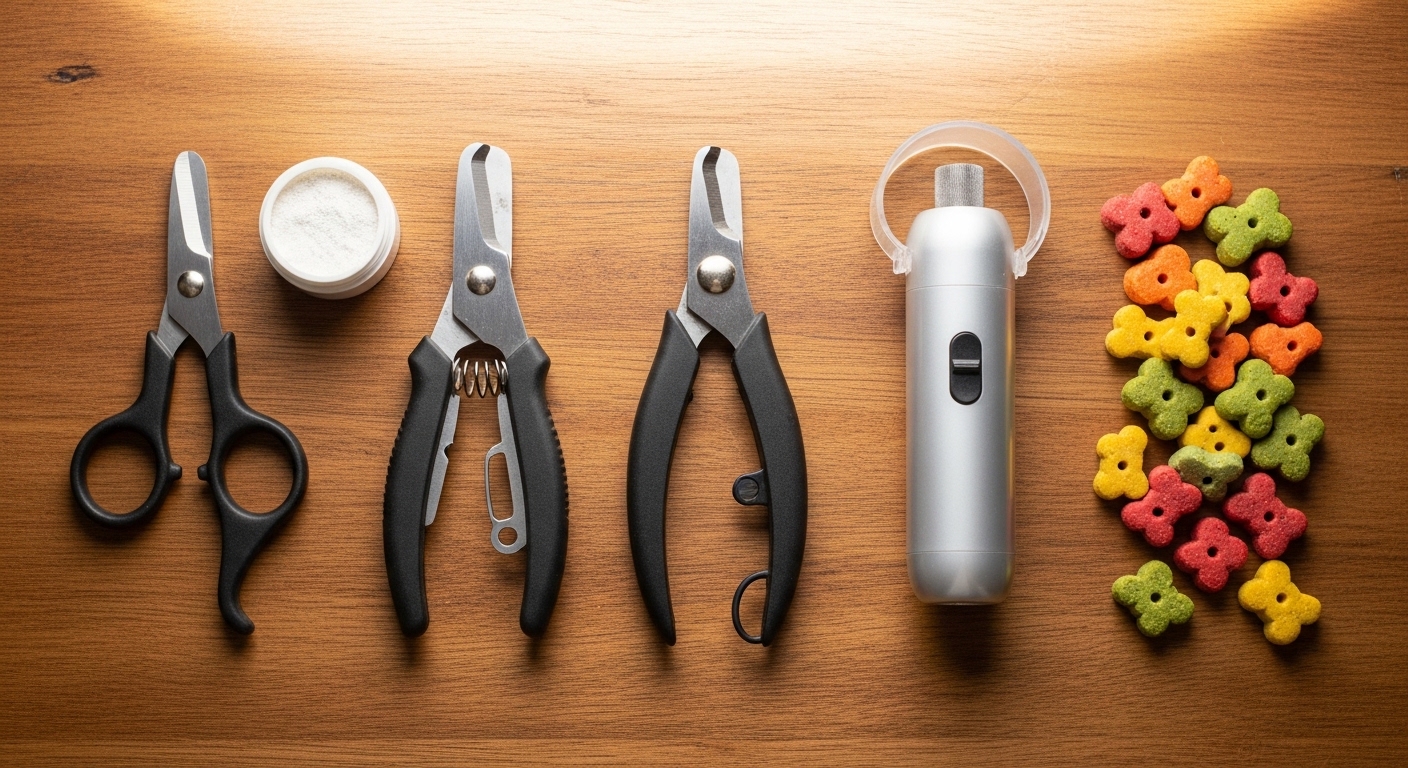
Having the right tools makes the entire process easier and safer. Not all nail clippers are created equal, and the best choice often depends on your dog's size and nail thickness. Here are the top recommended options to consider:
- Scissor-style clippers: These work like a pair of scissors and are generally recommended for medium to large dogs with thicker nails — they offer strong, clean cuts with good control.
- Guillotine-style clippers: The nail is inserted into a hole and a blade slides across to cut — many groomers favor these for small to medium dogs as they require less squeezing force.
- Nail grinders (rotary tools): Electric grinders file the nail down gradually rather than cutting, which many dogs tolerate better and which reduces the risk of cutting the quick — a great option for nervous dogs or very dark nails.
- Styptic powder: An absolute must-have in your kit — if you accidentally nick the quick, applying styptic powder stops bleeding quickly and safely.
- High-value treats: Soft, smelly treats like small pieces of chicken, cheese, or commercial training treats help create positive associations with the trimming process.
- Lick mat with peanut butter: Spreading dog-safe peanut butter on a lick mat and letting your dog lick it during the trim is a brilliant distraction technique that many pet owners swear by.
What to Avoid
Even well-meaning pet owners can make mistakes that turn nail trimming into a stressful ordeal. Avoiding these common pitfalls will help keep the experience positive and safe for your dog.
- Using dull clippers: Dull blades crush and split the nail rather than cutting cleanly, which is uncomfortable for your dog and more likely to cause cracking. Replace or sharpen your clippers regularly.
- Cutting too much at once: Trying to take off a large amount in one snip — especially on nails that have been neglected for a while — dramatically increases the risk of hitting the quick. Always take small increments.
- Skipping desensitization: Jumping straight into trimming without letting your dog get comfortable with the tools and handling can create lasting negative associations that are hard to undo.
- Forcing a struggling dog: Restraining a dog that is actively panicking can cause injury to both of you and will make future sessions harder. If your dog is extremely fearful, pause and consult your veterinarian or a professional groomer.
- Trimming in poor lighting: Good lighting is essential for seeing the quick, especially on dark nails. Always work in a well-lit area or use a small flashlight to illuminate the nail from behind.
- Neglecting the dewclaws: These are easy to forget but can become dangerously long or even ingrown if overlooked. Make them part of your routine every single time.
- Ending on a bad note: If your dog had a rough session, try to end with something positive — even just a treat and calm praise — so the last memory of the experience is not entirely negative.
Frequently Asked Questions
What do I do if I cut the quick?
Don't panic — it happens to even experienced groomers. Apply styptic powder or cornstarch directly to the nail tip and hold gentle pressure for a minute or two. The bleeding should stop fairly quickly. Offer your dog lots of reassurance and a treat. If bleeding does not stop within a few minutes, consult your veterinarian.
How do I find the quick on black nails?
On dark nails, you cannot see the quick from the outside. The safest approach is to trim tiny slivers at a time and look at the cut surface of the nail after each snip. When you start to see a small dark oval or dot appear in the center of the nail, you are close to the quick and should stop. Using a nail grinder instead of clippers may also give you more control.
My dog absolutely hates nail trims. What can I do?
Start with a desensitization program — touch your dog's paws daily, tap the clippers gently against the nails without cutting, and reward heavily at each step. Many vets suggest that breaking the process into tiny steps over days or weeks is far more effective than pushing through resistance. For dogs with severe nail-trim anxiety, your veterinarian may be able to offer additional strategies or refer you to a certified professional groomer or trainer.
Can I use human nail clippers on my dog?
Human nail clippers are generally not recommended for dogs. Dog nails are thicker and rounder in cross-section than human nails, and human clippers may crush or split them rather than cutting cleanly. Invest in a proper pair of dog nail clippers sized appropriately for your dog's breed.
How short should I cut my dog's nails?
The goal is to trim just enough so the nail does not touch the ground when your dog is standing. For most dogs, this means leaving about two millimeters of nail beyond the quick. When in doubt, trim less — you can always take a little more off, but you cannot put it back.
Nail trimming at home is a skill that genuinely gets easier with practice. The first few sessions may feel awkward or stressful, but as you and your dog build trust and routine around the process, it can become just another quiet moment of care in your week together. Be patient with yourself, celebrate small wins, and remember that a calm, confident owner goes a long way toward creating a calm, cooperative dog — and if you ever feel unsure about your dog's nail health or behavior during trims, your veterinarian is always the best person to consult.
Comments
Post a Comment