You walk into the kitchen on a quiet Tuesday morning, coffee in hand, and there it is — a very dead mouse placed neatly on the doormat like a small, unwanted gift. Your cat sits nearby, looking unmistakably pleased with herself. If you have ever lived with an outdoor cat, or even a particularly motivated indoor one, this scene is probably familiar. The behavior can feel baffling, a little gross, and oddly touching all at once. Understanding what is actually driving it makes the whole thing easier to handle — and easier to gently redirect.
Why It Happens: The Instinct Behind the Gift
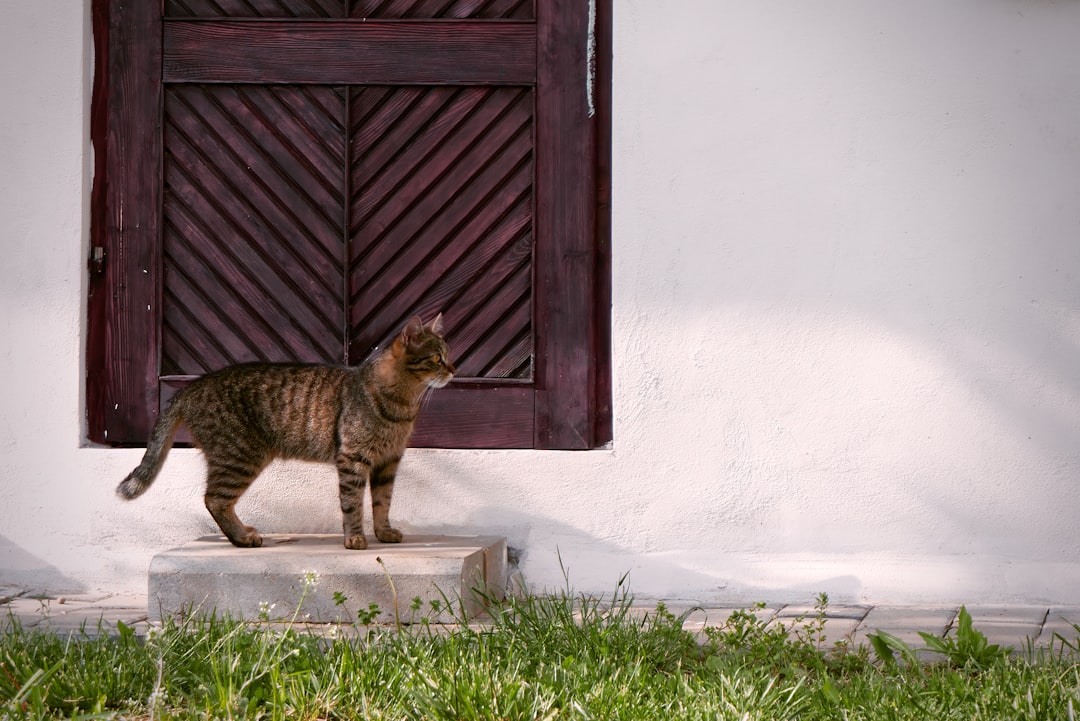
Cats are obligate carnivores with a predatory drive that has been refined over thousands of years. Even a cat that has never missed a meal in its life carries the full hunting toolkit — the stalking, the pounce, the kill bite. That instinct does not switch off just because there is a bowl of kibble waiting inside.
What many people do not realize is that bringing prey home is not random. In the wild, mother cats carry prey back to their kittens to teach them how to hunt. They start with dead animals, then progress to injured ones, then live ones — a structured curriculum in survival. When your cat drops a sparrow at your feet, many animal behaviorists suggest she may be treating you as a member of her social group who needs feeding or teaching. You are, in her assessment, a rather hopeless hunter who clearly needs help.
There is also a simpler explanation that runs alongside the social one: cats sometimes bring prey inside because the home is their safe territory. Eating or storing food in a secure location is instinctively sensible. Your living room qualifies. Neither explanation is mutually exclusive — both drives likely play a role depending on the individual cat.
Step-by-Step: How to Gently Discourage the Behavior
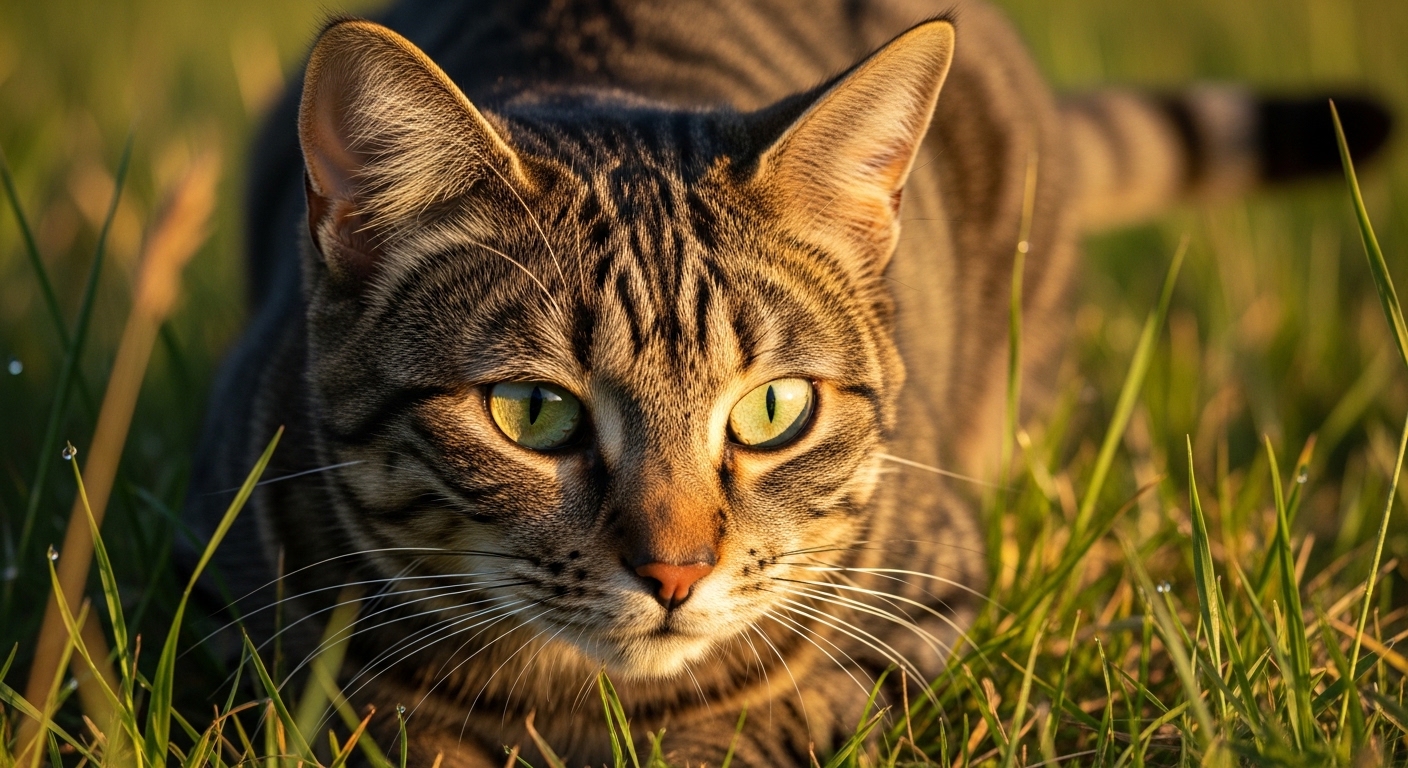
You are unlikely to eliminate the hunting drive entirely — nor should you try. What you can do is reduce opportunities and redirect the energy. Work through these steps gradually rather than all at once.
- Keep your cat indoors during peak hunting hours. Dawn and dusk are when small animals are most active. Keeping your cat inside during these windows alone can significantly reduce the body count.
- Fit a collar with a bell. A bell gives birds and small mammals a fraction of a second of warning. Studies suggest it may reduce hunting success by around a third, though determined cats do learn to move more carefully over time.
- Try a brightly colored collar cover. Products like the Birdsbesafe collar cover use high-visibility color to warn birds specifically, since birds have excellent color vision while most prey mammals do not.
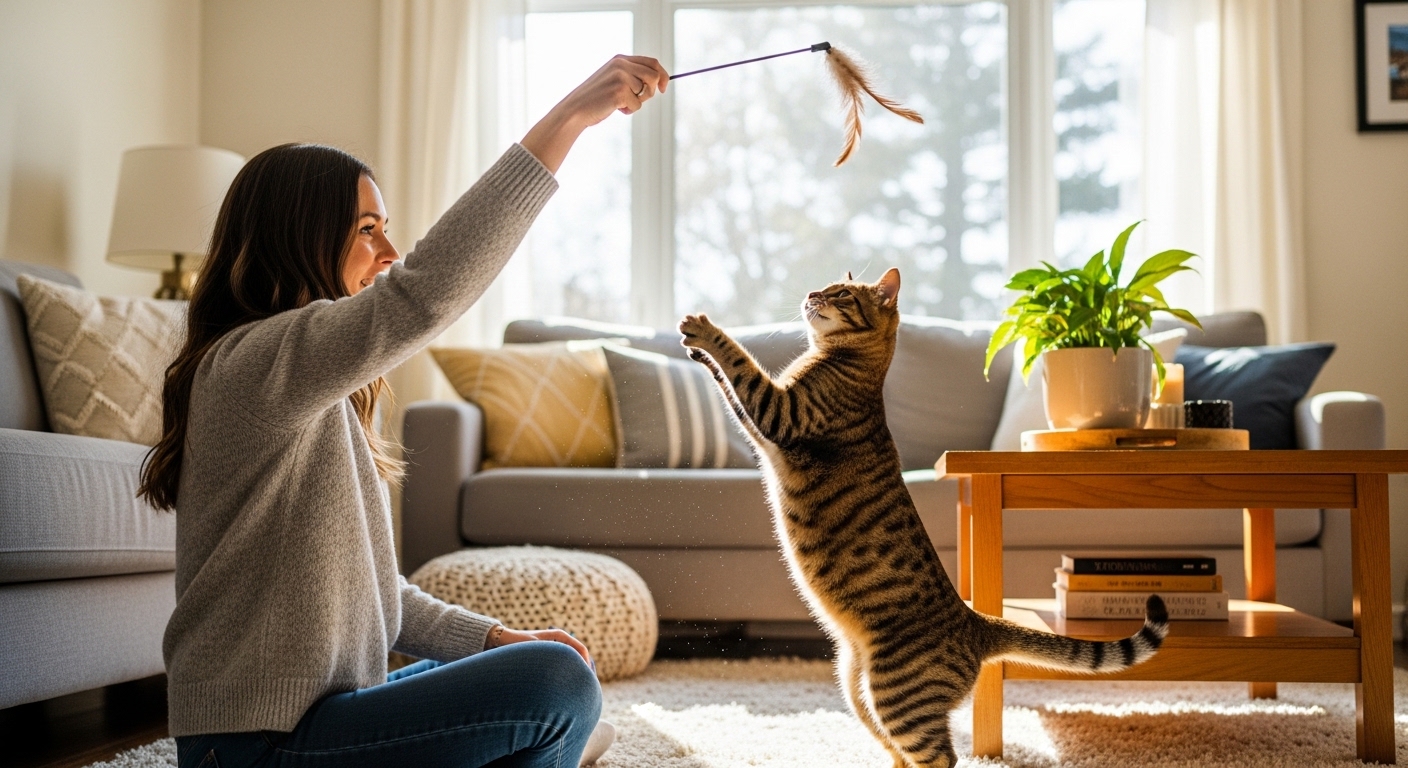
- Increase interactive play sessions indoors. A cat that has already 'hunted' a feather wand for fifteen minutes before going outside has partially satisfied the drive. Daily structured play is one of the most underused tools in a cat owner's kit.
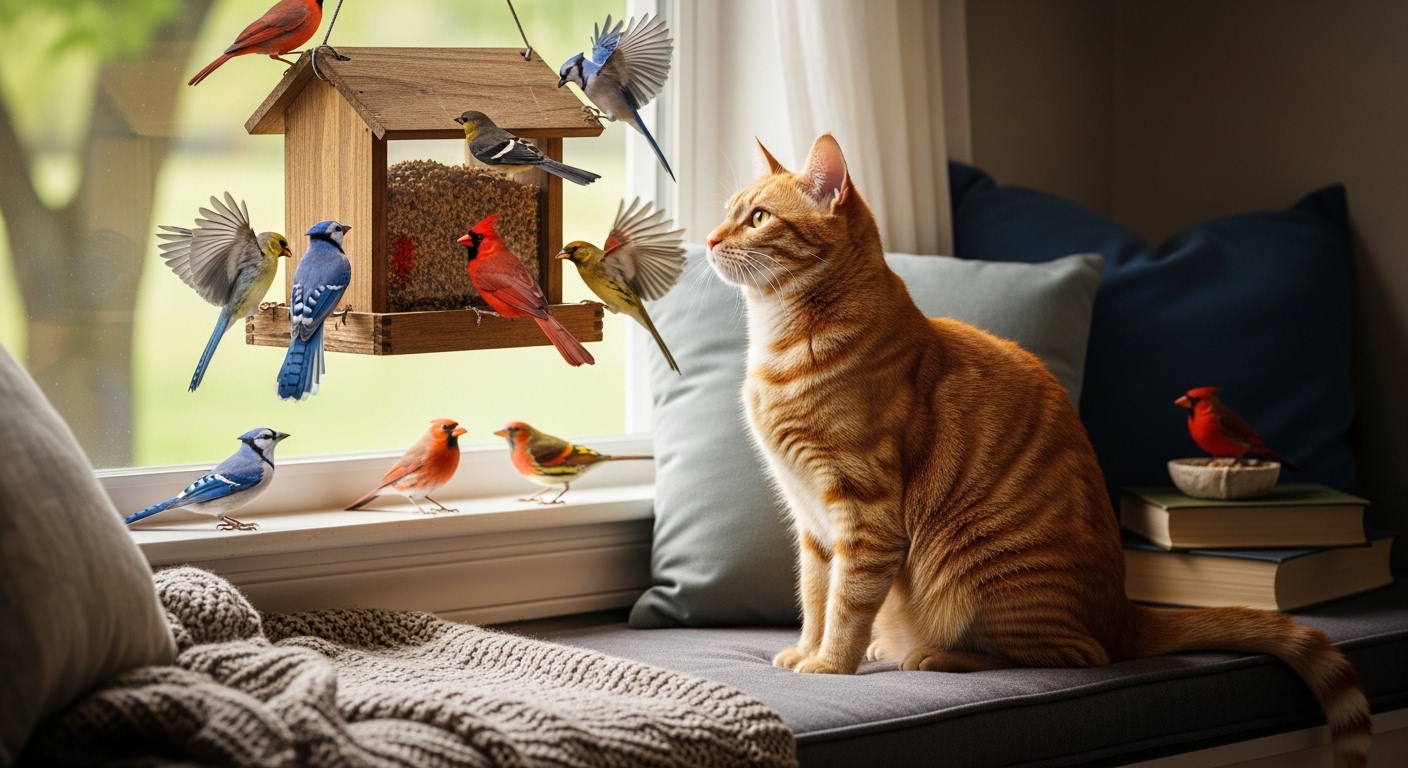
- Enrich the indoor environment. Puzzle feeders, window perches with bird feeder views, and rotating toys give a cat mental stimulation that partially substitutes for outdoor hunting.
- Consider supervised outdoor time. A catio, leash walks, or a secure garden enclosure lets your cat experience the outdoors without free-roaming access to wildlife.
None of these steps will work overnight. Expect a gradual reduction rather than a sudden stop, and accept that some cats are simply more driven hunters than others — a fact you will learn quickly if you own a Bengal or an Abyssinian.
Common Mistakes Owners Make
The instinct to scold your cat when she arrives with prey is understandable. It does not help. Cats do not connect a delayed reaction to a behavior they completed minutes ago, and punishment in this context may simply make your cat anxious around you without changing the hunting behavior at all.
Here are the mistakes worth avoiding:
- Reacting with loud alarm or chasing the cat — this can read as exciting play and accidentally reinforce the behavior.
- Removing the prey without acknowledging the cat at all, which misses a chance to redirect with a toy or treat.
- Relying on a bell collar alone and calling it done — it helps, but it is rarely sufficient on its own.
- Assuming the behavior will fade naturally with age — some cats do slow down, but many remain active hunters well into their senior years.
- Ignoring the wildlife impact — outdoor cats are a significant source of bird and small mammal mortality, and that is worth taking seriously even if your individual cat seems like a minor contributor.
One thing that catches new cat owners off guard: even indoor-only cats occasionally bring 'gifts' in the form of toys, socks, or hair ties deposited at your feet with the same ceremonial air. The instinct is the same. The cleanup is considerably easier.
Expert Tips That Actually Make a Difference
Talk to cat behaviorists and the advice tends to converge on a few practical points that go beyond the standard 'keep them inside' recommendation.
The single most effective long-term strategy is making the indoor environment genuinely stimulating — not just tolerable. A bored cat with outdoor access will hunt more, not less.
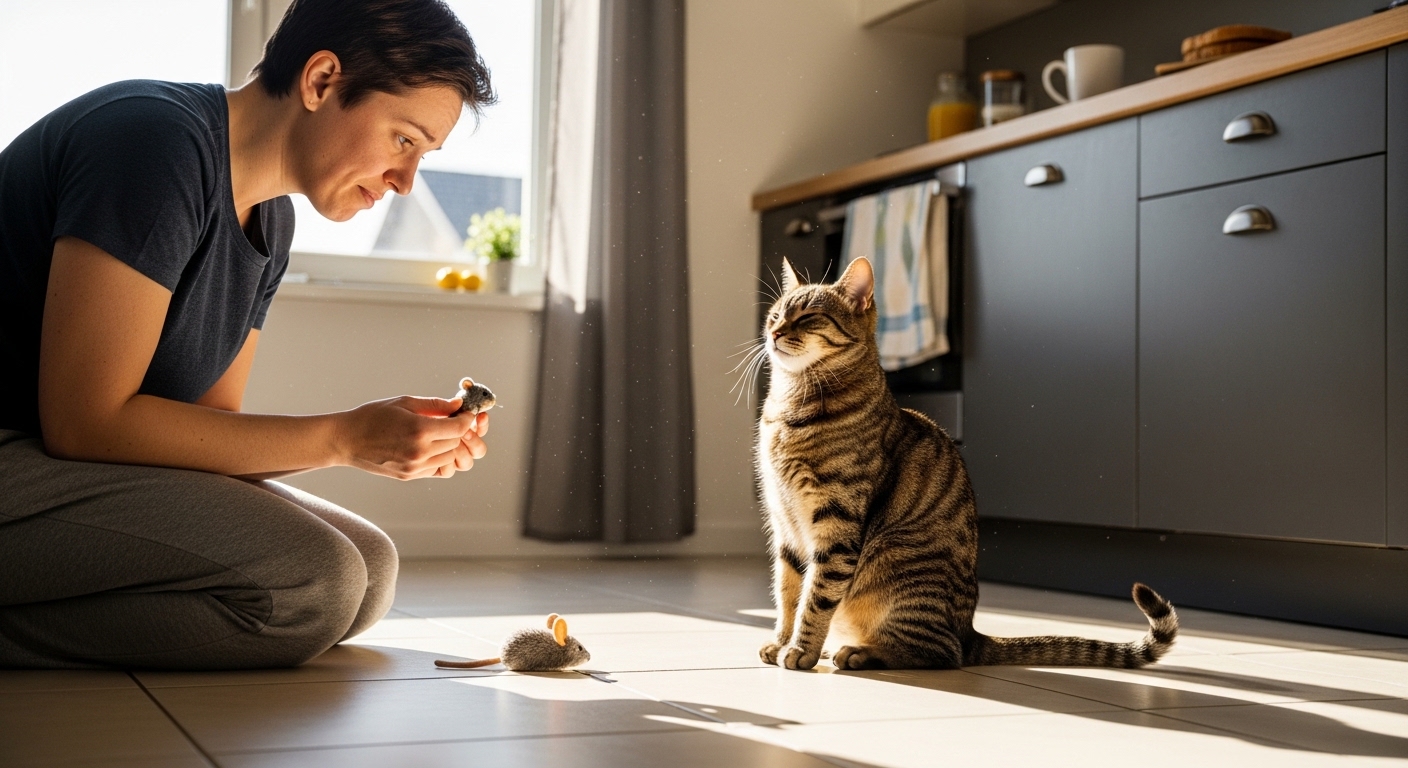
Timing your play sessions matters more than most owners expect. Playing with your cat for ten to fifteen minutes immediately before their main meal mimics the hunt-catch-eat sequence that is hardwired into feline behavior. Cats that follow this rhythm regularly tend to be calmer and less frantic in their outdoor activity, according to many feline behavior specialists.
Rotating toys also helps more than people think. A toy that has been sitting in the same corner for three weeks is invisible to your cat. Putting toys away and reintroducing them keeps novelty alive. You do not need expensive equipment — a crinkled piece of paper or a wine cork can hold a cat's attention just as well as a forty-dollar electronic toy, at least for a while.
If your cat has a specific hunting window — say, early morning — that is the time to schedule a play session, not the evening. Matching enrichment to the cat's natural rhythm is more effective than convenience-based scheduling.
When to See a Professional
Hunting behavior itself is normal and does not require professional intervention. There are situations, though, where consulting a vet or a certified cat behaviorist makes sense.
If your cat is bringing in prey and showing signs of illness afterward — vomiting, lethargy, or changes in appetite — a vet visit is warranted, since prey animals can carry parasites and disease. Cats that hunt and eat their catches may need more frequent parasite screening than indoor-only cats.
If the behavior is escalating alongside other signs of anxiety, overgrooming, or aggression, a behaviorist can help identify whether something environmental is amplifying the drive. And if you are struggling to manage a cat that is causing significant local wildlife damage despite your best efforts, a professional can offer a more tailored management plan than general advice allows.
Frequently Asked Questions
Is my cat bringing me dead animals as a sign of affection?
Affection may be part of it, but the behavior is more accurately described as social and instinctive rather than purely emotional. Many behaviorists suggest cats are acting on the same impulse that drives mother cats to provision their young — treating you as a member of the group who needs feeding or hunting instruction. Whether that counts as affection is partly a matter of interpretation, but it is not aggression or a warning sign.
Will neutering or spaying reduce hunting behavior?
Neutering and spaying reduce roaming and some forms of territorial behavior, but they have little consistent effect on hunting drive. A spayed female cat can be just as dedicated a hunter as an intact one. The drive is not hormonally dependent in the same way that mating behavior is.
My indoor cat brings me toys — is that the same thing?
Essentially, yes. The underlying mechanism appears to be the same. Indoor cats redirect the prey-delivery instinct onto objects in their environment, which is actually a healthy outlet. If your cat regularly drops toys at your feet, especially while vocalizing, she is expressing the same impulse in a way that costs no wildlife anything.
The honest reality of living with a hunter is that you will probably never fully stop the behavior — you can only shape the context around it. Keeping your cat indoors more, playing with her consistently, and making the indoor environment genuinely interesting will reduce incidents without requiring you to fight against something that is simply part of what cats are. The doormat surprises may not disappear entirely, but they can become considerably less frequent with steady effort.
Comments
Post a Comment