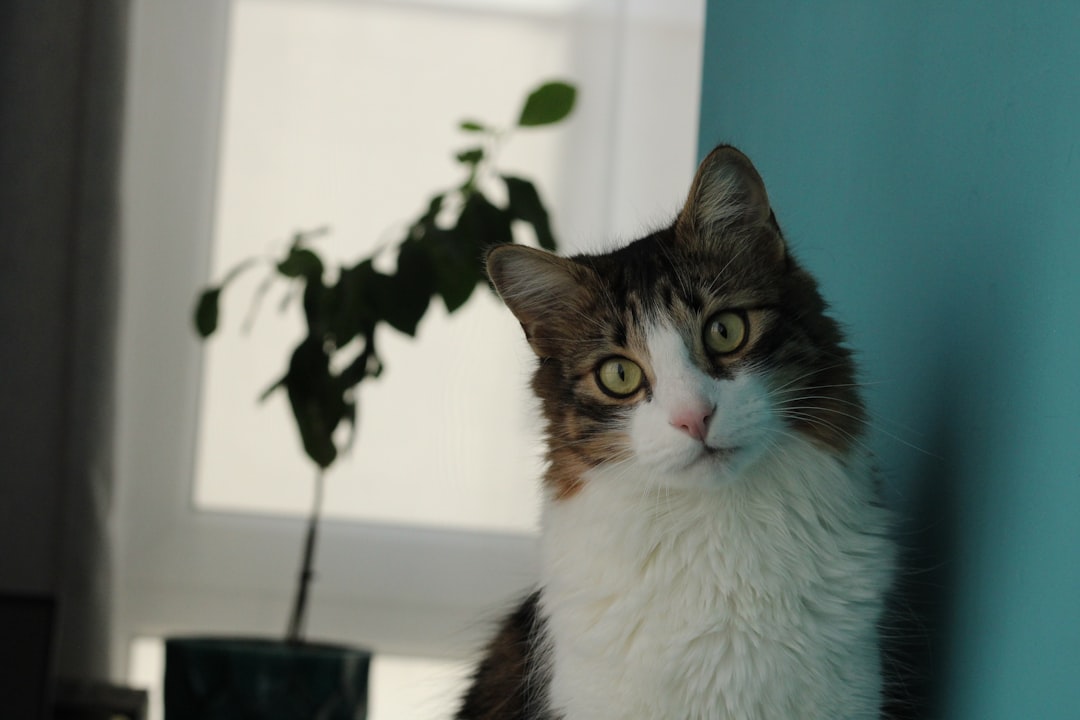
You are sitting quietly on the couch when your cat suddenly makes that bizarre stuttering sound — somewhere between a chirp, a chatter, and a tiny machine gun. She is locked onto a sparrow outside the window, tail twitching, jaw clicking rapidly. If you have never heard it before, it is genuinely startling. If you have heard it a hundred times, you probably still wonder what on earth is going on inside that small, intense brain. The chirping behavior cats display at birds (and squirrels, and the occasional fly on the ceiling) has a real name and a real explanation rooted in feline instinct — and understanding it makes the whole scene a lot more fascinating.
Why It Happens: The Science Behind the Chatter
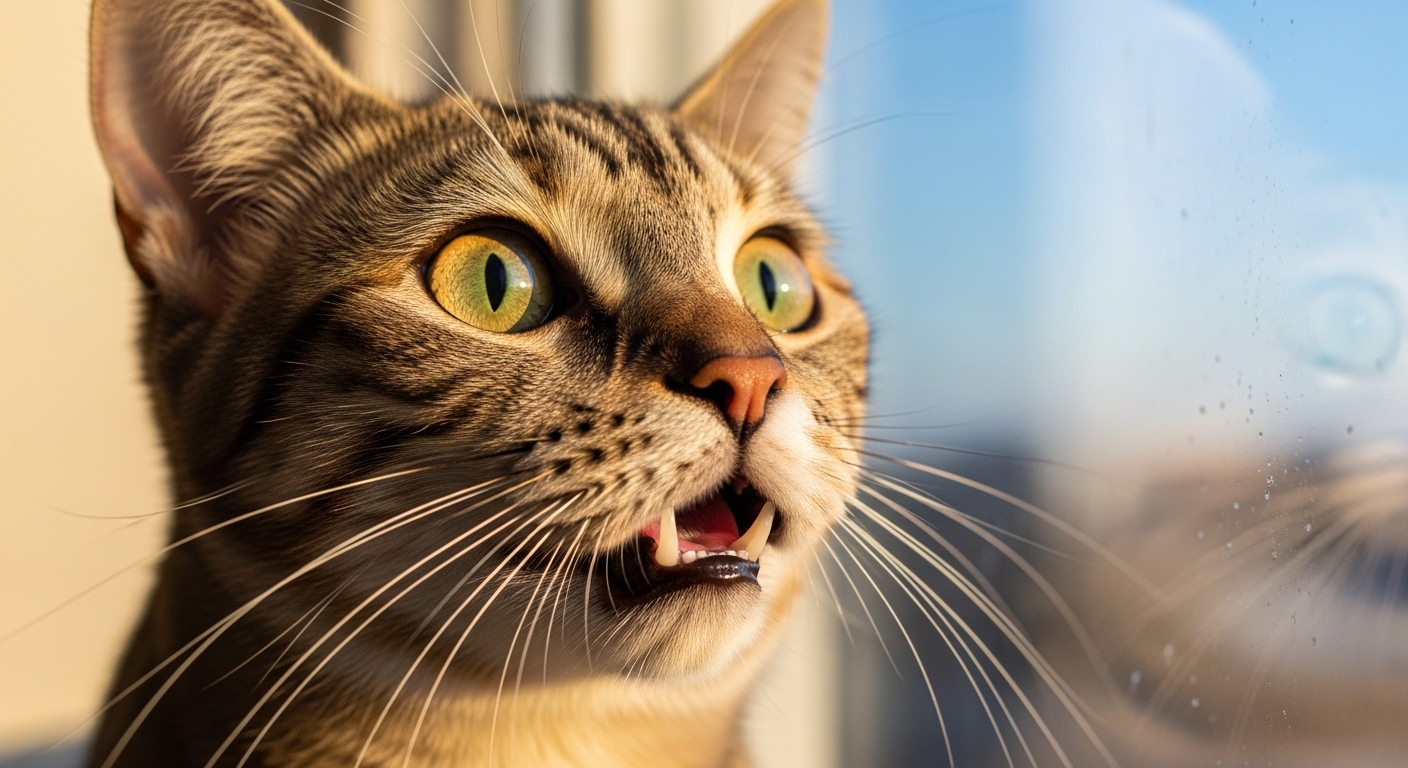
The technical term researchers use is "frustration vocalization," and that label tells you most of what you need to know. Your cat sees prey she cannot reach. The hunting drive fires up completely — pupils dilate, muscles tense, attention narrows to a single point — but the glass stops her cold. The chattering sound appears to be an involuntary response to that blocked predatory impulse.
There is also a second theory that has gained traction among animal behaviorists. Some researchers suggest the jaw movement mimics the killing bite cats use to sever a prey animal's spinal cord — a rapid, precise chomp to the back of the neck. The vocalization may be the sound that accompanies that instinctive motor pattern firing without an actual target. Think of it as the brain running a program that the body cannot fully execute.
A 2010 study conducted in Brazil added another intriguing layer. Researchers recorded wild pied tamarins responding to a margay — a small wild cat — that was imitating the tamarins' own calls to lure them closer. This suggested that some felids may use vocalizations strategically during hunting. Whether domestic cats are doing something similar when they chirp at birds through glass is still debated, but it raises the possibility that the sound is not purely involuntary. Cats are, after all, considerably more calculating than they sometimes let on.
Here is a look at what a typical window-chattering moment actually involves for your cat.
Step-by-Step: What Your Cat Is Actually Doing
Breaking down the sequence helps clarify why this behavior looks so peculiar from the outside. It is not random — each stage follows a predictable predatory pattern that simply gets interrupted at the final step.
- Detection: Your cat spots movement outside — a bird landing on a branch, a squirrel crossing the fence. Even small, distant movement triggers immediate attention.
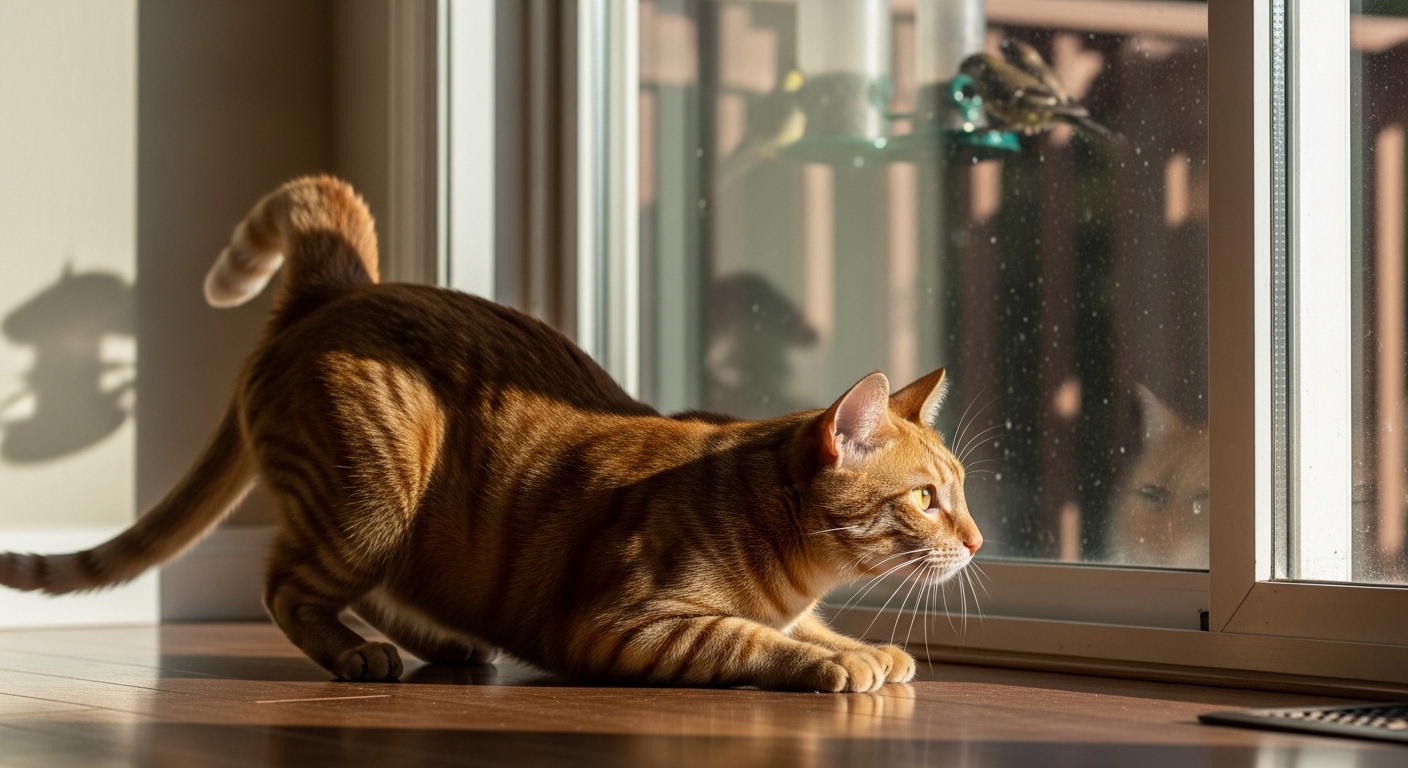
- Stalking posture: The body lowers slightly. Pupils dilate. The tail may begin a slow, controlled flick. Your cat is now fully in hunting mode.
- Target lock: Eyes fix on the prey animal without blinking. The head may make subtle tracking movements, following every hop and flutter.
- Chattering onset: As the prey moves in a way that would normally trigger a pounce, the jaw begins clicking. The vocalization — a rapid, stuttering chirp — starts here, often accompanied by a slight trembling of the lower jaw.
- Frustration plateau: The cat holds this state as long as the bird is visible. Some cats will hold position for ten or fifteen minutes without breaking focus, which is impressive dedication to something they cannot actually catch.
- Release: When the bird flies away, your cat may sit back, groom briefly, or walk away with an air of studied indifference — as if none of that just happened.
The grooming afterward is not coincidence. It is a common displacement behavior, a way for cats to reset after a high-arousal moment that did not resolve the way instinct expected.
Common Mistakes Owners Make About This Behavior
Most misreadings of window chattering are harmless, but a few lead owners to make choices that are not great for their cat's wellbeing.
- Assuming the cat is in distress: The chattering sounds odd and intense, but it is not a sign of pain or illness. Your cat is frustrated, yes, but this is normal predatory frustration — not suffering.
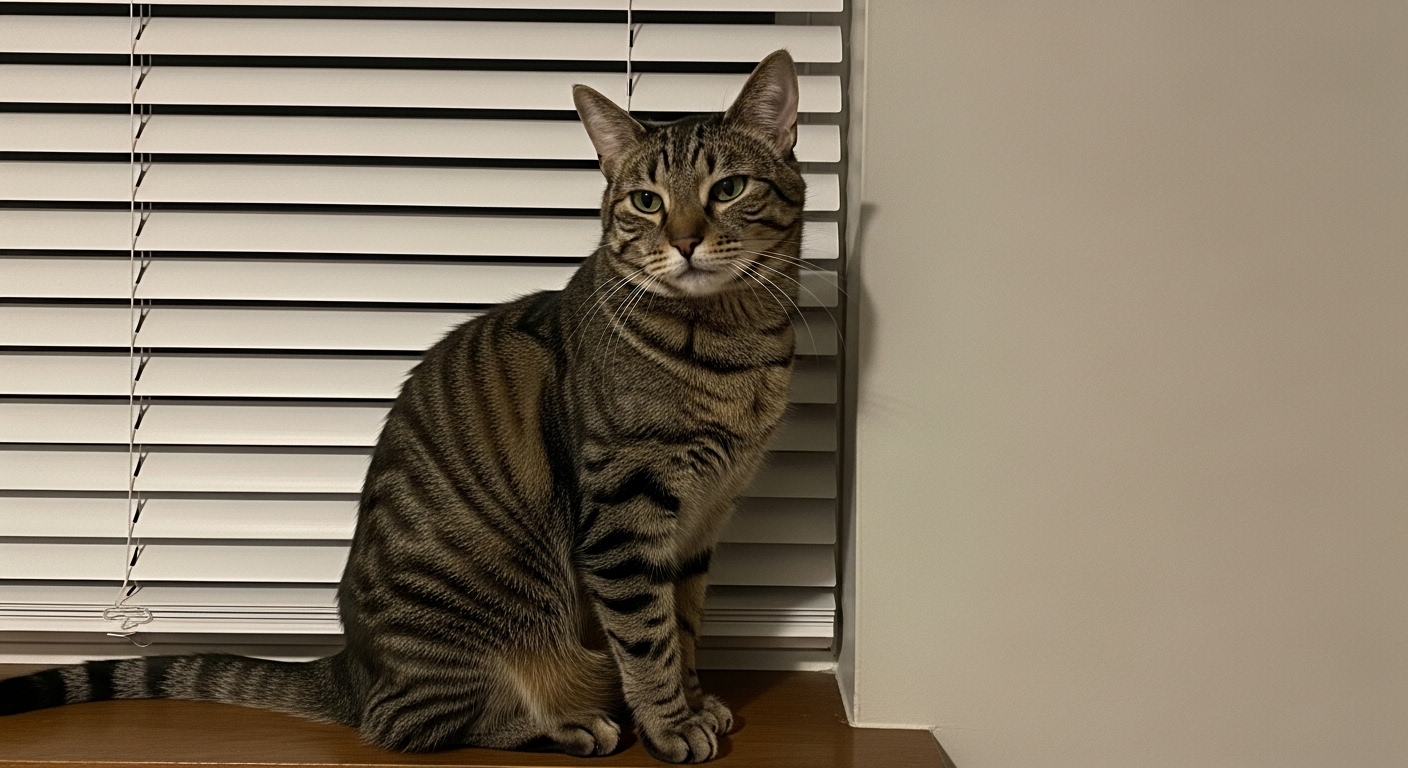
- Blocking the window to "protect" the cat: Some owners close the blinds thinking they are reducing stress. In reality, window-watching is a significant source of environmental enrichment for indoor cats. Taking it away removes stimulation, not frustration.
- Laughing it off and providing no outlet: The flip side of blocking the view is ignoring the underlying drive entirely. A cat that spends hours in frustrated hunting mode with no physical outlet may redirect that energy in less convenient ways — like attacking your ankles at 2 a.m.
- Thinking the cat wants to go outside: Window chattering is not necessarily a request for outdoor access. Many indoor cats chatter at birds their whole lives without ever showing signs of wanting to escape. The behavior is about the hunt, not the destination.
Expert Tips: Channeling the Hunting Drive
You cannot stop the chattering, and you probably should not try. What you can do is give your cat a more complete hunting experience so the frustration does not just sit there, unresolved.
The goal is not to eliminate predatory behavior — it is to give it somewhere to go.
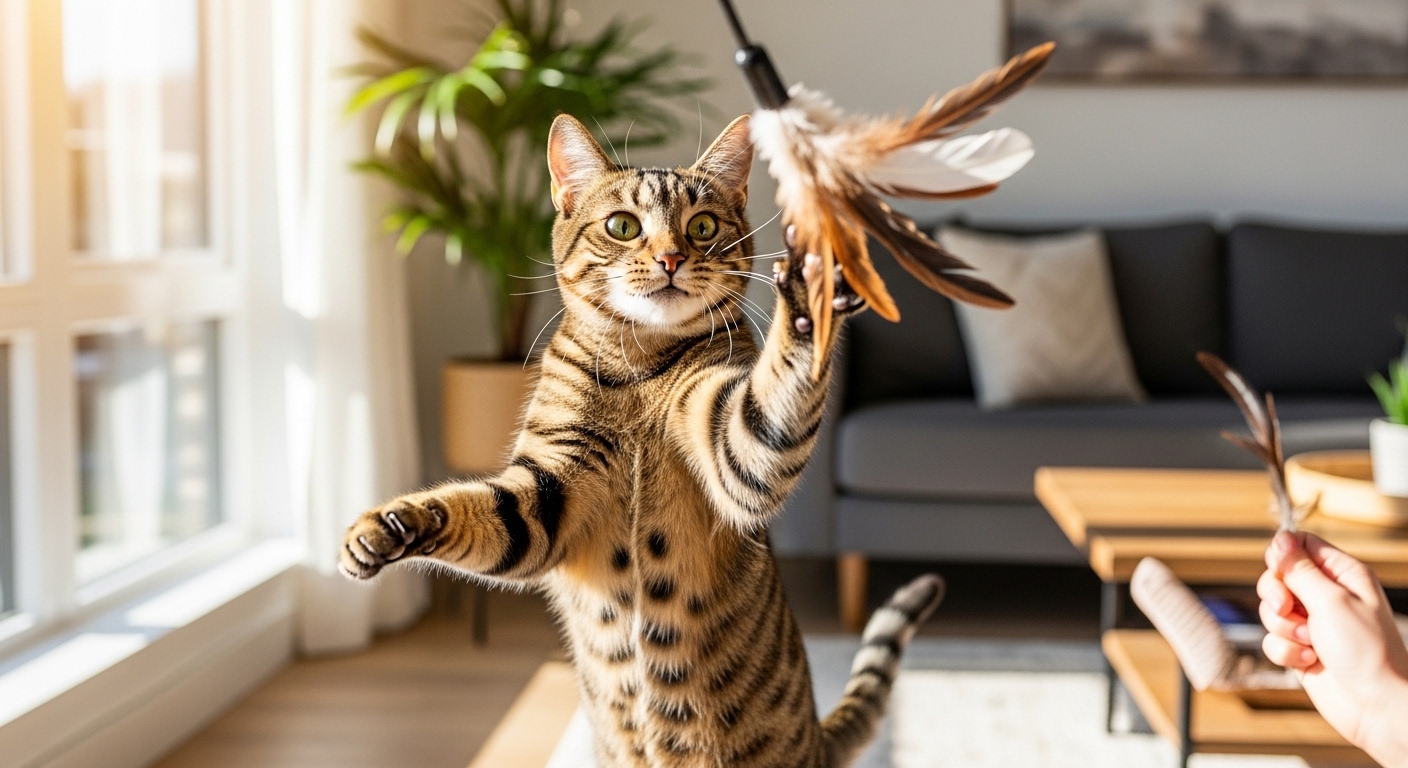
Many behaviorists suggest structured play sessions using wand toys or feather teasers, ideally timed for when your cat is most active — usually dusk and dawn. The key detail most owners miss is letting the cat actually "catch" the toy at the end of the session. Ending play abruptly without a catch leaves the predatory sequence incomplete, which is essentially the same frustration as the window situation. Toss a small toy at the end so your cat can grab it, bite it, and bunny-kick it into submission. That final stage matters.
A bird feeder placed just outside a window your cat can access is genuinely one of the best enrichment investments you can make. Yes, your cat will chatter more. That is the point — it is engagement, not agitation. After living with a particularly window-obsessed cat for a few years, you start to appreciate how much calmer they are in the evenings after a full afternoon of "bird TV."
Puzzle feeders and food-dispensing toys also tap into the same predatory sequence — locate, stalk, capture — and can reduce the intensity of frustration-based behaviors over time. Rotating toys every few days keeps novelty high, since cats habituate to the same objects surprisingly fast.
When to See a Pro
Window chattering on its own is not a reason to call your vet or a behaviorist. It is normal feline behavior, full stop. There are a few situations, though, where it is worth getting a professional opinion.
If the chattering is accompanied by signs of genuine distress — excessive vocalization throughout the day, inability to settle, destructive behavior, or aggression toward people or other pets — that points to a broader anxiety or under-stimulation issue that a certified cat behaviorist can help address. Similarly, if your cat suddenly starts chattering at things that are not there, or the jaw movement seems involuntary and unconnected to any visual stimulus, consult your veterinarian. In rare cases, repetitive jaw movements can have a neurological or dental component that warrants a check-up.
Any new or escalating behavior that seems out of character for your specific cat is always worth a conversation with your vet, even if the behavior itself sounds benign.
Frequently Asked Questions
Is window chattering a sign that my cat is unhappy being indoors?
Not necessarily. Many indoor cats chatter at birds throughout their lives without showing other signs of stress or discontent. The behavior reflects a functioning predatory drive, not a protest against indoor living. That said, if your cat also shows signs like excessive grooming, hiding, or aggression, it may be worth evaluating overall enrichment levels — chattering alone is not the red flag, but the full picture matters.
Do all cats chirp at birds, or just some?
Not every cat does it, and frequency varies widely. Some cats chatter intensely at every bird that passes; others barely react. Individual personality, prey drive, and early life experiences all seem to play a role. Cats that were not exposed to much environmental stimulation as kittens may show less of this behavior, while highly prey-driven cats may chatter at insects, ceiling fans, and television screens showing wildlife documentaries.
Can I teach my cat to stop chattering?
You can try, but redirecting is more realistic than stopping. The vocalization is largely involuntary and tied to deep instinct — punishing or discouraging it is unlikely to work and may create stress around something that is otherwise harmless. A better approach is channeling the drive through play and enrichment so the behavior has less pent-up energy behind it.
Window chattering is one of those cat behaviors that looks bizarre until you understand what is driving it, and then it makes complete sense. Your cat is not malfunctioning — she is running ancient predatory software on hardware that is stuck behind a pane of glass. The practical takeaway is straightforward: keep the window view available, add a bird feeder if you can, and run a proper play session in the evening that actually ends with a catch. That covers most of what your cat needs from you on this front.
Comments
Post a Comment