Ask anyone who has lived with an Abyssinian and they will probably tell you the same thing: you do not own this cat, you coexist with a small, opinionated athlete who has decided your home is an interesting enough place to stay. Abyssinians are relentlessly curious, physically agile, and socially demanding in ways that catch a lot of first-time owners off guard. They are not lap cats. They are not quiet cats. They are the kind of cats that will watch you cook, supervise your shower, and then sprint across your keyboard at the worst possible moment. If that sounds exhausting, it might be. If it sounds entertaining, you might be exactly the right person for one.
Origins & History
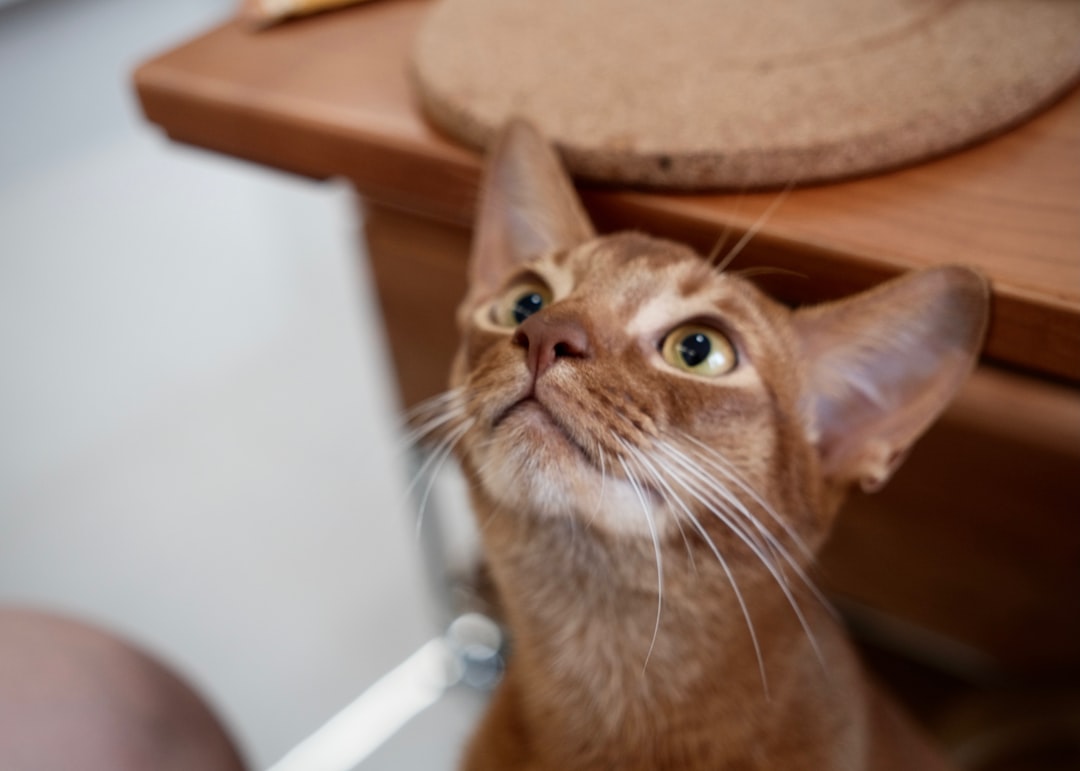
The Abyssinian's exact origins are genuinely murky, which is fitting for a breed that seems to enjoy keeping people guessing. The popular story links them to ancient Egypt — their lean, muscular build and large, almond-shaped eyes do bear a striking resemblance to cats depicted in Egyptian art and sculpture. However, genetic studies suggest the breed's roots may actually trace closer to the coastal regions of the Indian Ocean, possibly present-day Ethiopia or Southeast Asia.
The breed was formally developed in Britain during the late 19th century. A cat named Zula, reportedly brought back from Abyssinia (now Ethiopia) after the 1868 Abyssinian War, is often cited as a founding ancestor — though historians debate how much of that story holds up under scrutiny. What is clear is that by the early 1900s, the Abyssinian was being shown and selectively bred in England, and the Cat Fanciers' Association recognized the breed in the United States by the 1930s. Today they remain consistently popular, frequently ranking among the top ten most registered breeds in North America.
Appearance & Size
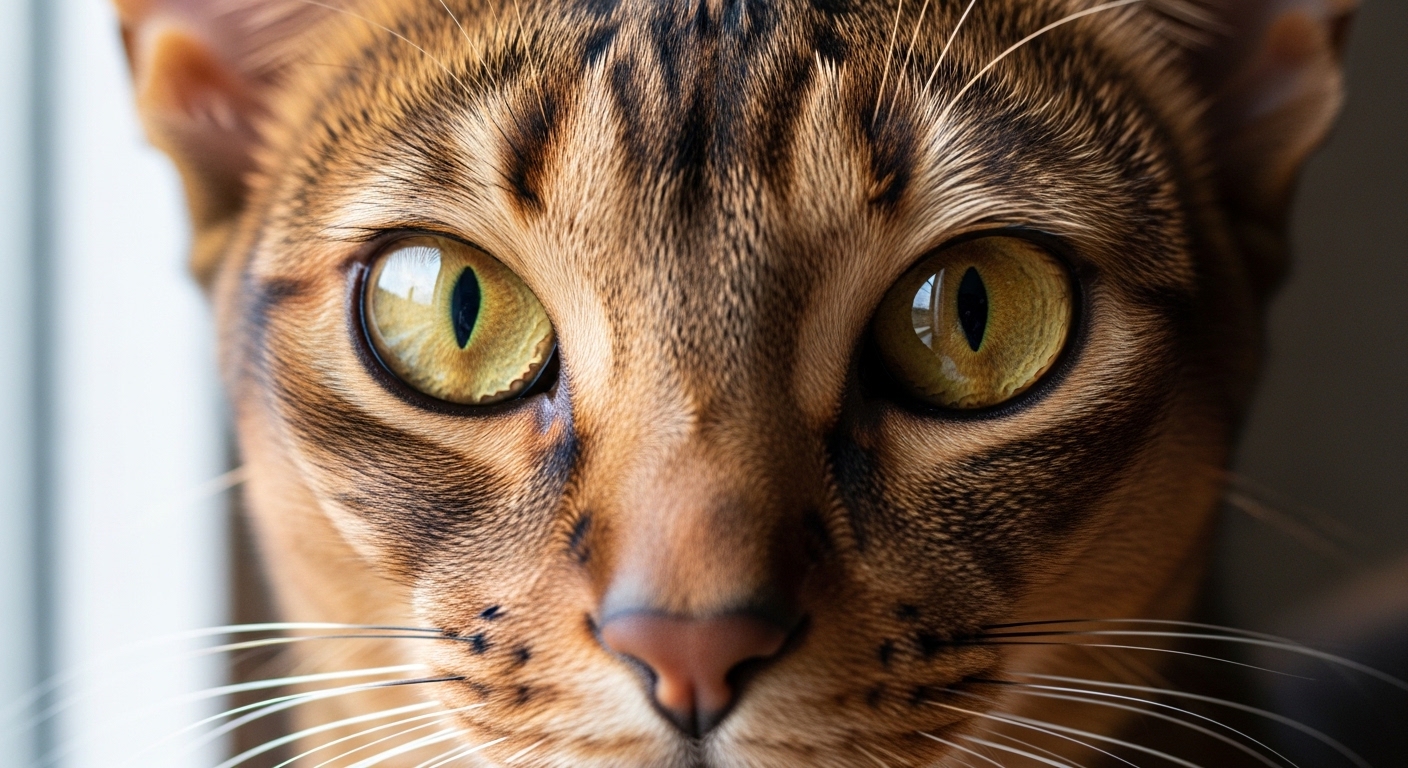
The Abyssinian is a medium-sized cat, typically weighing between 6 and 10 pounds, with females running slightly smaller. What makes them look distinctive is not just their size but their proportions — long, lean legs, a slightly arched back, and a wedge-shaped head that sits on an elegantly long neck. They look like they were designed for speed, and they were.
The coat is short, dense, and defined by a feature called ticking — each individual hair is banded with alternating light and dark colors, creating a warm, shimmering effect that looks almost luminous in sunlight. The most common color is ruddy (a warm reddish-brown), but Abyssinians also come in blue, fawn, and cinnamon. Their large ears are alert and slightly forward-facing, and their eyes — gold, green, or hazel — are outlined in a darker ring that gives them a naturally dramatic expression. On the grooming side, the short coat is genuinely low maintenance. Weekly brushing keeps shedding manageable, and you will not find fur tumbleweeds rolling across your floor the way you might with a longer-haired breed.
Temperament
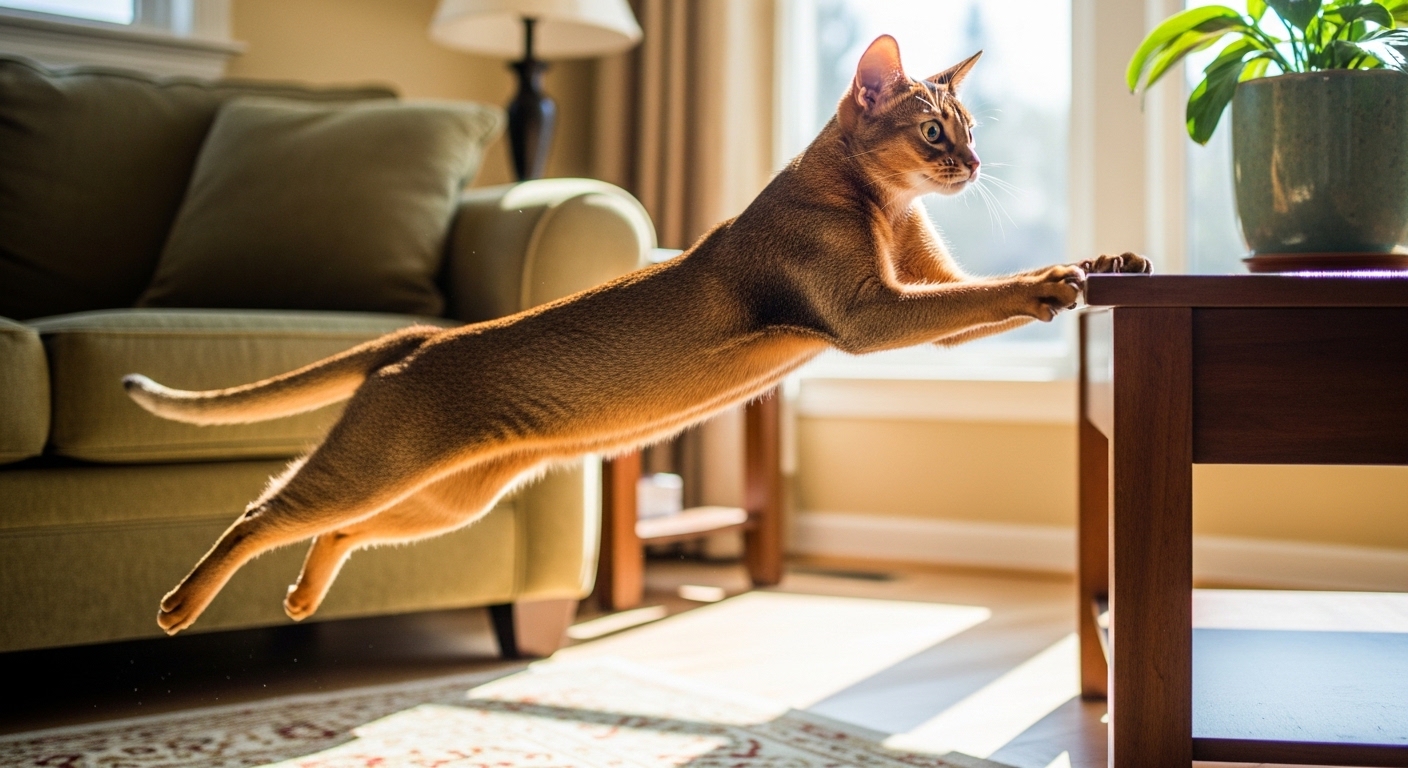
Active does not quite cover it. Abyssinians are among the most physically and mentally engaged cat breeds you will encounter, and they need stimulation the way some cats need sleep — constantly and urgently. They climb. They jump. They investigate every bag you bring home, every drawer you open, every guest who walks through the door. Boredom is genuinely bad for them, and a bored Abyssinian will find ways to entertain itself that you probably will not appreciate.
They are deeply social with their people but not in a cuddly, sedentary way. An Abyssinian will follow you from room to room, sit near you rather than on you, and engage with whatever you are doing. They tend to get along well with other cats and cat-friendly dogs, and many owners find that keeping two Abyssinians together helps manage their social energy — especially during long work days. They are not typically aggressive, but they are assertive and will communicate their preferences loudly and clearly.
They are also remarkably trainable for cats. Many Abyssinians learn to fetch, walk on a leash, and respond to their names with a reliability that surprises people used to more aloof breeds. That intelligence cuts both ways, though — they figure out how to open cabinets, unlatch doors, and access places you thought were secure.
Real Owner Reality: Living with an Abyssinian means accepting that nothing on a low shelf or countertop is truly safe. One common owner complaint is that the cat does not knock things over out of malice — it does so while investigating them with complete focus and zero awareness of consequences. Childproofing your breakables is not an overreaction.
Health & Lifespan
Abyssinians are generally a healthy breed with a lifespan of around 12 to 15 years, and some live well into their late teens with good care. That said, like all purebred cats, they carry some breed-specific health considerations worth knowing about before you commit.
Progressive retinal atrophy (PRA) is a hereditary condition that may affect some Abyssinians, potentially leading to vision loss over time. Reputable breeders screen for this, so asking about genetic testing when selecting a kitten is reasonable and expected. Pyruvate kinase deficiency, a red blood cell enzyme disorder, is another condition that has been documented in the breed and can be screened for through DNA testing.
Abyssinians may also be prone to periodontal disease, so many vets suggest establishing a dental care routine early — whether that means brushing, dental treats, or regular professional cleanings. Renal amyloidosis, a kidney condition, has historically been noted in the breed, though its prevalence varies by lineage. As always, consult your veterinarian for guidance specific to your cat's health history and any concerns that come up along the way.
Many vets suggest scheduling annual wellness exams for Abyssinians starting from kittenhood, not just when something seems wrong — early detection of hereditary conditions can make a meaningful difference in long-term outcomes.
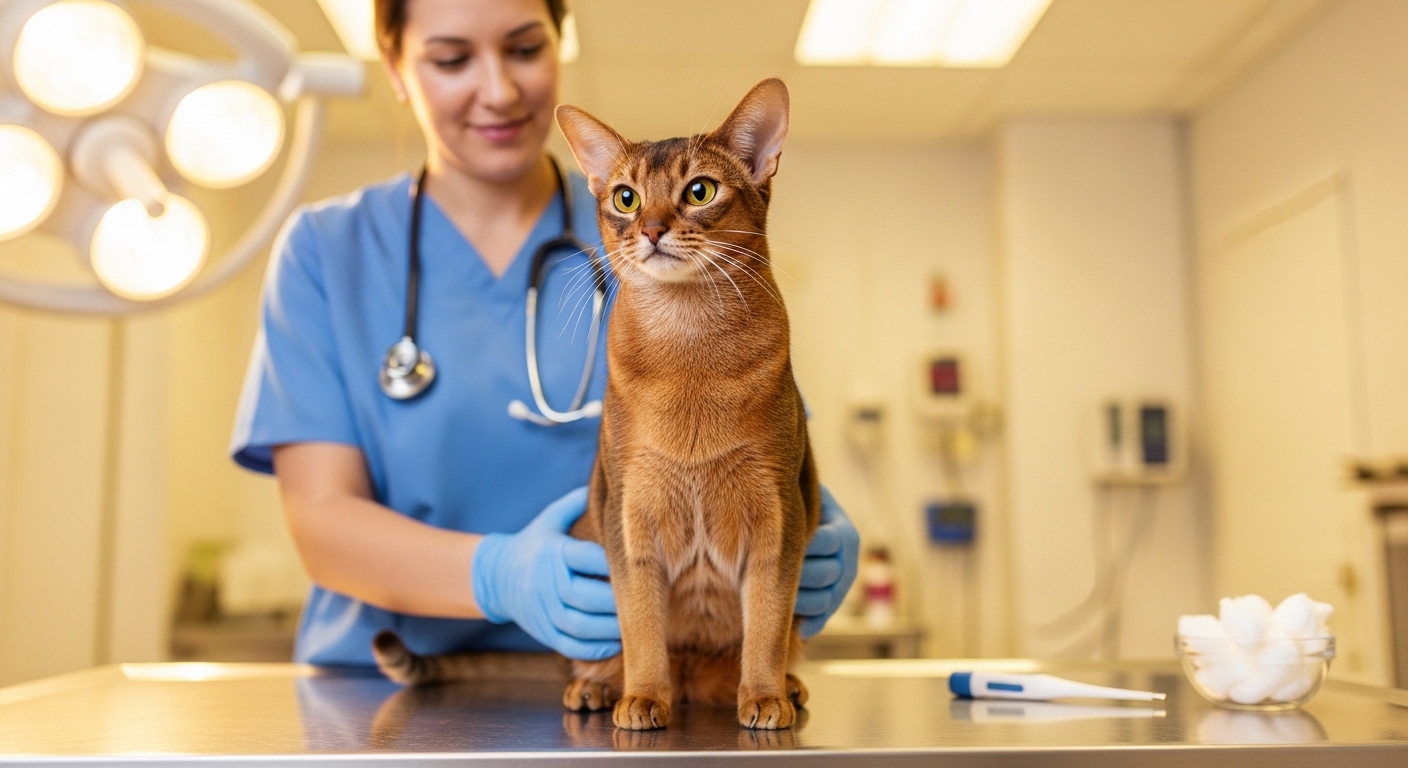
Is This Breed Right for You?
An Abyssinian thrives in a home where someone is around a fair amount, or where another pet provides company during the day. They do not do well with long stretches of solitude. If you work long hours and live alone, you may come home to a cat that has reorganized your bookshelves and shredded a toilet paper roll out of sheer frustration.
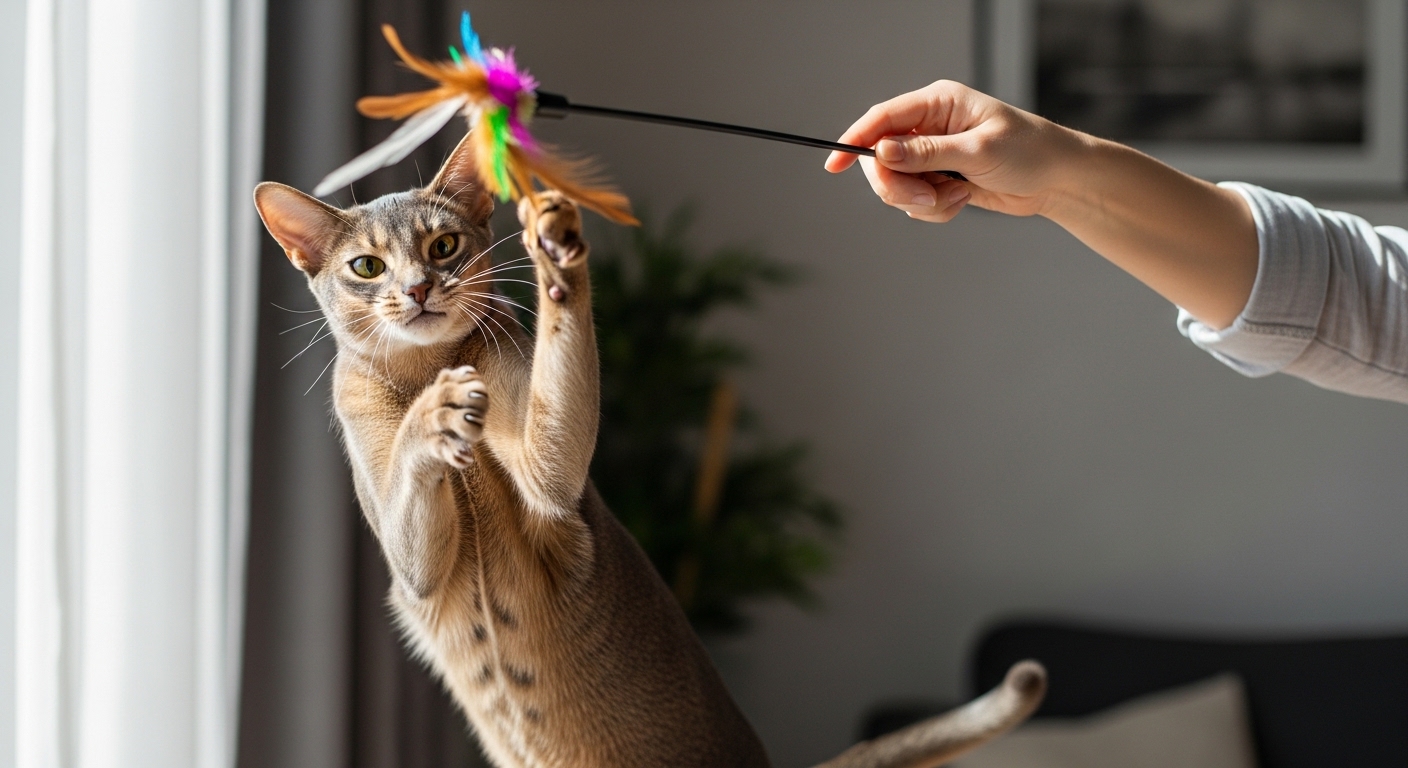
They are well-suited to active households, families with older children who engage with them appropriately, and owners who genuinely enjoy interactive play. Budget time every day for structured play sessions — a tired Abyssinian is a much calmer Abyssinian. Puzzle feeders, rotating toys, and cat trees with multiple levels all help channel their energy productively.
Apartment living is possible but requires more deliberate effort. Vertical space matters enormously to this breed, so a small apartment with tall cat trees and wall-mounted shelves works better than a larger space with nothing to climb. They are not particularly loud compared to breeds like Siamese, but they will vocalize when they want attention, and they will want attention regularly.
If you want a cat that mostly sleeps and requires minimal engagement, this is genuinely not the right breed. If you want a cat that acts more like a small, fur-covered roommate with strong opinions and an impressive vertical leap, the Abyssinian might be exactly what you are looking for.
Frequently Asked Questions
Do Abyssinians get along with other pets?
In most cases, yes — Abyssinians tend to be sociable with other cats and can coexist well with calm, cat-friendly dogs. They are active enough that a similarly energetic companion often suits them better than a more sedentary pet. Introductions should still be done gradually and carefully, as individual personalities vary.
Are Abyssinians good for first-time cat owners?
They can be, but with realistic expectations. First-time owners who are prepared for a high-energy, interactive cat often do very well with Abyssinians. Those expecting a low-maintenance, independent pet may find the experience overwhelming. Researching the breed thoroughly before adopting — which you are clearly already doing — is a solid start.
How much exercise does an Abyssinian need daily?
There is no fixed number, but most experienced owners suggest at least two dedicated interactive play sessions per day, each around 10 to 15 minutes, plus access to climbing structures and environmental enrichment throughout the day. A cat that has genuinely burned off energy is noticeably easier to live with by the evening.
The Abyssinian is not a complicated cat to understand — it wants engagement, stimulation, and your attention, more or less in that order. What catches people off guard is the sheer consistency of those needs. This is not a breed that has low-energy days very often. If you go in knowing that, and you have set up your home with enough vertical space, interactive toys, and time to actually play, you will probably find an Abyssinian to be one of the more rewarding cats you have ever shared a home with. Just keep your valuables on high shelves. Actually, keep them in a drawer.
Comments
Post a Comment