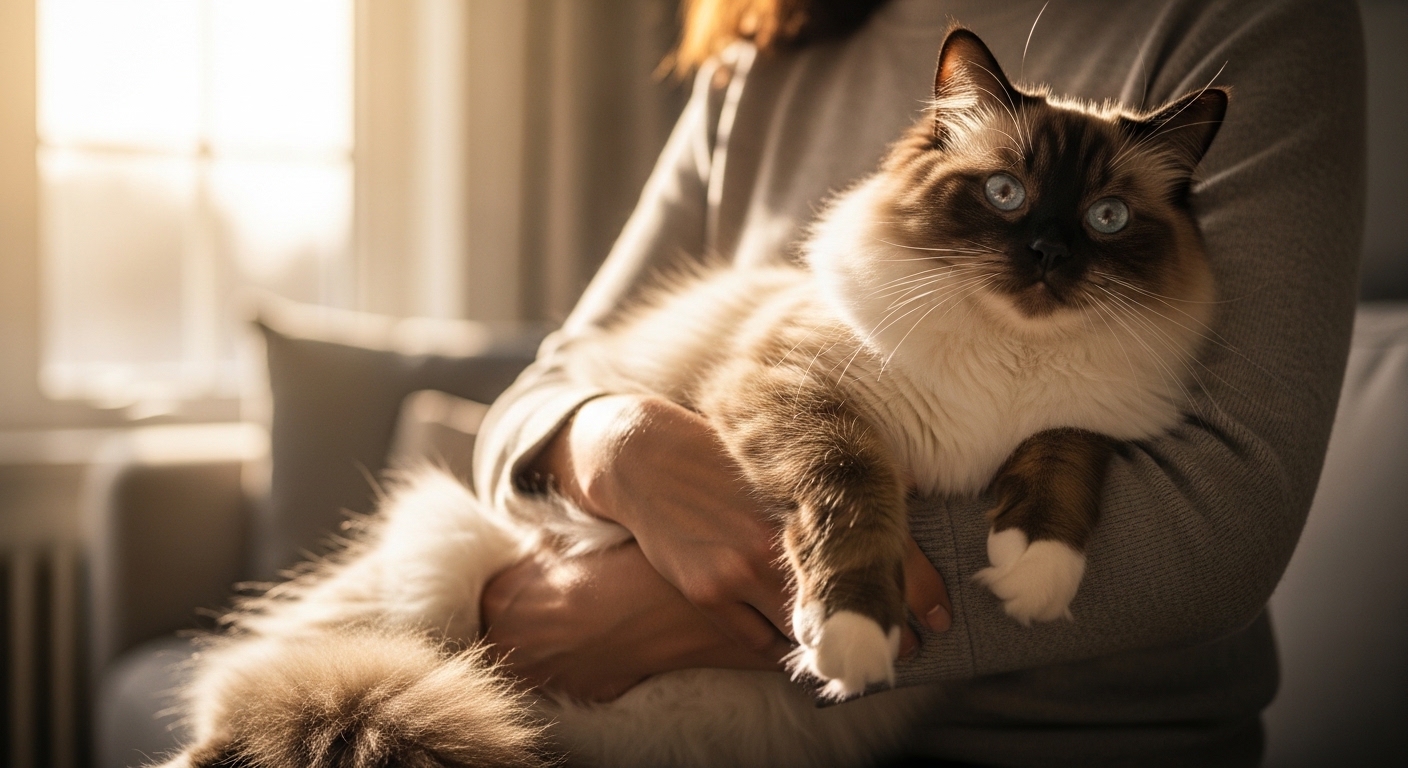
Ask any Ragdoll owner what surprised them most about the breed, and you will probably hear some version of the same story: they picked the cat up, and it just... went limp. Not in a worrying way — in a completely relaxed, trusting, almost theatrical way that makes you feel oddly chosen. Ragdolls have a reputation for being the dog-like cats of the feline world, and after spending any time with one, it is easy to see why. They follow you from room to room, greet you at the door, and have a genuinely uncanny ability to sense when you need company. This guide covers everything a prospective or new Ragdoll owner should know — the good, the shedding, and the vet bills.
Origins & History
The Ragdoll is a surprisingly recent breed. Ann Baker, a breeder in Riverside, California, developed it in the early 1960s by selectively breeding cats descended from a white domestic longhair named Josephine. Baker made some famously eccentric claims about the breed — including theories about pain resistance and unusual genetics — most of which have since been dismissed by the wider cat fancy community. What stuck, however, was the breed itself.
The name came directly from that floppy, go-limp behavior that kittens and adults alike display when held. Baker trademarked the name "Ragdoll" and set up her own registry, which created friction with mainstream cat organizations for years. Eventually, other breeders worked to bring the Ragdoll into recognized registries, and by the 1990s, organizations like TICA and the CFA had fully accepted the breed. Today, Ragdolls consistently rank among the most popular cat breeds worldwide — a long way from one breeder's backyard in California.
Appearance & Size
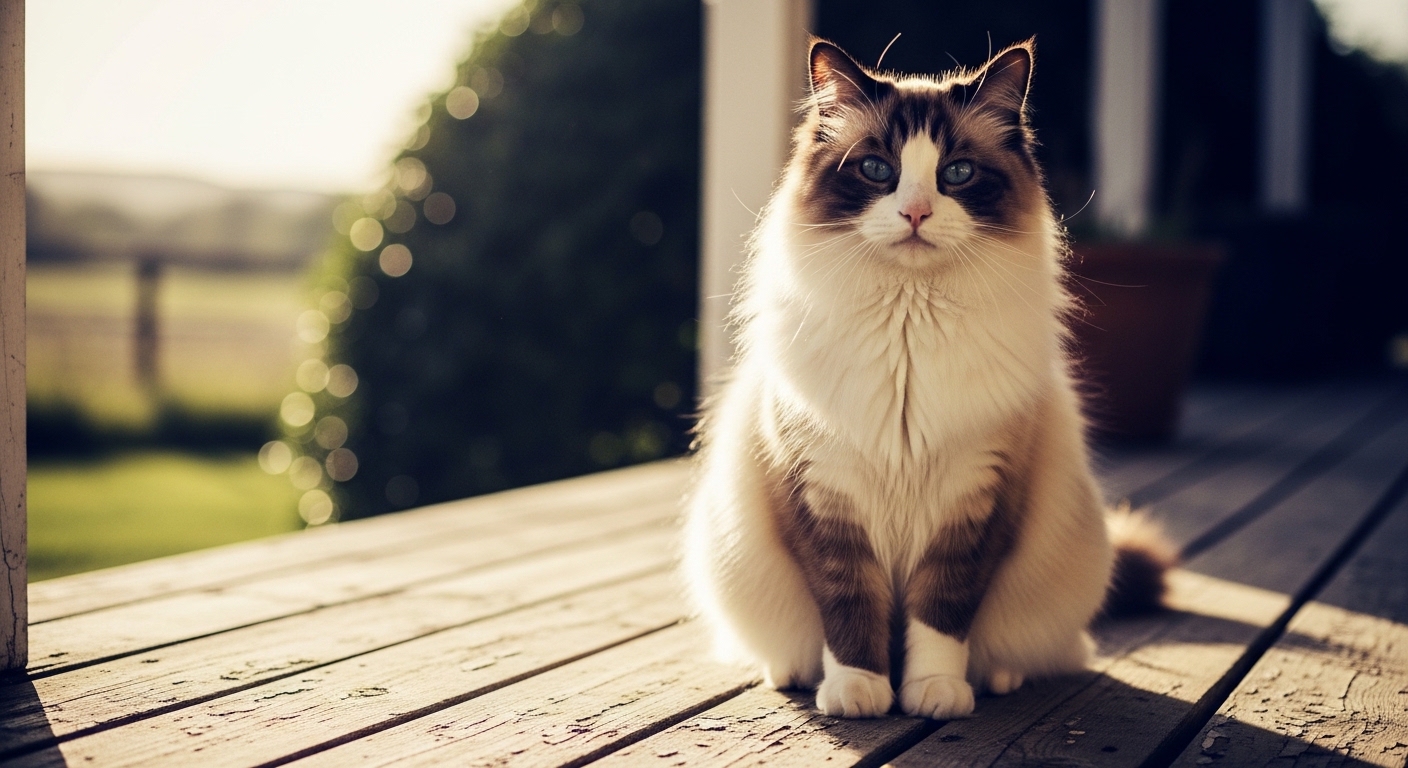
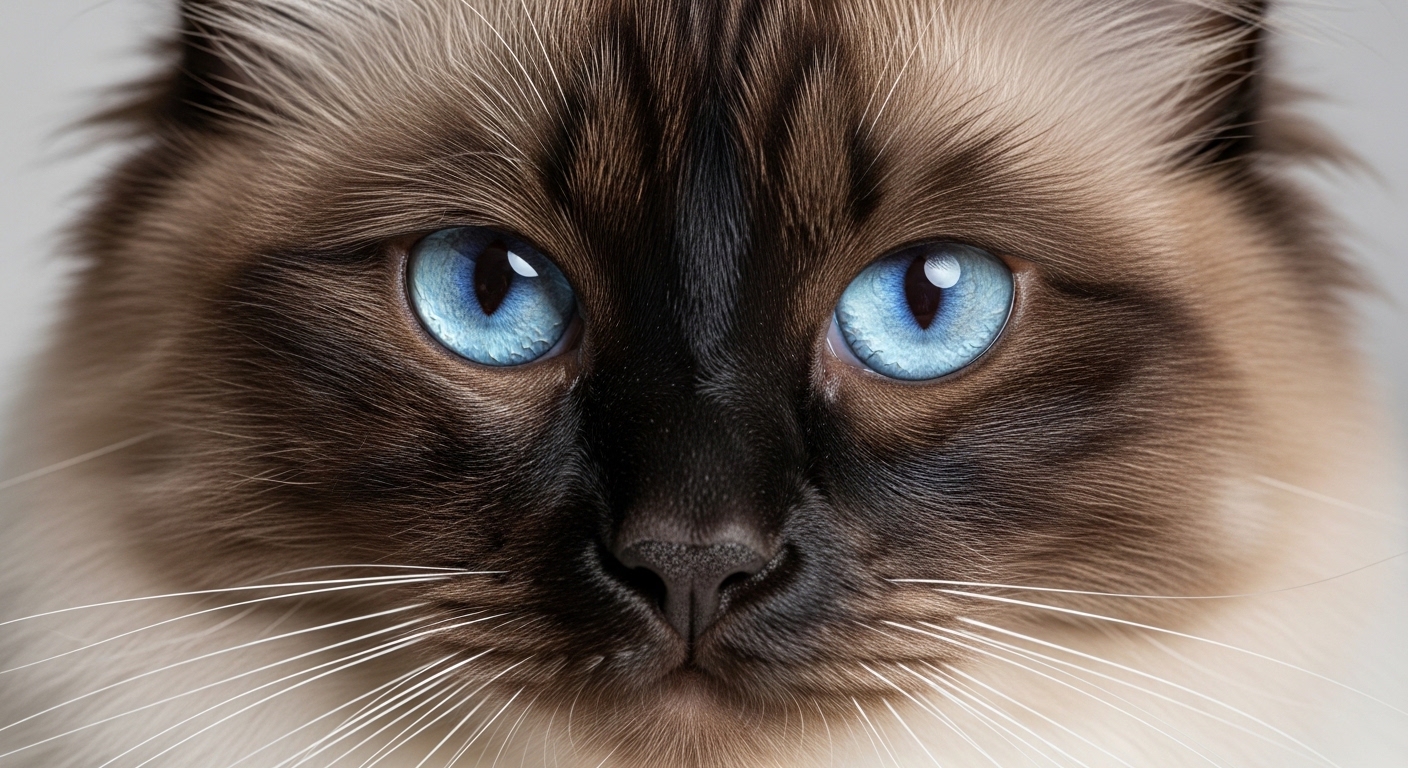
Ragdolls are big cats. Males typically weigh between 15 and 20 pounds, and females generally range from 10 to 15 pounds — though some males push past that upper limit without being overweight. They have a broad, modified wedge-shaped head, a strong chin, and those immediately recognizable blue eyes, which are always blue in the breed standard regardless of coat color. The eyes alone tend to stop people in their tracks.
The coat is semi-long, silky, and relatively low-mat compared to other longhaired breeds, though "relatively" is doing a lot of work in that sentence. You will still find fur on your dark clothing, your couch, and occasionally in your coffee. The breed comes in several color patterns:
- Colorpoint — darker color on the face, ears, legs, and tail with a lighter body
- Mitted — colorpoint pattern with white paws and a white chin
- Bicolor — white on the legs, belly, and an inverted V on the face
- Lynx — tabby striping overlaid on any of the above patterns
- Tortie — a mix of red or cream with another base color
Common base colors include seal, blue, chocolate, lilac, red, and cream. Kittens are born white and develop their full color over the first few years — some owners are genuinely surprised when their "light" kitten darkens considerably by age two.
Temperament
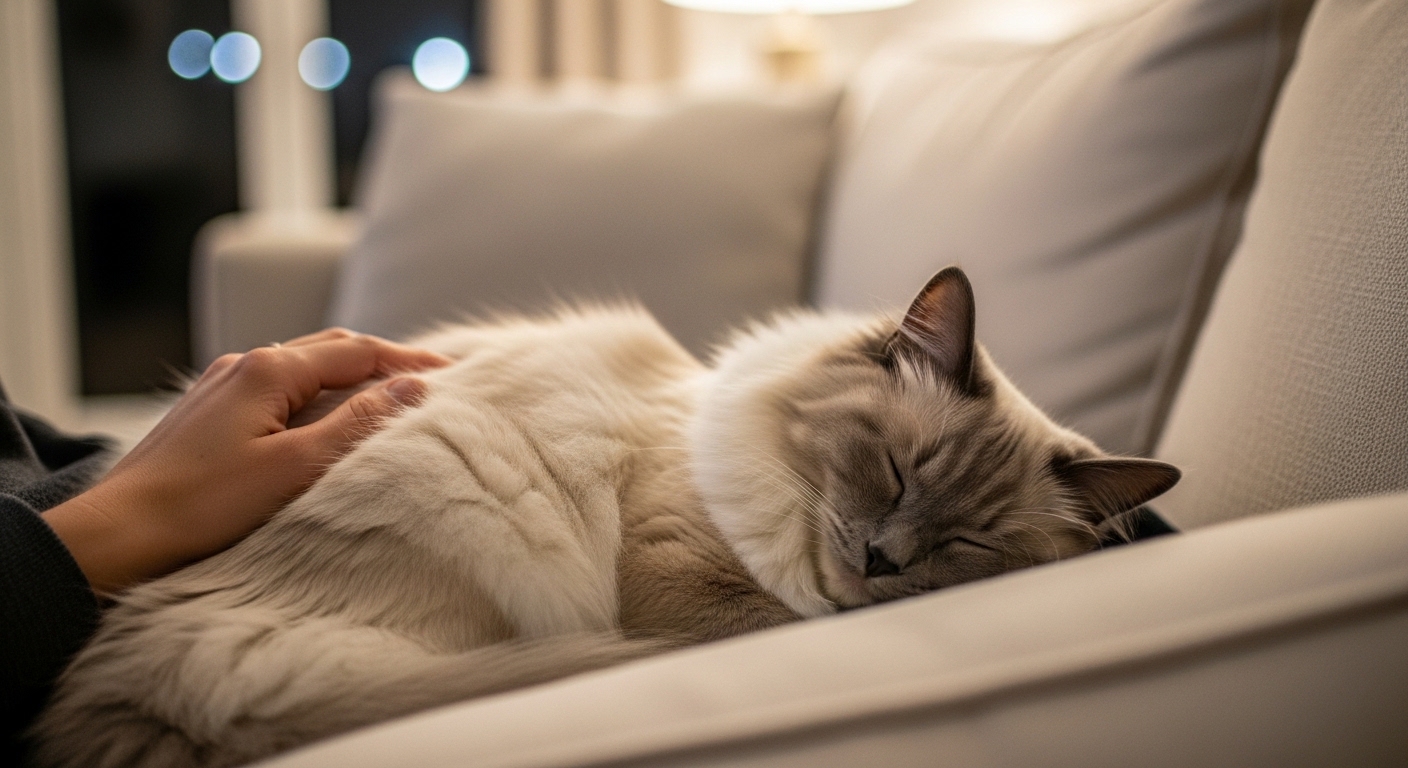
Gentle is the word that comes up most. Ragdolls are not typically climbers or counter-surfers — they tend to stay low, prefer laps and soft surfaces, and rarely show the frantic energy bursts common in breeds like Bengals or Abyssinians. They are affectionate without being demanding in a loud way; they will sit beside you rather than on your keyboard, most of the time.
They are also notably tolerant. Many Ragdoll owners report that their cats handle children, other cats, and even calm dogs with far more patience than the average feline. That said, this tolerance should not be mistaken for indifference to rough handling — they still have limits, and children should always be taught to respect them.
The floppy behavior when held is real, though it varies by individual. Not every Ragdoll goes completely limp, and some are more reserved than others, especially if they were not well-socialized as kittens. A Ragdoll from a reputable breeder who handled kittens frequently from birth tends to be noticeably more relaxed with strangers than one from a less hands-on environment.
Ragdolls are social enough that many owners find leaving them alone all day genuinely stressful — for the cat. A second pet for company is something worth considering seriously before bringing one home.
They are also vocal, but softly so. Expect chirps, quiet trills, and the occasional polite meow at dinnertime — not the persistent yowling of a Siamese. Living with one is generally quiet, which is either a selling point or a non-issue depending on what you were expecting.
Health & Lifespan
Ragdolls generally live between 12 and 17 years, with many reaching their mid-teens in good health. They are not a fragile breed, but there are a few health concerns that prospective owners should know about before committing.
Hypertrophic cardiomyopathy (HCM) is the most significant. This is a heart condition that affects many cat breeds, and Ragdolls have a known genetic predisposition to it. Responsible breeders test their breeding cats for the HCM-associated mutation, and many vets suggest annual cardiac screenings for adult Ragdolls. If you are buying from a breeder, asking for HCM testing documentation is entirely reasonable.
Other health considerations include:
- Polycystic kidney disease (PKD) — less common in Ragdolls than in Persians, but worth asking breeders about
- Bladder stones and urinary tract issues — may appear in some individuals, particularly males
- Obesity — their calm, low-activity temperament combined with a large frame means weight can creep up without careful feeding management
- Dental disease — common across cat breeds generally, and Ragdolls are no exception
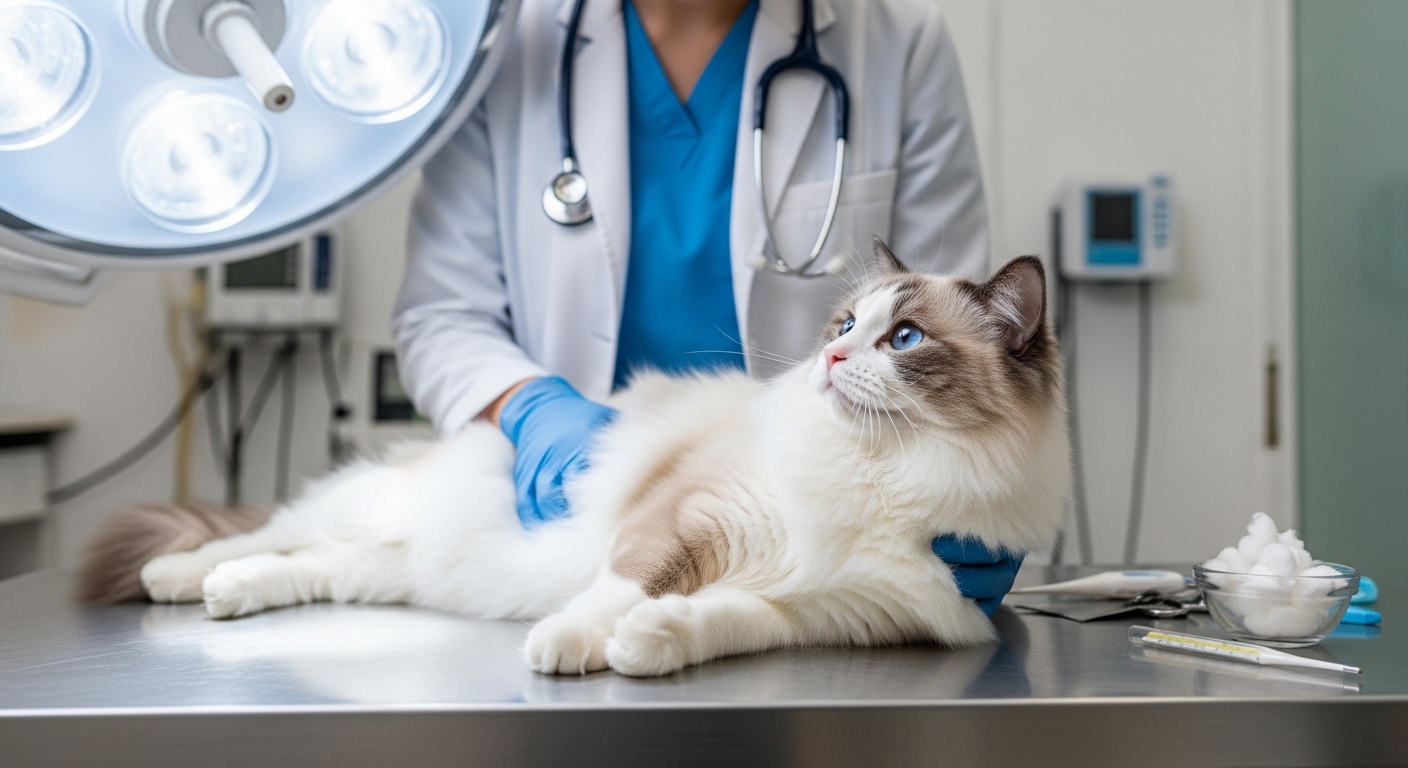
Because Ragdolls are slow to mature — they do not reach full physical and behavioral maturity until around age four — some health issues may not present until later than you might expect in a smaller, faster-maturing breed. Regular vet checkups are genuinely useful here, not just a formality. Always consult your veterinarian if you notice changes in appetite, breathing, or behavior.
Is This Breed Right for You?
Ragdolls suit people who want a genuinely interactive cat but do not have the time or space for a high-energy breed. They work well in apartments, provided they get daily play and attention. They are not the cat that will entertain itself for hours — they want to be part of whatever you are doing, even if that just means sitting nearby while you work.
Grooming is a real commitment. That silky coat needs brushing two to three times a week to prevent tangles, particularly around the collar area and behind the ears where mats form fastest. It is not a painful or difficult process, but it is a consistent one, and if you skip it for a week or two, you will notice.
Consider a Ragdoll if:
- You are home frequently or work from home
- You want a cat that interacts with the whole household, not just one person
- You have children or other calm pets
- You can commit to regular grooming and annual vet visits
- You are prepared for a slow-maturing cat that may not fully settle until age three or four
Think carefully if you travel frequently for work, live in a very active or noisy household, or are looking for a fully independent cat. Ragdolls can develop anxiety when left alone for long stretches, and some owners do not realize this until behavioral issues — like over-grooming or reduced appetite — start showing up.
Real Owner Reality: Several Ragdoll owners mention the same thing after the first year: the cat is wonderful, but the fur management is a part-time job. Light-colored furniture helps. A good vacuum helps more. And if you have dark hardwood floors, you will be sweeping more than you expected — the fur shows up on everything, and the cat will watch you do it with complete serenity.
Frequently Asked Questions
Do Ragdoll cats really go limp when you pick them up?
Many do, and it is a genuine breed trait rather than a myth — though the degree varies between individuals. Cats that were handled frequently as kittens tend to display this more consistently. It reflects a relaxed, trusting temperament rather than any physical abnormality, so if your Ragdoll does it, there is nothing to worry about.
Are Ragdolls good for first-time cat owners?
They are often recommended for first-time owners because of their gentle, forgiving nature. That said, their social needs and grooming requirements mean they are not entirely low-maintenance. Going in with realistic expectations about time commitment — especially for coat care and companionship — will make the experience much smoother.
Can Ragdolls be left alone during the day?
Short periods are generally fine, but Ragdolls are more social than many cat breeds and may struggle with long daily stretches of isolation. Many owners find that having a second cat — ideally another calm breed — makes a noticeable difference in their Ragdoll's mood and behavior. If you work long hours regularly, this is worth factoring into your decision. Consult your veterinarian if you notice signs of stress or behavioral changes.
Ragdolls are not for everyone, but for the right household they are genuinely easy to live with — calm, affectionate, and adaptable without being needy in an exhausting way. The fur is real, the vet costs are real, and the grooming schedule is real. So is the cat sitting on your feet every evening without fail, which turns out to be a fairly reasonable trade-off.
Comments
Post a Comment