If the mere sight of a cat carrier sends your feline friend sprinting under the bed, you are definitely not alone. For millions of cat owners, the carrier has become a symbol of dread — both for the cat and the human who has to wrestle them into it. But here is the good news: with a little patience and the right approach, you can transform that dreaded plastic box into a cozy, familiar space your cat actually tolerates — and may even enjoy. Carrier training is one of the most practical skills you can teach your cat, making vet visits, travel, and emergency evacuations dramatically less stressful for everyone involved. Here is how to make peace with the carrier, one small step at a time.

Why Cats Fear Carriers: The Science Behind the Stress
Understanding why your cat panics around the carrier is the first step toward solving the problem. Cats are creatures of habit and territory, and their stress responses are deeply rooted in instinct. The carrier triggers anxiety for several compounding reasons.
First, cats are highly sensitive to novelty. When the carrier only appears before a vet trip, it immediately signals something unpredictable is about to happen. Cats learn associations quickly — and negative ones tend to stick. Second, the carrier removes a cat's sense of control. In the wild, a cat's survival depends on being able to flee or hide. Being enclosed in a small box strips away that option entirely, activating a genuine fear response.
There is also the sensory overload factor. Many carriers carry the scent of previous stressful trips — the vet's office, other animals, antiseptic smells. To a cat's extraordinarily sensitive nose, that carrier may literally smell like danger. Finally, the physical act of being forced inside — often involving grabbing, scruffing, or chasing — creates a deeply negative memory that compounds with every future encounter.
Key takeaway: Your cat does not fear the carrier itself — they fear what it has come to represent. Change the association, and you change the behavior.

Step-by-Step Carrier Training Method
The key to successful carrier training is going slowly and letting your cat set the pace. Rushing this process almost always backfires. Plan to spend anywhere from one week to a month on this, depending on your cat's personality. Here is a proven, gentle progression that many cat behaviorists recommend.
Step 1: Choose the Right Carrier
Before training begins, make sure you have a carrier that supports the process. Look for one with these features:
- A top-loading option in addition to a front door, which gives you more flexibility during loading.
- Hard-sided construction that feels sturdy and stable, not wobbly or collapsible.
- Adequate size — your cat should be able to stand, turn around, and lie down comfortably.
- Easy-to-remove top half, which many vets prefer for examinations anyway.
Step 2: Make It a Permanent Fixture
Place the carrier in a room where your cat spends a lot of time — the living room or bedroom works well. Leave it open and do absolutely nothing with it for the first few days. Let your cat investigate on their own terms. Curiosity is a powerful motivator for cats, and many will sniff around the carrier within 24 to 48 hours simply because it is new.
Step 3: Layer in Positive Associations
Once your cat is comfortable being near the carrier, begin making the inside appealing:
- Place a worn T-shirt or blanket inside that carries your scent.
- Spritz the interior lightly with a feline calming pheromone spray, which may help reduce anxiety.
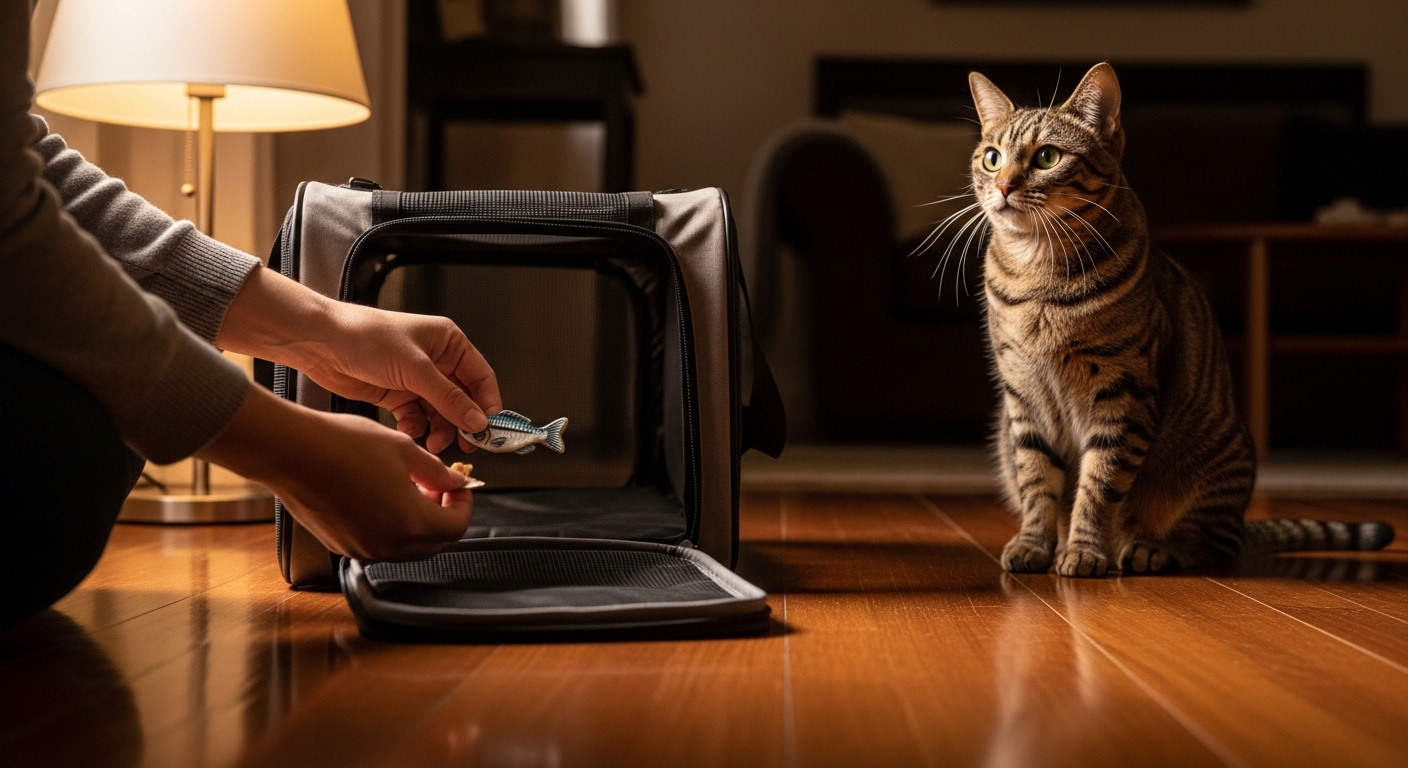
- Drop high-value treats just inside the entrance without any pressure to go in.
- Gradually move treats further inside over several sessions, always at your cat's pace.
Step 4: Feed Meals Near, Then Inside, the Carrier
Mealtime is a powerful training tool. Start by placing your cat's food bowl right in front of the carrier, then move it to the entrance, then just inside, and eventually all the way to the back. This process may take several days, and that is perfectly fine. Never force the issue — if your cat backs off, simply move the bowl back to the last comfortable position and try again tomorrow.
Step 5: Close the Door Briefly
Once your cat is eating comfortably inside the carrier, gently close the door for just a few seconds while they eat, then open it again before they finish. Gradually extend the duration over multiple sessions. Always end on a positive note — never let your cat exit in a panicked state if you can help it.
Step 6: Practice Short Carries
With your cat inside and the door latched, pick up the carrier and carry it a few steps, then set it down and open the door. Over time, practice carrying it to different rooms, then eventually to the car. The goal is to normalize the sensation of movement so it no longer predicts a stressful destination.
Common Mistakes That Slow Down Progress
Even well-meaning cat owners can accidentally undermine their own training efforts. Watch out for these frequent missteps that many people make when introducing a carrier.
- Storing the carrier away between uses. If the carrier only appears before a trip, your cat will always associate it with stress. Keep it out year-round as a piece of furniture.
- Moving too fast through the steps. Skipping steps or rushing because you have an upcoming vet appointment almost always results in regression. Start training well in advance of any planned travel.
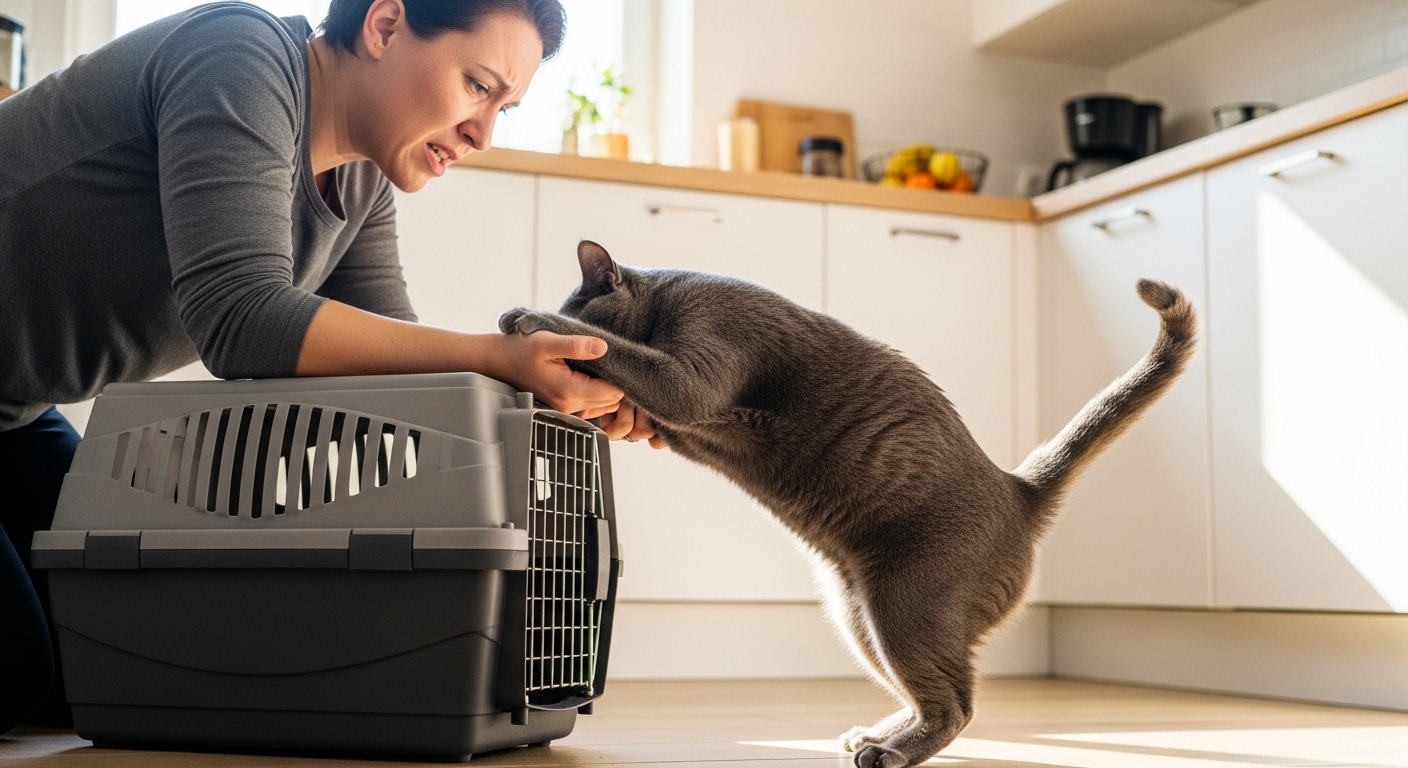
- Using force or chasing. Grabbing or chasing your cat to get them into the carrier destroys trust and sets training back significantly. If your cat is not ready, do not force it.
- Punishing fearful behavior. Scolding or showing frustration when your cat runs away only adds another negative layer to the experience. Stay calm and neutral at all times.
- Forgetting to clean the carrier. Old scents from previous stressful trips can linger and trigger anxiety before training even begins. Wash the carrier thoroughly and use a pet-safe enzymatic cleaner.
- Using low-value rewards. If your cat is not motivated by the treats you are using, the training will stall. Experiment with different high-value options like freeze-dried chicken, tuna flakes, or small pieces of cooked meat.
Expert Tips to Accelerate Carrier Comfort
Beyond the basic training steps, there are several additional strategies that experienced cat behaviorists and veterinary professionals often recommend to make the process smoother and more effective.
- Use a Feliway or similar pheromone product. Synthetic feline facial pheromones, available as sprays or diffusers, may help create a sense of calm familiarity around the carrier. Many vets suggest spraying the bedding inside the carrier about 30 minutes before use.
- Try a 'two-piece' carrier trick. Remove the top half of a hard-sided carrier and let your cat use the bottom as a cozy bed. Once they are sleeping in it regularly, reattach the top with the door open, then eventually close the door for brief periods.
- Incorporate play sessions near the carrier. Use a wand toy to guide your cat in and around the carrier during play. Positive, exciting experiences near the carrier help rewrite its emotional meaning.
- Practice 'happy visits' to the vet. In some cases, you can arrange brief, low-stress visits to your veterinary clinic — just for treats and gentle handling, with no procedures. This helps break the association between the carrier and unpleasant experiences at the destination.
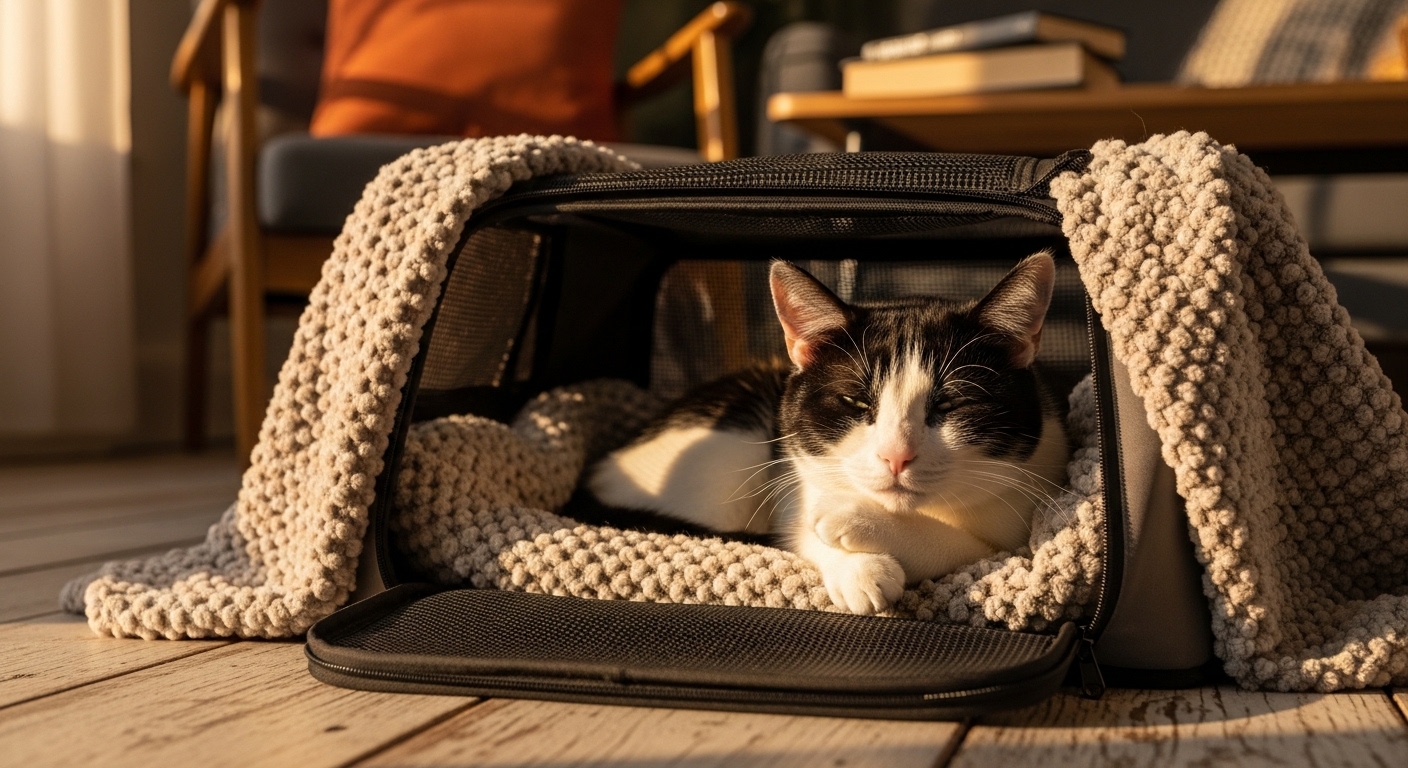
- Cover the carrier during transport. Draping a light blanket over the carrier during car rides can reduce visual stimulation and help some cats feel more secure, as it mimics the feeling of a den.
- Maintain a calm energy yourself. Cats are remarkably attuned to human emotions. If you approach the carrier situation with tension or anticipation, your cat will likely pick up on it. Take a breath, move slowly, and keep your voice low and neutral.
When to See a Professional
For most cats, consistent positive reinforcement training will make a meaningful difference within a few weeks. However, some cats have deeply ingrained fear responses — particularly rescues with unknown histories or cats who have experienced repeated traumatic vet visits — and may need additional support beyond what home training can provide.
Consider reaching out to a professional in the following situations:
- Your cat shows signs of extreme panic such as urinating, defecating, or injuring themselves when near the carrier, even after several weeks of gentle training.
- Your cat becomes aggressive — hissing, scratching, or biting — during any stage of the training process.
- You have an urgent upcoming trip or medical appointment and your cat is not yet carrier-trained.
- Your cat has a diagnosed anxiety condition or other behavioral challenges that make training particularly difficult.
A certified cat behavior consultant or a veterinary behaviorist can create a tailored desensitization plan for your specific cat. In some cases, your vet may also discuss whether short-term anti-anxiety support could be appropriate for particularly stressful one-off situations — always consult your veterinarian before considering any such options, as they can advise based on your cat's individual health profile.
Remember, asking for help is not a failure — it is simply the most effective way to advocate for your cat's wellbeing. With the right guidance and a generous dose of patience, even the most carrier-phobic cat can learn that the box is not something to fear. Your future self — and your cat — will be grateful you put in the work now, long before the next vet appointment rolls around.

Comments
Post a Comment