Bringing a new puppy home is one of the most exciting moments a pet owner can experience — and one of the most overwhelming. Between the midnight whimpers, the tiny accidents on the rug, and the sheer cuteness overload, your first week with a puppy can feel like a beautiful whirlwind. The good news? Most of what you are experiencing is completely normal, and with a little preparation and patience, you and your new furry family member will find your rhythm faster than you think. This day-by-day guide walks you through what to realistically expect during those first seven days, covering sleep, feeding, crying, and the foundations of a healthy routine that will serve you both for years to come.

Why the First Week Matters So Much
The first week at home is far more than just a settling-in period — it is a critical developmental window that can shape your puppy's confidence, trust, and behavior for life. Puppies are highly impressionable during their early weeks, and the experiences they have right now lay the neurological groundwork for how they respond to the world around them. Veterinary behaviorists often note that positive, low-stress early experiences may significantly reduce the likelihood of anxiety-related behaviors later on. Think of this week as the foundation of your relationship: every gentle interaction, every consistent feeding time, and every calm response to nighttime crying is a deposit into a trust account that will pay dividends for the next decade or more. Understanding why this week matters so much can help you stay patient when things get tough — and they will get tough, at least a little.

Sleep, Feeding, and Crying: Day-by-Day Guidelines
Breaking the first week into daily milestones makes the whole experience feel far more manageable. Here is a practical framework to guide you through each stage.
Days 1–2: Arrival and Decompression
Your puppy has just left their mother, littermates, and the only environment they have ever known. Expect them to be quiet, clingy, or even slightly lethargic. This is normal decompression behavior. Keep the home calm, limit visitors, and let the puppy explore at their own pace. Introduce them to their sleeping area — ideally a crate or a puppy-proofed pen — right away so it becomes familiar from the start.
- Sleep: Puppies at this age may sleep 16–18 hours per day. Do not be alarmed by how much they nap.
- Feeding: Offer the same food the breeder or shelter was using to avoid digestive upset. Feed small meals 3–4 times per day on a consistent schedule.
- Crying: Nighttime whining is almost universal on the first night. A warm water bottle wrapped in a towel and a ticking clock near the crate may help mimic the warmth and heartbeat of littermates.
Days 3–4: The 'Honeymoon Crash'
Many owners notice that around day three, the puppy's personality starts to emerge — and not always in the most convenient ways. Some puppies become bolder and start testing boundaries; others may become more anxious as the novelty wears off. Stick firmly to your schedule. Consistency is your most powerful tool right now.
- Sleep: Continue to enforce nap times. An overtired puppy is a nippy, whiny puppy.
- Feeding: Watch stool consistency. Loose stools for a day or two can be normal during transition, but persistent diarrhea warrants a call to your veterinarian.
- Crying: Resist the urge to immediately take the puppy out of the crate every time they cry. Wait for a brief pause in the whining before opening the door, so you are not inadvertently rewarding the behavior.
Days 5–7: Finding the Rhythm
By the end of the week, most puppies begin to anticipate their schedule. They may start waking up at feeding times, moving toward the door before potty breaks, and settling more quickly at night. Celebrate these small wins — they are signs that your routine is working.
- Sleep: You may notice slightly longer stretches of nighttime sleep, though waking once or twice is still very common.
- Feeding: If the transition to your chosen food is going smoothly, you can begin a gradual switch if needed — mix 25% new food with 75% old food to start.
- Crying: Crying should be decreasing in frequency and intensity. If it seems to be getting significantly worse, consult your veterinarian to rule out any underlying discomfort.
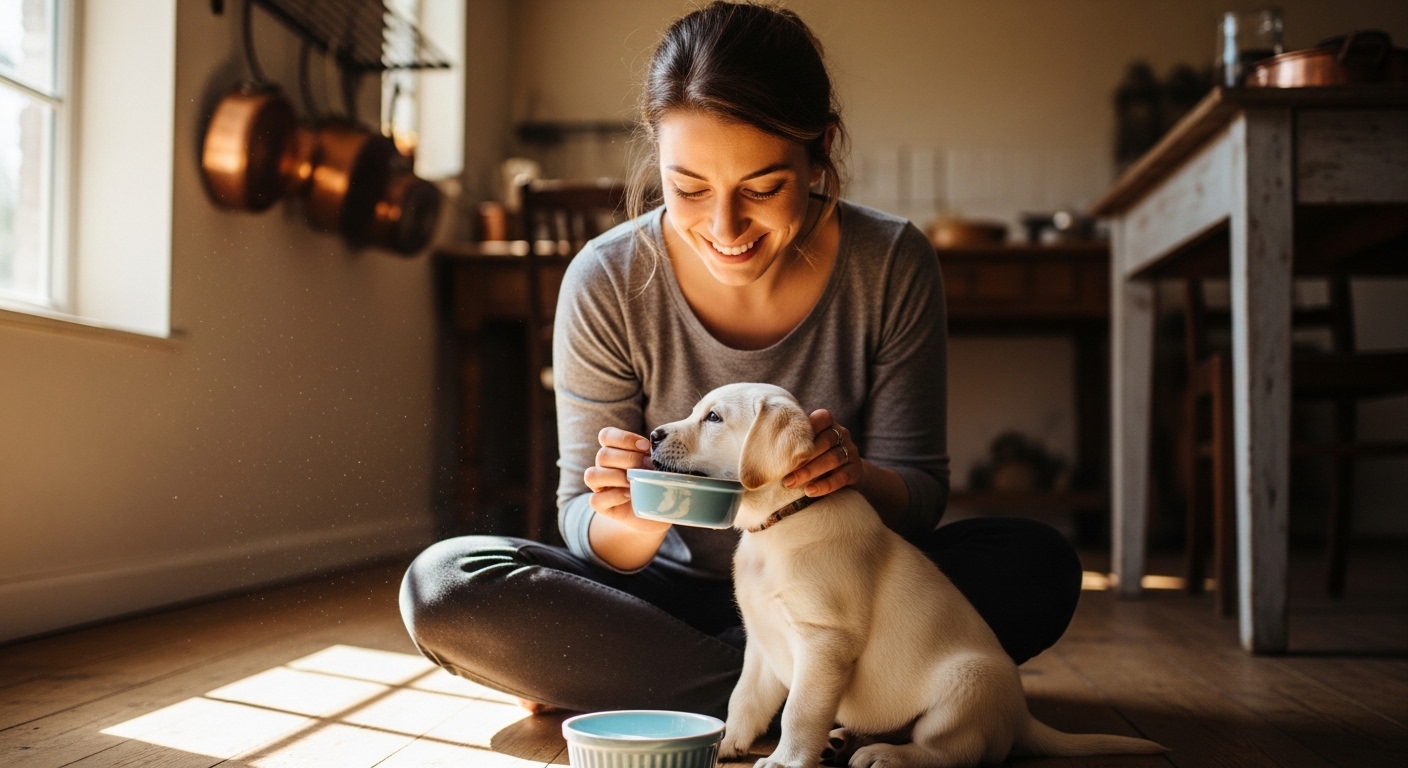
A puppy learning to settle calmly in their crate is one of the most rewarding sights of the first week.
Recommended Routines and Supplies
Setting up the right environment and sticking to a predictable daily structure are the two biggest factors in a smooth first week. Here are the essentials that many experienced puppy owners and veterinary professionals recommend.
- A properly sized crate: The crate should be large enough for the puppy to stand, turn around, and lie down — but not so large that they can use one corner as a bathroom.
- High-quality puppy food: Choose an age-appropriate formula approved by your vet; many vets suggest looking for an AAFCO statement confirming it meets nutritional levels for growth.
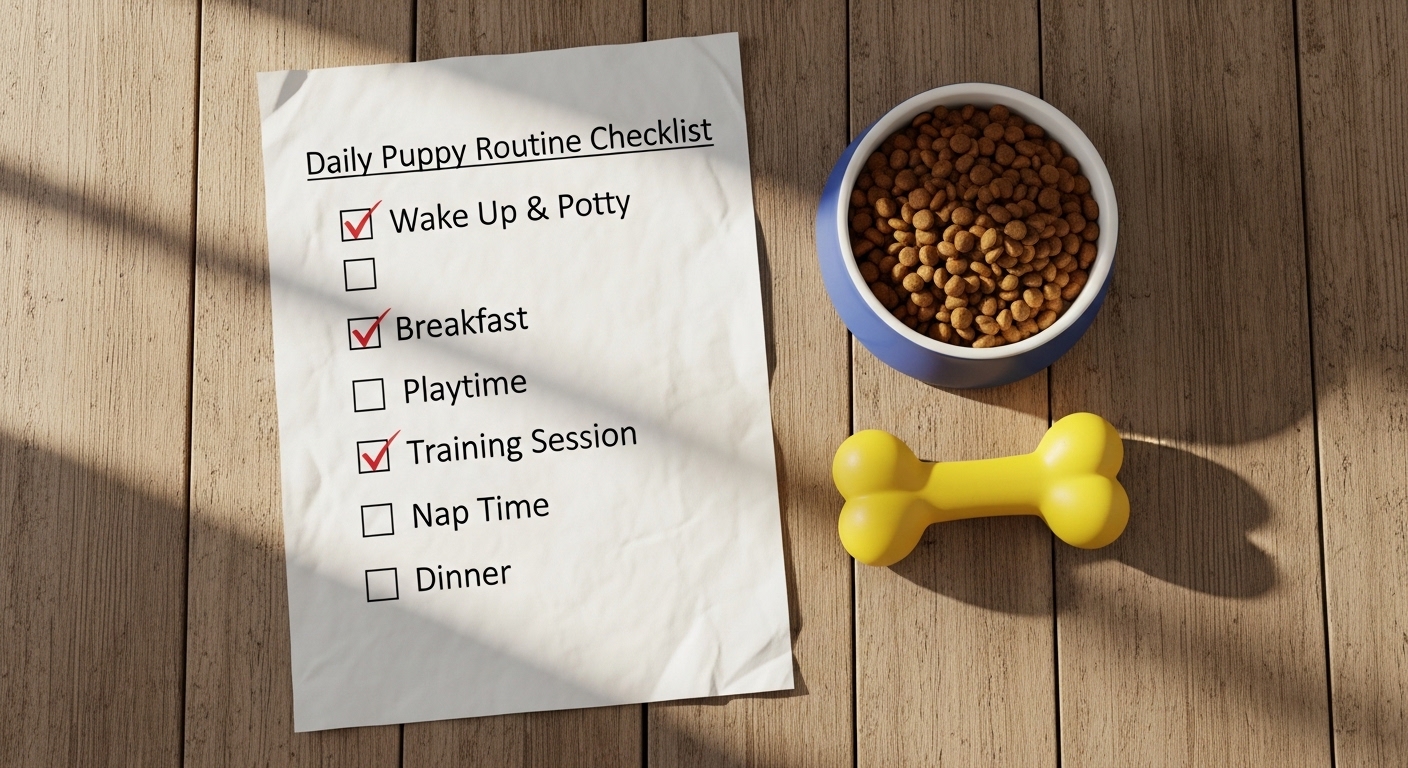
- Consistent feeding times: Feeding at the same times each day — typically morning, midday, and early evening — helps regulate digestion and makes potty training far more predictable.
- A designated potty spot: Taking your puppy to the exact same outdoor spot every time helps them learn the association between location and elimination much faster.
- Puppy-safe chew toys: Appropriate chewing outlets reduce destructive behavior and support healthy dental development.
- A vet appointment in the first week: Scheduling a wellness check within the first few days is strongly advisable so your vet can confirm the puppy is healthy and advise on vaccination and deworming schedules.
A predictable daily routine is the single greatest gift you can give your new puppy. Dogs are creatures of habit, and knowing what comes next helps them feel safe.
What to Avoid During the First Week
Knowing what not to do is just as important as knowing what to do. Many well-meaning new puppy owners make a handful of common mistakes that can unintentionally create stress or set back training progress.
- Overwhelming the puppy with visitors: It is tempting to show off your adorable new addition, but too many new faces and loud voices in the first few days can spike stress hormones and delay the bonding process with you.
- Skipping the crate at night: Allowing the puppy to sleep in your bed from night one may feel kind, but it can create separation anxiety and make crate training significantly harder later.
- Free-feeding throughout the day: Leaving food out all day makes it nearly impossible to predict when the puppy needs to go outside, which dramatically slows potty training progress.
- Punishing accidents: Puppies do not have full bladder control yet. Scolding them for accidents — especially after the fact — may cause fear and confusion rather than understanding.
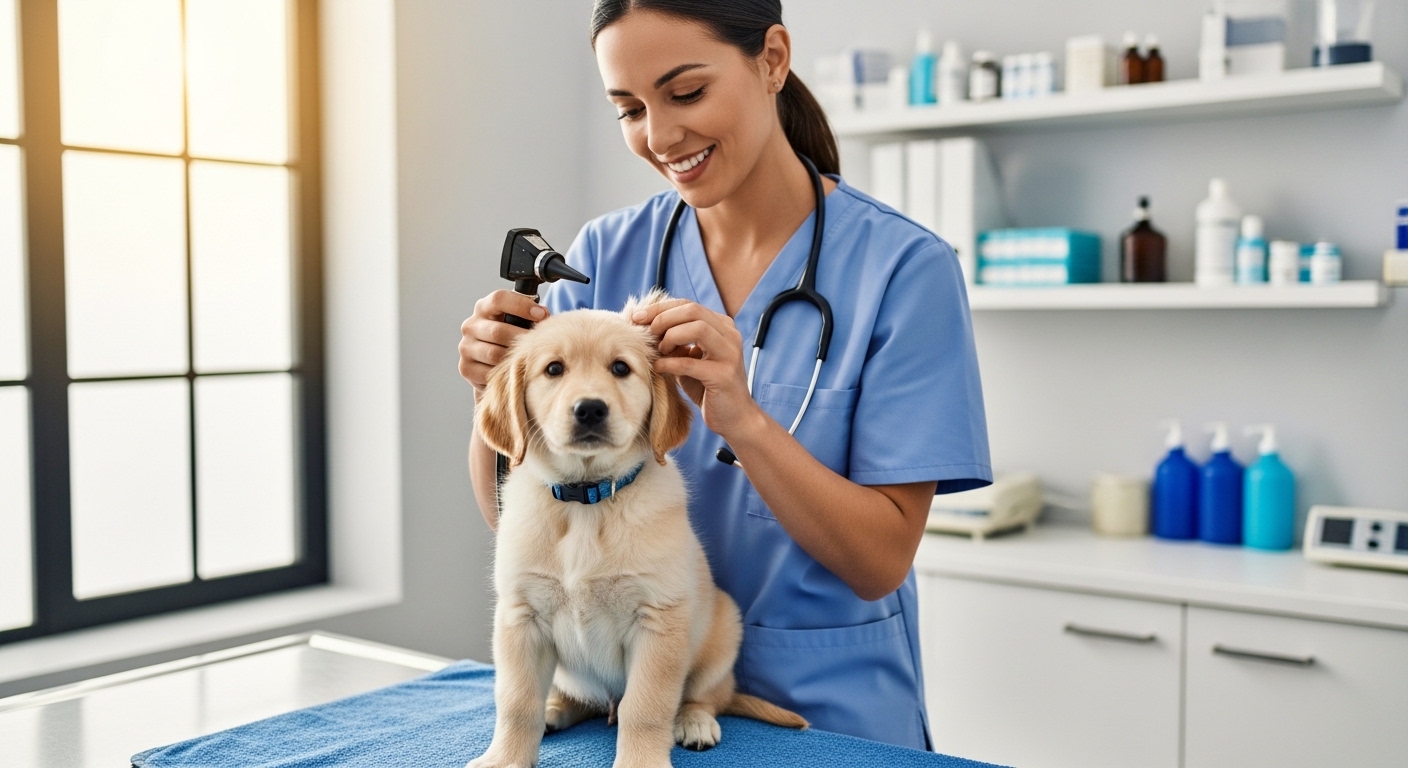
- Skipping the vet visit: Even if the puppy seems perfectly healthy, a professional wellness check in the first week can catch issues that are not visible to the untrained eye and sets up a vital health baseline.
Avoiding these common pitfalls will help your puppy feel secure and set both of you up for a much smoother second week and beyond.
Frequently Asked Questions
How long will my puppy cry at night?
Most puppies begin to settle more quietly at night somewhere between the third and seventh night, though some may take two to three weeks. Consistency with your bedtime routine — a final potty trip, a calm goodnight, and no dramatic responses to crying — tends to speed up the process considerably.
How often should a puppy eat during the first week?
Most veterinarians suggest feeding puppies three to four small meals per day during the first several months of life. The exact amount depends on the puppy's breed, size, and the specific food you are using — always follow the feeding guidelines on the packaging and confirm with your vet.
Is it normal for my puppy to sleep so much?
Absolutely. Young puppies commonly sleep between 16 and 18 hours per day. Sleep is essential for their rapid brain and body development. If your puppy seems unusually lethargic even when awake, or is not eating, consult your veterinarian.
When can my puppy meet other dogs?
This is an important question to discuss directly with your vet, as the answer depends on your puppy's vaccination status. Many vets suggest waiting until the puppy has completed a core portion of their vaccination series before exposure to unknown dogs in public spaces.
My puppy is not eating much. Should I be worried?
A slight decrease in appetite during the first day or two is common due to the stress of a new environment. However, if your puppy refuses food for more than 24 hours or shows other symptoms such as vomiting or lethargy, contact your veterinarian promptly.
Your first week with a puppy is a crash course in patience, consistency, and unconditional love — and it is absolutely worth every sleepless hour. By understanding what is normal, setting up a reliable routine, and knowing when to call your vet, you are already giving your puppy the best possible start in life. The chaos of week one fades quickly, and what remains is the beginning of an extraordinary bond that will enrich your life in ways you cannot yet imagine. Take a deep breath, trust the process, and enjoy every single moment of this tiny, fleeting chapter.

Comments
Post a Comment