Bringing a rescue dog home is one of the most rewarding things you can do — but those first few days and weeks can feel overwhelming for both of you. Your new companion has likely experienced upheaval, uncertainty, and a parade of unfamiliar faces before landing in your living room. Understanding what your dog is going through emotionally, and having a clear plan to guide them through it, can make the difference between a rocky transition and a beautifully smooth one. The good news? There is a simple, research-backed framework that rescue advocates swear by: the 3-3-3 rule. Paired with a practical room-by-room settling strategy, it gives your dog exactly what they need — time, space, and a whole lot of patience.
Why It Happens: The Science Behind Shelter Stress
To help your dog settle in, it helps to understand what they have just been through. Shelters, even the best ones, are inherently stressful environments. The constant noise, unfamiliar smells, irregular routines, and lack of personal space can elevate a dog's cortisol levels significantly. Research in animal behavior suggests that it may take weeks — not days — for a dog's stress hormones to return to baseline after leaving a shelter environment.
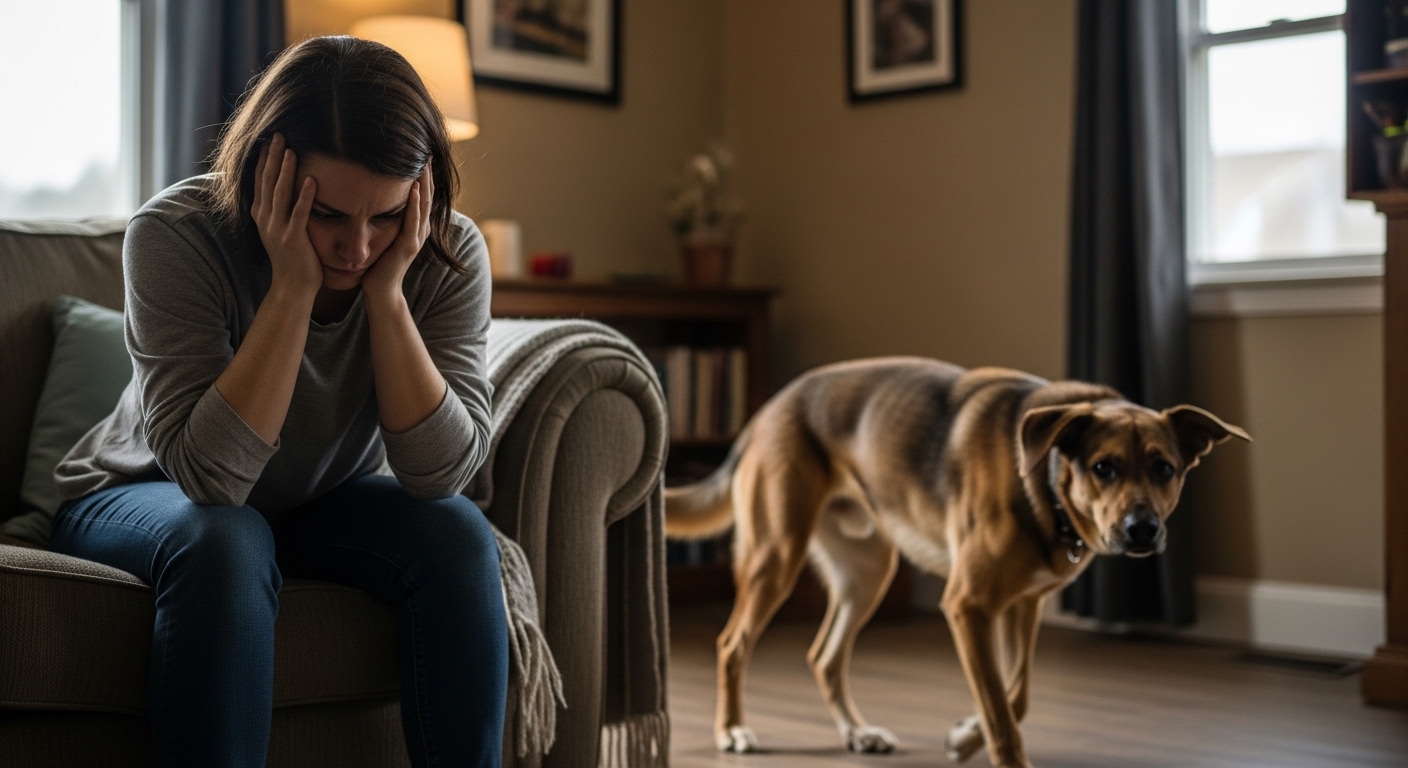
This stress manifests in different ways depending on the individual dog. Some common behaviors you might notice include:
- Shutdown behavior: hiding, refusing food, avoiding eye contact, and moving very little
- Hyperactivity or anxiety: pacing, whining, jumping, or inability to settle
- Regression: house-training accidents, even in dogs listed as house-trained
- Selective reactivity: growling or barking at specific triggers that did not appear in the shelter
- Velcro behavior: following you from room to room and becoming distressed when left alone
None of these behaviors mean you adopted the 'wrong' dog. They are simply a dog communicating that they are not yet sure the world is safe. Your job in those early weeks is to become the most reliable, predictable presence in their life — and the 3-3-3 rule gives you a beautiful roadmap for doing exactly that.
A dog who feels safe will eventually show you who they truly are. Your patience in the early weeks is the foundation of a lifelong bond.

Step-by-Step: The 3-3-3 Rule and Room-by-Room Strategy
The 3-3-3 rule breaks your dog's adjustment into three distinct phases — 3 days, 3 weeks, and 3 months — each with its own emotional milestones and practical goals. Layered on top of this is a room-by-room approach that gradually expands your dog's world at a pace they can handle.
Phase 1 — The First 3 Days: Decompress
During the first 72 hours, your dog is in pure survival mode. They are processing an enormous amount of sensory information and may not eat, drink, or sleep normally. Your entire goal during this phase is to reduce stimulation and let them decompress.
- Start with one room: Set up a quiet, comfortable base room — ideally a bedroom or a calm corner of the living room — with a crate or dog bed, water, and a few low-odor chew toys. This is their safe zone.
- Limit visitors: Resist the urge to invite friends and family over to meet the new dog. Keep the household as calm and quiet as possible.
- Use a long leash indoors: Many trainers recommend keeping a light drag leash on your dog inside the house during the first few days. It allows you to gently guide them without grabbing, which can feel threatening to a fearful dog.
- Establish a toilet routine immediately: Take them outside to the same spot every 1–2 hours, after meals, and after naps. Praise calmly when they go outside.
- Do not force interaction: Let them approach you on their own terms. Sit on the floor, offer a treat, and let them decide when they are ready.
Phase 2 — Weeks 1 to 3: Learn the Routine
Around day four or five, most dogs begin to relax slightly and start testing the boundaries of their new environment. This is when you can begin expanding their access room by room.
- Introduce one new room every few days: Once your dog is comfortable and relaxed in their base room, open the door to an adjacent space. Supervise all exploration and keep sessions short at first.
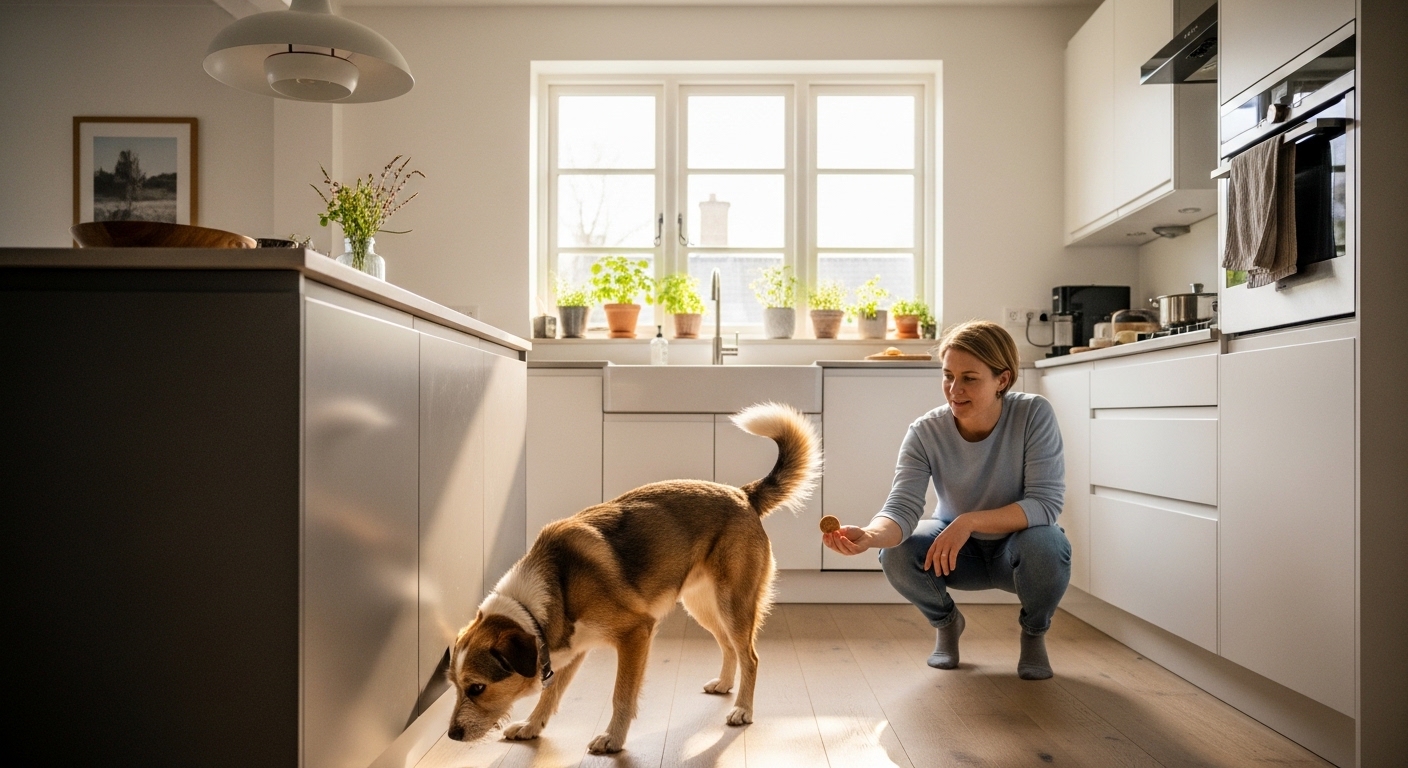
- Kitchen introduction: Introduce the kitchen during a calm moment — not during meal prep when there is a lot of movement and noise. Let them sniff around, then reward calm behavior.
- Living areas: Allow access to the main living area once they are consistently relaxed in the base room and kitchen. Use baby gates to manage access rather than closing doors, which can feel more isolating.
- Begin basic training: Short, positive reinforcement sessions of 5 minutes for 'sit', 'stay', and 'name recognition' help build confidence and establish communication.
- Introduce a consistent daily schedule: Feed, walk, and rest at the same times each day. Predictability is profoundly calming for anxious dogs.
Phase 3 — Weeks 3 to 12: Start to Bloom
By week three, many dogs begin showing their true personality. You may notice playfulness, silliness, or affection that was completely absent in the first two weeks. By the three-month mark, most dogs have fully settled into their new home and feel genuinely secure.
- Full home access (supervised): Gradually allow access to all areas of the home, always monitoring for signs of stress or destructive behavior.
- Introduce outdoor adventures: Begin exploring new walking routes, parks, and social situations slowly and positively.
- Build on training: Enroll in a group obedience class or work with a trainer to continue building confidence and communication.
- Introduce other pets carefully: If you have other animals, this phase is generally the right time for slow, structured introductions — ideally on neutral ground first.
Common Mistakes New Adopters Make
Even the most well-intentioned pet parents can accidentally slow their dog's adjustment. Here are the most common pitfalls to watch out for during those critical early weeks.
- Overwhelming the dog with love too soon: Constant petting, picking up, and cuddling can actually increase anxiety in a dog who has not yet established trust. Let them set the pace for physical affection.
- Skipping the crate: Many adopters feel guilty using a crate, but for most rescue dogs, a crate is a sanctuary — a den-like space that reduces anxiety and prevents destructive behavior when unsupervised.
- Giving full home access immediately: Too much space too soon is genuinely overwhelming for a dog who is already overstimulated. The room-by-room approach exists for a very good reason.
- Inconsistent rules: Allowing the dog on the sofa one day and correcting them for it the next creates confusion and anxiety. Decide on your house rules before the dog arrives and stick to them consistently.
- Comparing timelines: Every dog is different. Some settle in two weeks; others take four months. Comparing your dog's progress to someone else's rescue story on social media is a recipe for unnecessary worry.
- Skipping veterinary check-ups: Many behavioral issues in newly adopted dogs have an underlying physical cause. Always schedule a full veterinary examination within the first week of adoption.
Expert Tips to Accelerate Confidence
Beyond the 3-3-3 framework, experienced rescue advocates and trainers have a toolkit of small but powerful strategies that can meaningfully speed up a dog's sense of security. Here are some of the most effective ones to incorporate into your daily routine.
- Use a snuffle mat or food puzzle at mealtimes: Mental enrichment through food work is deeply calming for anxious dogs and helps them associate their new environment with positive experiences.
- Try an Adaptil diffuser: These plug-in diffusers release a synthetic version of the calming pheromone mother dogs produce for their puppies. Many owners and vets report that they may help reduce anxiety during transitions — though results vary by individual dog.
- Practice 'decompression walks': Instead of structured heel walks, allow your dog to sniff freely on a long leash in a quiet area. Sniffing is neurologically tiring in the best possible way and may reduce overall stress levels significantly.
- Use a calm, low voice: High-pitched, excited voices can inadvertently amp up an already anxious dog. Speak in slow, low, reassuring tones, especially during the first few weeks.
- Establish a 'settle' spot in every room: Place a small mat or bed in each room you spend time in. Reward your dog for choosing to lie on it. Over time, this gives them a sense of ownership and security throughout the whole home.
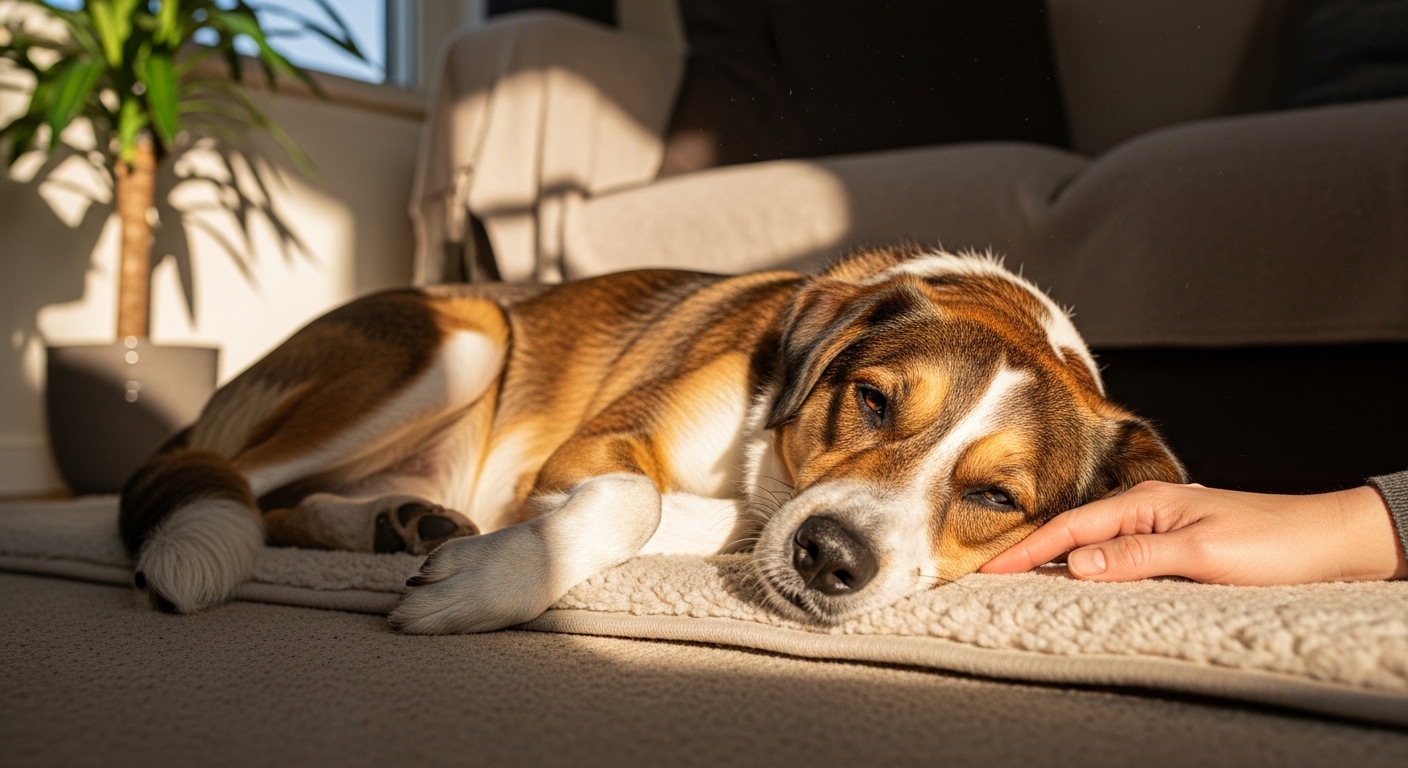
- Capture calm behavior: Whenever your dog is relaxed — lying down, sighing, or resting quietly — softly say 'good' and offer a gentle treat. You are reinforcing the emotional state of calm itself, which is enormously powerful.
When to See a Professional
The 3-3-3 rule covers the vast majority of adjustment challenges, but there are situations where professional support is not just helpful — it is essential. Consider reaching out to a certified professional dog trainer (CPDT-KA) or a veterinary behaviorist if you notice any of the following:
- Growling, snapping, or biting that escalates rather than decreases over the first few weeks
- Complete refusal to eat for more than 48 hours
- Severe separation anxiety that makes it impossible to leave the house
- Extreme fear responses such as trembling, panting, or attempting to escape that do not improve with time
- Aggression toward other pets in the home that cannot be safely managed
These behaviors may have deeper roots — past trauma, medical issues, or anxiety disorders — that require expert assessment. Always consult your veterinarian first to rule out any physical causes before pursuing behavioral intervention. There is absolutely no shame in asking for help; in fact, it is one of the most loving things you can do for your new companion.
Adopting a rescue dog is not always a fairy tale from day one — and that is perfectly okay. The dogs who take the longest to open up often turn out to be the most deeply loyal and loving companions once they finally feel safe. Trust the process, trust your dog, and trust yourself. With the 3-3-3 rule as your guide and a room-by-room approach that respects your dog's pace, you are giving them the greatest gift imaginable: a home where they can finally exhale. That moment when your once-fearful rescue dog trots up to you with a wagging tail and shining eyes, completely at ease — that is worth every patient, quiet moment you invested along the way.

Comments
Post a Comment