You close the bathroom door, and within seconds you hear it — a small paw sliding under the gap, followed by a persistent meow. If you have ever wondered why your cat treats your bathroom trip as a group activity, you are not alone. This oddly specific behavior puzzles cat owners constantly, and it turns out there are some genuinely interesting reasons behind it that go well beyond your cat simply being weird. Understanding what drives this shadowing habit can actually tell you a lot about how your cat sees you and the space you share.
Why It Happens: The Science Behind the Shadow
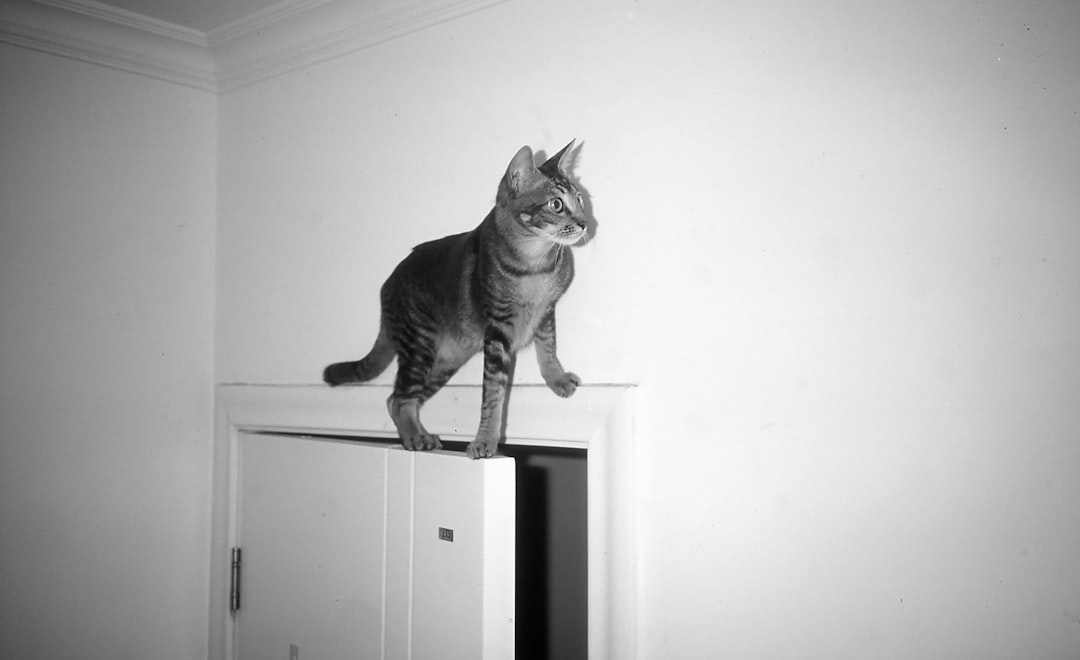
Cats are territorial animals, and your home is their territory — every square inch of it. When you disappear behind a closed door, you are essentially entering a zone your cat cannot monitor or control. That creates a low-level tension for them. It is not separation anxiety in the clinical sense, though in some cases it can edge toward that, but rather an instinct to keep tabs on the important members of their social group.
Domestic cats retain many of the social behaviors of their wild ancestors, who lived in loose colonies and kept track of group members for survival. You are, functionally, part of your cat's colony. Losing visual contact with you — especially in a small, enclosed space — triggers a monitoring impulse that is deeply wired in.
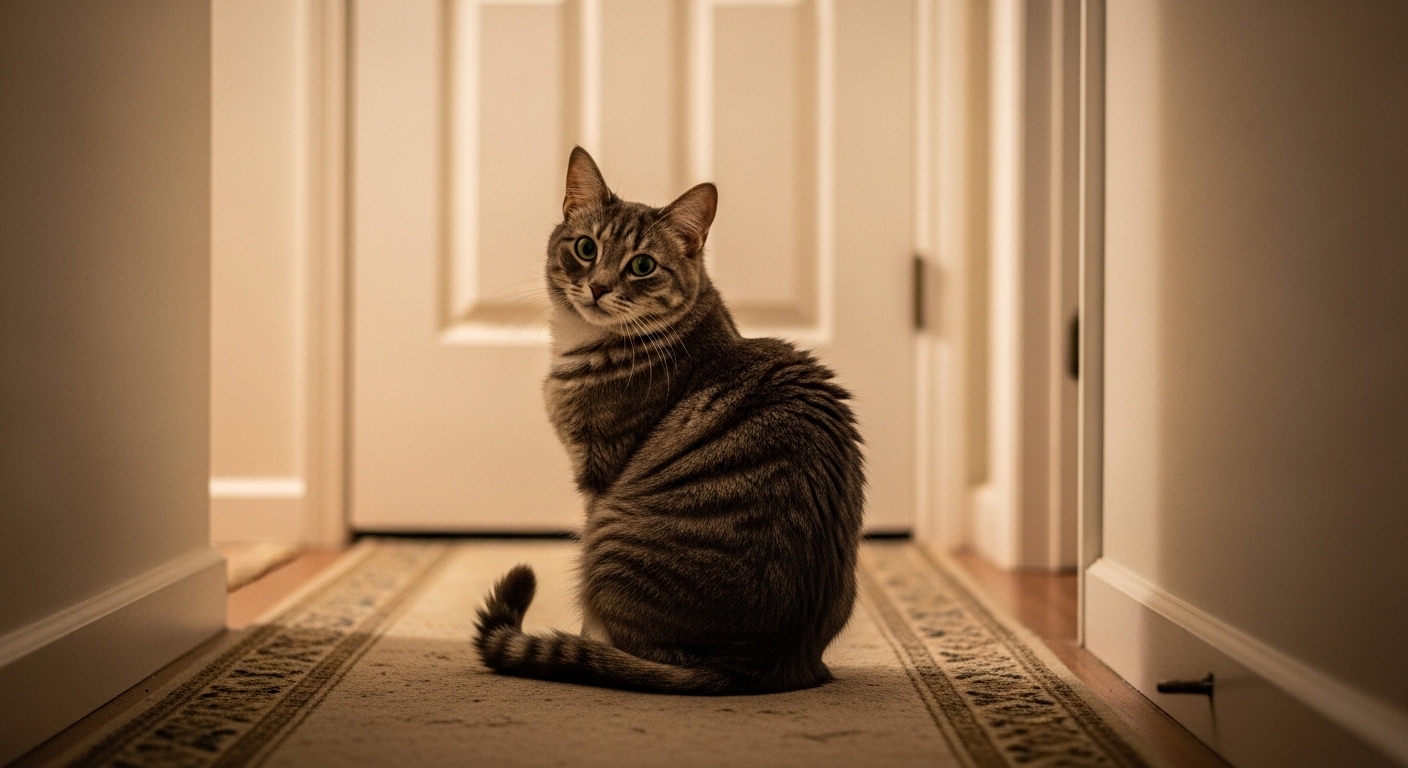
There is also an attachment dimension. Research on cat-human bonding suggests that many cats form secure attachments to their owners, not unlike the bonds seen in dogs. A cat that follows you everywhere, including the bathroom, is often displaying what behaviorists call proximity-seeking behavior — they simply want to be near you, and a closed door is an obstacle to that goal.
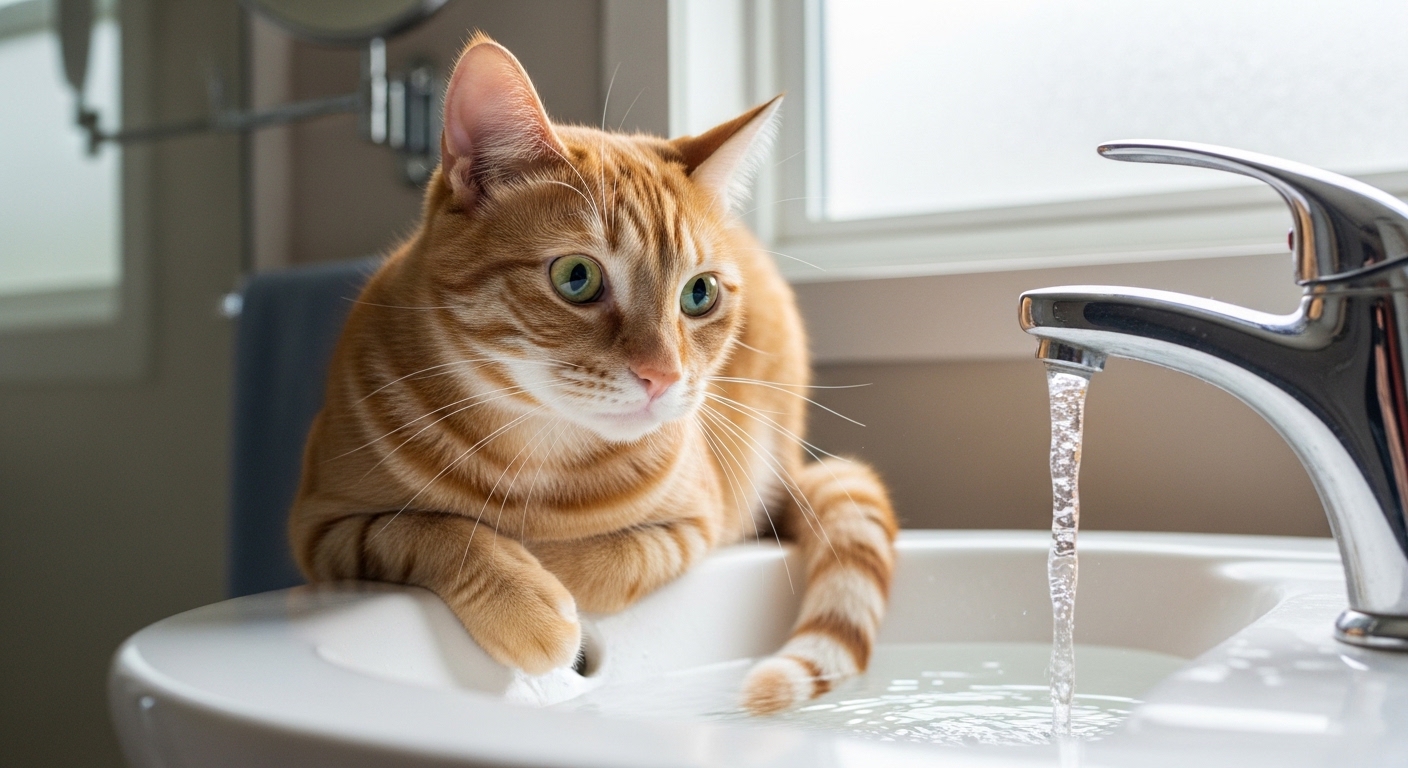
Curiosity compounds everything. Bathrooms are full of running water, rustling sounds, and unfamiliar smells. Your cat is not just following you — they are also investigating an interesting room that happens to contain you.
Step-by-Step Training Method: Teaching Comfortable Independence
If the bathroom following bothers you, or if your cat's distress when excluded seems intense, you can gradually train a more relaxed response. The goal is not to punish the behavior but to build your cat's confidence about being briefly separated from you.
- Start with short separations. Close the bathroom door for just 30 seconds, then open it calmly without making a fuss. No big greeting, no scolding — just neutral re-entry into the space.
- Increase duration slowly. Over several days, extend the closed-door time in small increments. Consistency matters more than speed here.
- Create a positive association with the door being closed. Toss a treat or a favorite toy near the door just before you close it, so your cat has something engaging to do on the other side.
- Avoid reinforcing distress. If you open the door every time your cat yowls, you are teaching them that yowling works. Wait for a pause in the noise before opening, even if it is a brief one.
- Enrich the rest of the home. A cat with a window perch, a puzzle feeder, or an active play session before your bathroom routine is less likely to fixate on your location.
This process takes weeks, not days, and some cats — particularly those who were adopted as adults with unknown histories — may always prefer to keep you in their line of sight. That is not a training failure.
Common Mistakes Owners Make
The most common mistake is accidentally rewarding the very behavior you want to reduce. Letting your cat in every time they scratch or cry teaches a clear lesson: persistence opens doors. Literally.
- Making a big deal of leaving or returning. Dramatic goodbyes and enthusiastic hellos signal to your cat that the separation is a significant event, which can amplify their reaction to it.
- Punishing the behavior. Spraying water or shouting at a cat for following you will not reduce the underlying attachment drive — it will just add stress and erode trust.
- Skipping enrichment. Expecting a bored cat to be content alone in a quiet apartment while you are in the bathroom is optimistic. Environmental stimulation is the foundation of independent behavior.
- Assuming it is always a problem. Many cats follow their owners to the bathroom their entire lives without any distress on either side. If your cat waits calmly outside and moves on when you emerge, there is genuinely nothing to fix.
Expert Tips for Managing the Behavior Day-to-Day
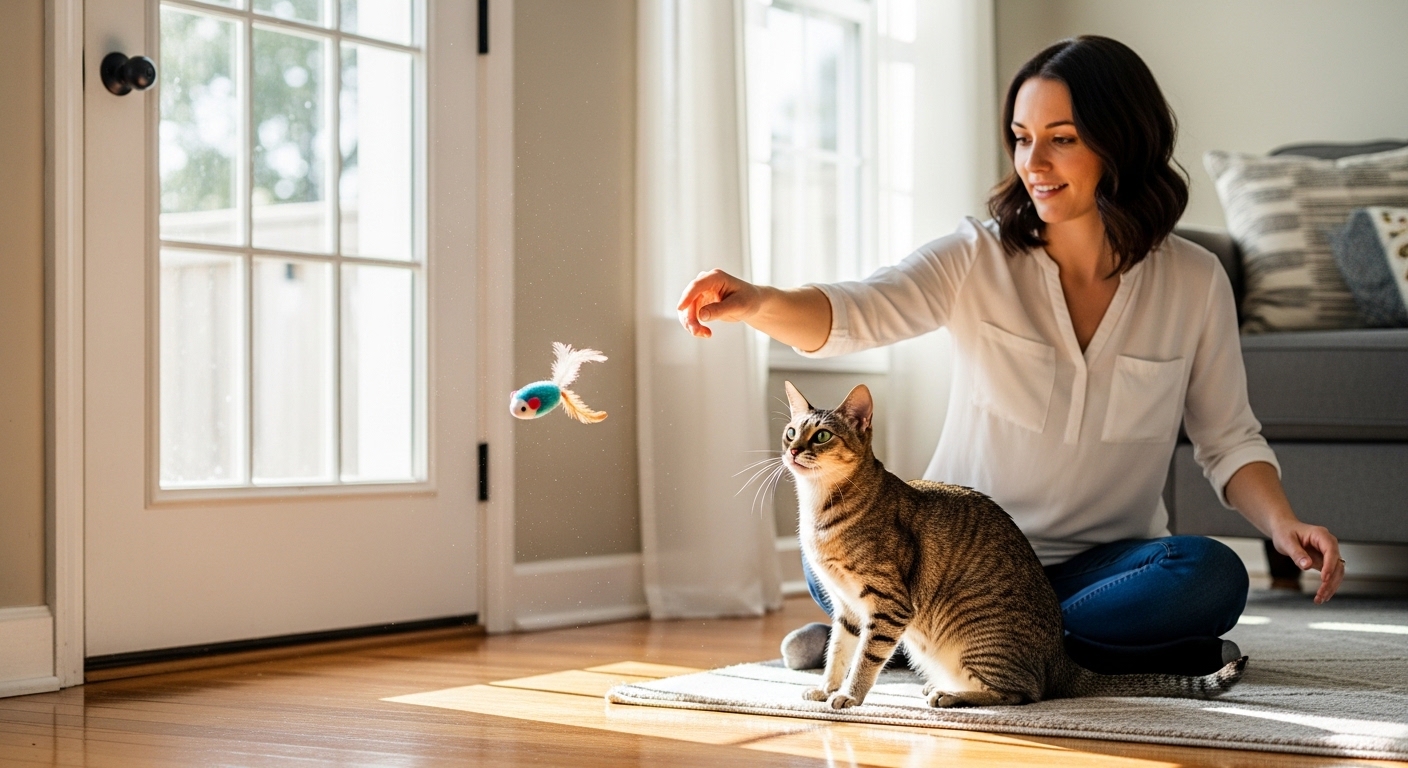
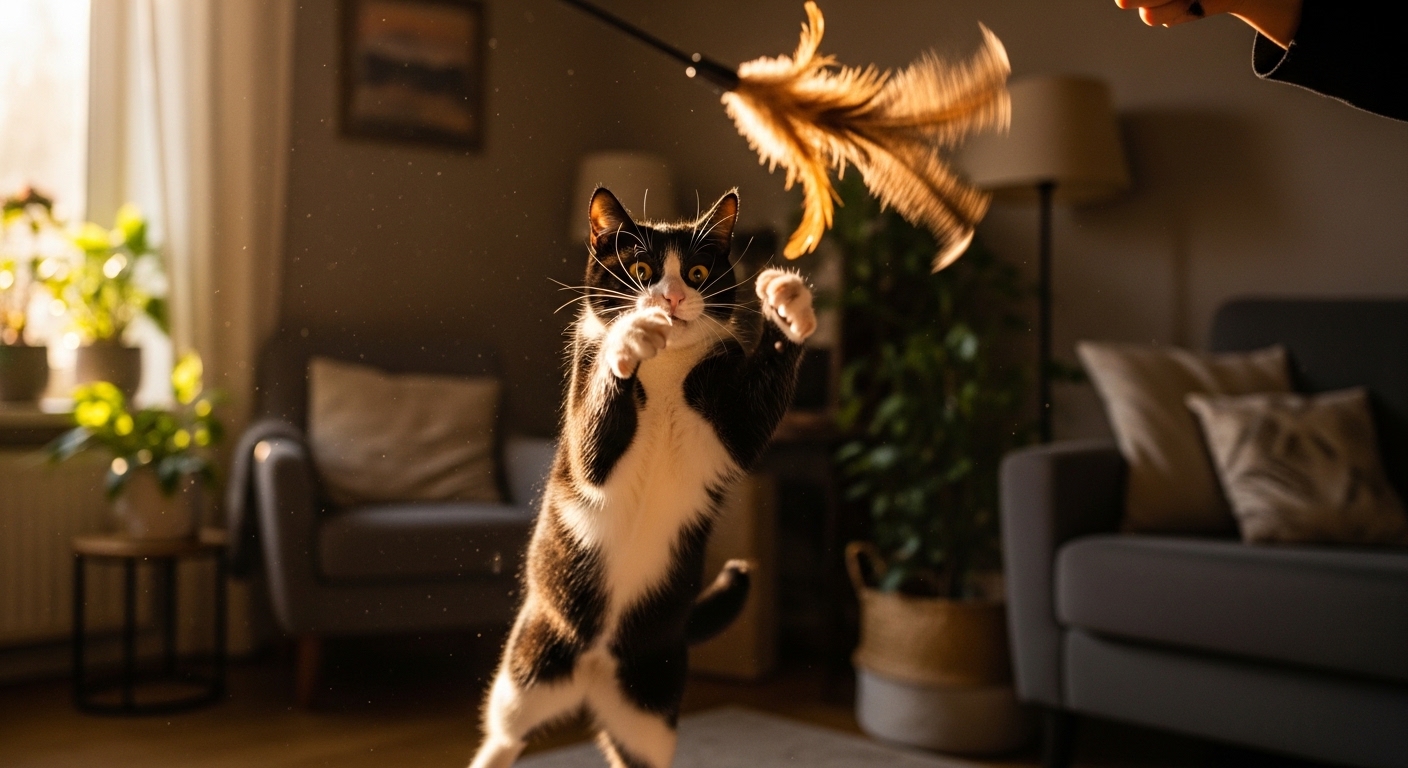
Many cat behaviorists suggest that the bathroom-following habit is best managed at the routine level rather than in the moment. A cat who gets a solid 10-to-15-minute interactive play session before your morning routine is often far less interested in supervising your shower — they are tired and satisfied.
Cats that follow owners into every room often benefit most from structured play, not from training them to stay out of specific spaces.
Feeding puzzles and slow feeders placed away from the bathroom can also redirect attention effectively. The idea is to give your cat something worth doing that competes with following you around. It sounds simple, and it mostly is — though finding the right puzzle toy that actually holds your particular cat's interest can take some trial and error. Some cats ignore every enrichment toy you buy and remain devoted to watching you brush your teeth.
If you have multiple cats, you may notice that the bathroom-following behavior is stronger in one cat than another. That usually reflects individual personality and attachment style rather than a problem with how you have raised them. Some cats are just more people-oriented than others, and no amount of environmental enrichment fully changes that.
When to See a Professional
Most bathroom-following is harmless and requires no intervention. But there are situations where consulting a veterinarian or a certified cat behaviorist makes sense.
- Your cat vocalizes intensely and cannot settle when separated, even briefly.
- The behavior has appeared suddenly in a cat that previously had no issue with closed doors — sudden behavioral changes in cats can sometimes have medical causes, so a vet check is a reasonable first step.
- Your cat shows physical signs of distress: excessive grooming, loss of appetite, or eliminating outside the litter box when you are unavailable.
- The behavior is accompanied by aggression toward other pets or people in the home.
True separation anxiety in cats is less common than in dogs, but it does occur, and it responds well to behavior modification when caught early. Your vet may refer you to a veterinary behaviorist, or in some cases may discuss whether other support options are appropriate — always follow your vet's guidance on that front.
Frequently Asked Questions
Is it normal for my cat to cry outside the bathroom door?
Mild vocalization — a meow or two — is common and generally not a concern. If your cat is howling, scratching frantically, or seems unable to calm down for the few minutes you are inside, that level of distress is worth paying attention to. A single vet visit to rule out any underlying health issue is a sensible starting point before assuming it is purely behavioral.
Does following me to the bathroom mean my cat loves me?
It is a reasonable sign of attachment, yes. Cats that seek proximity to specific people are typically expressing a preference and a degree of trust. That said, cats also follow people out of curiosity and territorial monitoring, so it is not exclusively an affection signal — though for many cats, it is a combination of all three.
Will getting a second cat help reduce the behavior?
Sometimes, but not reliably. A second cat may provide companionship that reduces your cat's focus on your movements, but introducing a new cat is a significant undertaking with its own adjustment period. If the bathroom-following is your main concern, enrichment and routine adjustments are a better first approach than adding another animal to the household.
The bathroom-following habit is one of those cat behaviors that seems bizarre until you understand the territorial and social logic underneath it. Your cat is not being clingy for no reason — they are doing exactly what their instincts and attachment to you would predict. Whether you find it endearing or mildly inconvenient probably depends on how long your showers are. Either way, a little environmental enrichment and a consistent routine go a long way toward finding a balance that works for both of you.
Comments
Post a Comment